The Past Simple Revision

English

Exercise 1: Complete the sentences with there was or there were in affirmative, negative or question form.

1. ________________ a new student in your class last week? Yes, ________________.

2. ________________ any students in the library at 3 o'clock yesterday.

3. I think ________________ a boy waiting for you yesterday.

4. ________________ any chicken left when I arrived home at lunchtime.

5. ________________ any water in the fridge last night? I don't think so.

6. ________________ any people at the museum?

Exercise 2: Fill in the blanks with was, were, there was or there were.

1. William Shakespeare ________________ a famous poet and playwright.

2. ________________ some people waiting for you at the door.

3. How many apples ________________ in the cupboard?

4. We ________________ very tired when we finished the PE lesson.

5. Your sister ________________ at the cinema with her friends last Friday.

6. How much milk ________________ in the fridge yesterday?

7. Miguel de Cervantes ________________ born in 1920.

8. The police ________________ investigating a crime in my area.

9. ________________ a lot of people at the concert last night.

10. We ________________ happy with the exam results.

Exercise 3: Give the past form of the following verbs.

1. meet → __________

2. do → __________

3. laugh → __________

4. help → __________

5. cry → __________

6. try → __________

7. speak → __________

8. stand → __________

9. tidy → __________

10. live → __________

11. play → __________

12. enjoy → __________

13. write → __________

14. stay → __________

15. plan → __________

16. study → __________

17. ask → __________

18. drive → __________

19. put → __________

20. sing → __________

21. sit → __________

22. stop → __________

23. agree → __________

24. buy → __________

25. run → __________

26. break → __________

27. build → __________

28. begin → __________

29. bring → __________

30. be → __________

Exercise 4: Change the given sentences into affirmative (+), negative (-), and question (?) form.

1. (+) He wrote a book.

                  (-) ___________________________

                  (?) ___________________________

2. (+) She was my boss.

                  (-) ___________________________

                  (?) ___________________________

3. (+) ___________________________

                 (-) They didn’t build a new house.

                 (?) ___________________________

4. (+) ___________________________

                 (-) I wasn’t at the concert last Sunday.

                 (?) ___________________________

5. (+) ___________________________

                 (-) ___________________________

                 (?) Did you buy clothes in this clothes shop?

6. (+) ___________________________

                 (-) ___________________________

                 (?) Were they born in Korea?

7. (+) He swam in the lake.

                 (-) ___________________________

                 (?) ___________________________

8. (+) We were at the gym last week.

                 (-) ___________________________

                 (?) ___________________________

9. (+) ___________________________

                 (-) She didn’t go to her office by car.

                 (?) ___________________________

10. (+) ___________________________

                 (-) He wasn’t a good person.

                 (?) ___________________________

Exercise 5: Give the past form of the verb in brackets.

1. I knew Sarah was busy, so I (not disturb) ________________ her.

2. I was very tired, so I (leave) ________________ the party.

3. The bed was very uncomfortable. I (not sleep) __________ very well.

4. The window was open and a bird (fly) ________________ into the room.

5. The hotel wasn’t expensive. It (not cost) ________________ much.

6. I was in a hurry, so I (not have) ________________ time to phone you.

7. It was hard carrying the bags. They (be) ________________ very heavy.

8. Linda (buy) ________________ that car last week.

9. She (do) ________________ doing gymnastics when she was four.

10. Last winter my family (go) ________________ on a skiing holiday in France.

11. My dad (decide) ________________ to travel around the world after university.

12. I (compete) __________ in a skateboarding competition last week.

13. I haven’t got any homework this weekend because I (do) __________ it all last night!

14. There (not be) _______________ any money in my wallet.

15. Jennifer Lawrence (become) ________________ famous after The Hunger Games.

16. Tom Schaar (start) ________________ to skateboard when he was very young.

17. We (win) __________ the school basketball match last year!

18. They (live) __________ in Paris in 2010.

19. Yesterday there (be) __________ a fire in the town centre.

20. There (be not) _______________ any eggs for breakfast this morning.

Review Text

English as a Second Language (ESL)

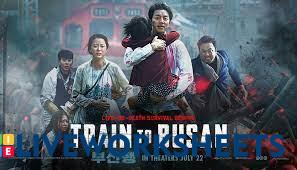
                                                                            Train to Busan

"Train to Busan" takes the zombie genre on a gripping ride, delivering a high-octane thriller that keeps audiences on the edge of their seats from start to finish. Directed by Yeon Sang-ho, this South Korean film offers a fresh take on the undead apocalypse narrative.

The story unfolds on a speeding train from Seoul to Busan, where a mysterious virus turns passengers into bloodthirsty zombies. The claustrophobic setting of the train creates an intense atmosphere, effectively heightening the stakes for the characters as they fight for survival. Yeon Sang-ho masterfully develops a diverse set of characters, each with their own motivations and struggles. The film explores the dynamics of human relationships under extreme circumstances, adding depth to the typical zombie movie narrative.

What sets "Train to Busan" apart is its emotional resonance. Amidst the chaos, the film delves into the human condition, exploring themes of sacrifice, redemption, and the lengths people go to protect their loved ones. The emotional punches are as impactful as the physical ones.

The film is a rollercoaster of adrenaline-fueled action. From heart-stopping chases through the narrow train corridors to nail-biting confrontations with the undead, "Train to Busan" doesn't let up on the tension, offering a relentless and pulse-pounding viewing experience. Visually striking, the film effectively uses tight spaces and dynamic camera work to enhance the sense of confinement and urgency. The makeup and special effects contribute to the overall believability of the zombie threat, creating a visually immersive experience.

Beyond the gore and suspense, "Train to Busan" incorporates subtle social commentary. The film touches on issues like class disparity and the consequences of unchecked corporate greed, adding layers of depth to the narrative.

The film's haunting and atmospheric soundtrack, composed by Jang Young-gyu, complements the intense visuals, elevating the overall cinematic experience. The music effectively underscores the emotional beats of the story, enhancing the impact of key moments.

"Train to Busan" garnered international acclaim for its exceptional storytelling and execution. It played a crucial role in bringing South Korean cinema to the forefront of the global stage, showcasing the country's prowess in creating compelling and commercially successful films.

The film's success extends beyond the box office. "Train to Busan" became a cultural phenomenon, influencing subsequent zombie movies and solidifying its place as a modern classic in the horror genre. The film's success led to the creation of a sequel, "Peninsula," and an animated prequel, "Seoul Station." While the sequel took the story in a different direction, the franchise as a whole has continued to captivate audiences with its unique approach to the zombie genre.

"Train to Busan" stands as a testament to the innovation that can be brought to a well-trodden genre. With its heart-stopping action, well-drawn characters, and emotional depth, the film has earned its place as a must-watch for both horror enthusiasts and those new to the world of zombie cinema. Yeon Sang-ho's directorial prowess, coupled with a stellar cast and crew, ensures that "Train to Busan" remains a thrilling and enduring cinematic experience.


"Train to Busan" Quiz


1. What is the main setting of the film "Train to Busan"?

a. Seoul
b. Busan
c. Tokyo
d. Shanghai


2. Who directed the film "Train to Busan"?

a. Bong Joon-ho
b. Park Chan-wook
c. Kim Jee-woon
d. Yeon Sang-ho


3. What type of creatures do the passengers on the train turn into?

a. Vampires
b. Werewolves
c. Zombies
d. Ghosts


4. What themes are explored in the film "Train to Busan"?

a. Sacrifice and redemption
b. Friendship and love
c. Revenge and betrayal
d. Power and corruption


5. How does the film create a sense of urgency and confinement?

a. Through tight spaces and dynamic camera work
b. Through wide open spaces and slow camera movements
c. Through high-speed chase scenes on the train
d. Through the use of jump scares


6. What social issues are touched upon in "Train to Busan"?

a. Climate change and pollution
b. Gender equality and discrimination
c. Class disparity and corporate greed
d. Immigration and refugees


7. Who composed the soundtrack for the film?

a. Ryuichi Sakamoto
b. Joe Hisaishi
c. Jang Young-gyu
d. Hans Zimmer


8. What impact did "Train to Busan" have on the global stage?

a. It influenced subsequent zombie movies
b. It sparked a resurgence in vampire films
c. It led to the creation of a sequel and prequel
d. It introduced South Korean cinema to a wider audience


9. What is the name of the sequel to "Train to Busan"?

a. Peninsula
b. Seoul Station
c. Apocalypse Train
d. Undead Express


10. What qualities make "Train to Busan" a must-watch film?

a. Heart-stopping action and well-drawn characters
b. Stunning visual effects and intricate plot twists
c. Dark humor and social satire
d. A romantic subplot and fantastical elements


Hobbies

English as a Second Language (ESL)

I'm a typical student, I suppose. I study hard during the week and go out with my friends at the weekend. I don't have much free time but I've got lots of hobbies. I play tennis occasionally, about once every two months, and I do judo every now and then when I'm at home with my family. I don't do any sport at university, though. I watch TV most days for about an hour, but I hardly ever read. No books, no magazines, nothing! I listen to music all the time - in the car, in my room, when I'm doing homework, when I'm going to sleep. I love it. My favourite group is Coldplay but I like lots of different types of music. I go to concerts quite often, usually three or four times a year, and I always enjoy them.

My other big hobby is my computer. I don't play games on it - I think they're boring - but I'm online nearly every day. I chat to my friends on Facebook and look at photos, and I download films and music. I love watching films. I watch a film on TV almost every day and I go to the cinema twice a month, more or less. I don't like horror films - they're scary! - but I like romantic films and action films. I never read books but I read the newspaper every day online. I'm not into politics but I like reading about famous people. I think it's interesting.

So that's me. I'm a very ordinary person, really. I'm not a sportsman but I like playing tennis and doing judo. I'm not a bookworm but I love watching films and reading newspapers. And I'm not a musician but I'm always listening to music.

สร้างและปรับแต่งใบงานสำหรับทุกห้องเรียน

LiveWorksheets ทำให้คุณครู ผู้ปกครอง และผู้สอนแบบโฮมสคูล สามารถออกแบบและมอบสื่อการเรียนรู้ที่น่าสนใจได้อย่างง่ายดาย เพียงอัปโหลดไฟล์ PDF หรือเริ่มต้นสร้างใหม่ทั้งหมด คุณก็สามารถทำได้ทุกอย่าง ไม่ว่าจะเป็นใบงานคณิตศาสตร์แบบโต้ตอบ ใบงานอ่านจับใจความ ใบงานการคูณ หรือใบงานสำหรับเด็กอนุบาล ด้วยขั้นตอนเพียงไม่กี่คลิก เครื่องมือแก้ไขแบบลากและวางของเรารองรับทุกระดับชั้นและทุกวิชา ช่วยให้คุณปรับเนื้อหาให้ตรงกับแผนการสอน การบ้าน หรือแบบทดสอบ ครูสอนภาษาอังกฤษ (ESL) ยังสามารถสร้างใบงาน ESL แบบเฉพาะ เพิ่มตารางเสียงภาษาอังกฤษ หรือออกแบบกิจกรรม ESL เพื่อให้การเรียนสนุกและมีส่วนร่วมมากขึ้น สร้างกิจกรรมที่ปรับระดับได้ ตรวจอัตโนมัติ ช่วยประหยัดเวลา และสนับสนุนการเรียนรู้ของนักเรียนให้ดียิ่งขึ้น

คลังสื่อการเรียนรู้ครบวงจรสำหรับ K-12 และ ESL

เข้าถึงใบงานที่พร้อมใช้หลายพันชุด ครอบคลุมทุกวิชาในระดับ K-12 รวมถึงใบงานอนุบาล ใบงานคณิตศาสตร์ แบบฝึกการคูณ แบบฝึกอ่านจับใจความ และทรัพยากร ESL เลือกค้นหาตามชั้นเรียน วิชา หรือระดับทักษะ เพื่อให้ได้สิ่งที่คุณต้องการ ไม่ว่าจะสำหรับห้องเรียนประถม ทบทวนในระดับมัธยมต้น หรือการฝึกในระดับมัธยมปลาย ครู ESL ยังสามารถสำรวจคลังใบงาน ESL และกิจกรรมภาษาอังกฤษที่ออกแบบมาเพื่อรองรับผู้เรียนทุกระดับ เนื้อหาใหม่ถูกเพิ่มเข้ามาอย่างต่อเนื่อง LiveWorksheets จึงเป็นทรัพยากรที่ยืดหยุ่นและช่วยสร้างผลลัพธ์การเรียนรู้ที่ยั่งยืน