
Author's Instructions
Type of reaction: Free radical substitution reaction. It is a monosubstitution reaction because there is only one hydrogen atom in alkane is substituted by halogen free radical.
Step 1: Initiation step • In the present of uv light/heat, the covalent bond of Cl2 undergoes homolytic cleavage to produce free radicals. Function of uv light: provide energy for homolytic cleavage of Cl2
Step 2: Chain Propagation Step • Cl free radicals collide with methane to form HCl and methyl free radicals. Methyl free radicals react with Cl2 to form haloalkane and generate the chlorine free radicals
Step 3: Chain Termination Step • The reaction stops when the two free radicals collide and combine with one another
Free Radical Substitution of Alkane

Author's Instructions
Type of reaction: Free radical substitution reaction. It is a monosubstitution reaction because there is only one hydrogen atom in alkane is substituted by halogen free radical.
Step 1: Initiation step • In the present of uv light/heat, the covalent bond of Cl2 undergoes homolytic cleavage to produce free radicals. Function of uv light: provide energy for homolytic cleavage of Cl2
Step 2: Chain Propagation Step • Cl free radicals collide with methane to form HCl and methyl free radicals. Methyl free radicals react with Cl2 to form haloalkane and generate the chlorine free radicals
Step 3: Chain Termination Step • The reaction stops when the two free radicals collide and combine with one another
Explore Worksheets
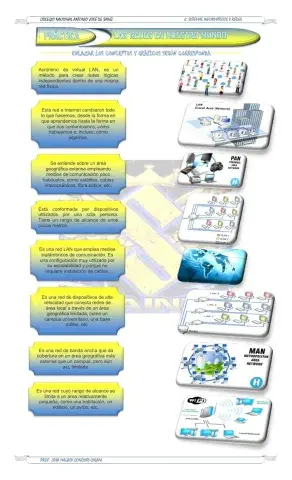
Tipos de Redes Informáticas
- Science
- 12th grade

Kim loại - tính chất - điều chế
- Science
- 12th grade

Phân loại polime và vật liệu polime
- Science
- 12th grade