Exercise: Forming Questions about Clothes

English as a Second Language (ESL)

Exercise: Forming Questions about Clothes

Part 1: Yes/No Questions

Rewrite the sentences below as yes/no questions using "do" or "does".

  1. You need a new shirt.
    • Question: Do you need a new shirt?
  2. She wants a pair of jeans.
    • Question: Does she want a pair of jeans?
  3. They like the red dress.
    • Question: Do they like the red dress?
  4. He has a blue jacket.
    • Question: Does he have a blue jacket?
  5. We need some new shoes.
    • Question: Do we need some new shoes?

Part 2: Information Questions

Rewrite the statements below as information questions using "do" or "does" and the question words (what, which, why, when, where, who).

  1. You need a new shirt.
    • Question: What do you need?
  2. She wants a pair of jeans.
    • Question: What does she want?
  3. They like the red dress.
    • Question: Which dress do they like?
  4. He has a blue jacket.
    • Question: What color jacket does he have?
  5. We need some new shoes.
    • Question: What do we need?

Part 3: Create Your Own Questions

Now, create your own yes/no and information questions about clothes using the verbs need, want, like, and have.

  1. (Yes/No Question)
    • Statement: I need a warm sweater.
    • Question:
    • Why do you want to buy a new jacket?
  2. (Information Question)
    • Statement: She likes the black boots.
    • Question: What color shoes does she like?
  3. (Yes/No Question)
    • Statement: They have a lot of scarves.
    • Question: ____Do they have a lot of scarves_________________________________?
  4. (Information Question)
    • Statement: He wants a new belt.
    • Question: ______What does he want___________________________?


Part 1: Yes/No Questions

Rewrite the sentences below as yes/no questions using "do" or "does".

  1. You need a new shirt.
    • Question: Do you need a new shirt?
  2. She wants a pair of jeans.
    • Question: Does she want a pair of jeans?
  3. They like the red dress.
    • Question: Do they like the red dress?
  4. He has a blue jacket.
    • Question: Does he have a blue jacket?
  5. We need some new shoes.
    • Question: Do we need some new shoes?

Part 2: Information Questions

Rewrite the statements below as information questions using "do" or "does" and the question words (what, which, why, when, where, who).

  1. You need a new shirt.
    • Question: What do you need?
  2. She wants a pair of jeans.
    • Question: What does she want?
  3. They like the red dress.
    • Question: Which dress do they like?
  4. He has a blue jacket.
    • Question: What color jacket does he have?
  5. We need some new shoes.
    • Question: What do we need?

Part 3: Create Your Own Questions

Now, create your own yes/no and information questions about clothes using the verbs need, want, like, and have.

  1. (Yes/No Question)
    • Statement: I need a warm sweater.
    • Question: ________Do you need a sweater__________________?
  2. (Yes/No Question)
    • Statement: They have a lot of scarves.
    • Question: ______________Do they have a scarf_____________?

Exercise: Forming Questions with Why, What, Which, and One/Ones

Part 1: Complete the Questions

Complete the questions using "why," "what," "which," "one," or "ones."

  1. ____Why____ do you want to buy a new jacket?
  2. ___What_____ color shoes do you need?
  3. ___Which_____ dress do you like, the red one or the blue one?
  4. ___What_____ do you have in your shopping bag?
  5. _____Which___ do you prefer, the striped shirt or the plain one?
  6. _____Why___ did you choose the black boots?
  7. ___Which_____ jeans are more comfortable, the skinny ones or the regular ones?
  8. ____What____ accessories do you want to wear with your outfit?
  9. ____Which____ of these hats is your favorite?
  10. _____Why__ does he need a new suit?


Unit 4 Vocabulary Review for Final Exam

Language Arts

Unit 4 Vocabulary Review for Final Exam


Word Bank:


dispose, legislation, litter, pollute, environment, recycle, retailer, reuse, tax, resource, support, supporter, consumer, produce, production, occur, relevant, potential, ineffective, generate, alternative


Definition Match:


1. ___dispose                      a.  something people use to help themselves

2. ___legislation                  b.  useless or not working well

3. ___litter                           c. someone who buys items

4. ___pollute                       d.  to put away or get rid of

5. ___environment              e.  a charge from the government on property

6. ___recycle                       f.  appropriate or fitting to the situation

7. ___retailer                       g.  to throw items or garbage

8. ___reuse                         h.  possible or promising

9. ___tax.                            i. to make something

10. ___resource                  j. to use again and make a new thing

11. ___support                    k. a law or to make a law 

12. ___supporter                l.  to happen

13. ___consumer               m.  a person or store that sells items

14. ___produce                  n. to create or produce

15. ___production              o.  to take care of or provide for

16. ___occur                      p.  to use something again

17. ___relevant                  q.  to make or leave unclean with waste products

18. ___potential                 r.  a possible or different choice

19. ___ineffective              s.  the creation of items or things

20. ___generate                t.  an area or environment where people or things live

21. ___alternative             u.  a person that helps or assists others


True or False:  Is the vocabulary word used correctly in the sentence?


_______________ 1.  The relevant question did not relate to the speech they presented that day.

_______________ 2.  We have a potential new house lined up to rent, next month.

_______________ 3.  The ineffective cord would not charge the phone.

_______________ 4.  We can recycle the bottles and throw them in the garbage can.

_______________ 5.  The retailer bought things at the new store.

_______________ 6.  An alternative assignment was possible, so they could make up the work.

_______________ 7. The woman was a supporter, and complained about everything they did.

_______________ 8. When they bought the new car, there was an additional charge for tax.

_______________ 9.  A resource is not going to help us with the project.

_______________ 10. Please do not litter in the garden, and remember to clean up after lunch.


Is the following word a noun (person/place/thing), verb (an action) or an adjective (a descriptive word)?


1. ________________ generate

2. ________________ consumer

3. ________________ legislation

4. ________________ pollute

5. ________________ ineffective

6. ________________ occur

7. ________________ alternative

8. ________________ environment

9. ________________ potential

10. _______________ support


Write an example sentence for the following words.  Do not reuse sentences on the worksheet :).


1. pollute ________________________________________________________________________________


2.  production _____________________________________________________________________________


3.  dispose _______________________________________________________________________________


4.  relevant _______________________________________________________________________________


5.  potential _______________________________________________________________________________


6.  alternative ______________________________________________________________________________


7.  consumer _______________________________________________________________________________


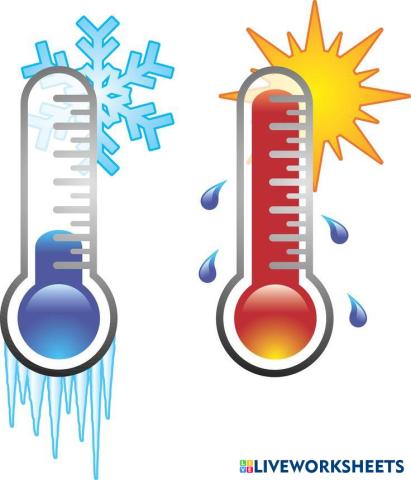
Unit C: Heat & Temperature

Science

Unit C: Heat and Temperature review


  • Explain expansion and contraction in terms of heat

Things expand when heated and contract when cooled


  • In Canada what do we measure degrees in?

Celsius


  • Caloric theory was proven to be untrue because… (read textbook)

The mass of a heated spoon did not change


  • Heat energy is measured in ___________

joules


  • Heat energy flows from ___________________  to ____________________

Hot objects to cold objects


  • What heating technology reappeared over time?

Central heating


  • What are examples of non-sustainable resources?

Oil, coal, natural gas


  • The transfer of heat energy between substances that are in contact with each other is called…

conduction


  • When a metal spoon is put into a bowl of hot soup, heat is transferred from what to what?

From the soup to the spoon


  • In what substances could a convection current form? (solid, liquid or gas)

Liquid and gas


  • What substances absorb heat the fastest, a black shirt or white shirt?

A black shirt


  • The transfer of energy by infrared rays is called…

radiation


  • The energy of movement is called…

Kinetic energy


  • The method of heat transfer when liquid or gas particles move from one area to another is called…

Convection  


  • According to the Particle Model of Matter (PMOM), heating a substance does what to the particles?

Increases the kinetic energy of the particles


  • The measure of the average Kinetic energy of the particles in a substance is called…

Temperature 


  • The total Kinetic energy of all the particles in a substance is called…

Thermal energy


  • When a liquid changes to a solid it is called… 

freezing


  • What is the relative particles movement of each state of matter from fastest to slowest movement of particles?

Gas, liquid, solid


  • During conduction, which way does heat transfer?

From areas of greater kinetic energy to areas of lower kinetic  energy


  • When cooking chicken in the oven, why should the reflective side of the aluminum foil be toward the food?

The reflective side will reflect the heat toward the chicken causing it to cook faster


  • Which state(s) of matter has a definite volume? (can take a shape)

Liquid and solid


  • Materials that do not allow easy transfer of heat are called…

insulators


  • The four natural sources of thermal energy are…

Fires, geothermal, sun, decay


  • The name given to energy produced by the sun is…

Solar energy


  • Heating systems are controlled by…

Thermostats 


  • Every insulator is given a number showing its insulating ability, this is known as its…

R-value


  • Heating systems that provide heat for a larger area from a single source is known as…

Central heating


  • Many thermostats contain a strip which is made up of two different metals; this is called a…

Bimetallic strip


  • Insulation is used to…

Prevent heat transfer from the warm object to the cold object


  • One source of energy is not limited, does not create pollution, nor does it carry radiation risks. This source is… 

The sun


  • Making effective energy use choices begins with…

Separating societal needs from societal wants


  • What is a non-renewable resource?

It can not be replaced


  • An example of a renewable energy resource is…

Wind, water, solar


  • A major disadvantage of using wind energy is that…

It can only be used in windy areas


  • Which energy sources produce extremely hazardous waste material?

nuclear


  • An advantage of using hydroelectric energy is that…

It does not create air pollution


  • To improve their energy efficiency, many large companies that produce electricity now use a process called…

Cogeneration


สร้างและปรับแต่งใบงานสำหรับทุกห้องเรียน

LiveWorksheets ทำให้คุณครู ผู้ปกครอง และผู้สอนแบบโฮมสคูล สามารถออกแบบและมอบสื่อการเรียนรู้ที่น่าสนใจได้อย่างง่ายดาย เพียงอัปโหลดไฟล์ PDF หรือเริ่มต้นสร้างใหม่ทั้งหมด คุณก็สามารถทำได้ทุกอย่าง ไม่ว่าจะเป็นใบงานคณิตศาสตร์แบบโต้ตอบ ใบงานอ่านจับใจความ ใบงานการคูณ หรือใบงานสำหรับเด็กอนุบาล ด้วยขั้นตอนเพียงไม่กี่คลิก เครื่องมือแก้ไขแบบลากและวางของเรารองรับทุกระดับชั้นและทุกวิชา ช่วยให้คุณปรับเนื้อหาให้ตรงกับแผนการสอน การบ้าน หรือแบบทดสอบ ครูสอนภาษาอังกฤษ (ESL) ยังสามารถสร้างใบงาน ESL แบบเฉพาะ เพิ่มตารางเสียงภาษาอังกฤษ หรือออกแบบกิจกรรม ESL เพื่อให้การเรียนสนุกและมีส่วนร่วมมากขึ้น สร้างกิจกรรมที่ปรับระดับได้ ตรวจอัตโนมัติ ช่วยประหยัดเวลา และสนับสนุนการเรียนรู้ของนักเรียนให้ดียิ่งขึ้น

คลังสื่อการเรียนรู้ครบวงจรสำหรับ K-12 และ ESL

เข้าถึงใบงานที่พร้อมใช้หลายพันชุด ครอบคลุมทุกวิชาในระดับ K-12 รวมถึงใบงานอนุบาล ใบงานคณิตศาสตร์ แบบฝึกการคูณ แบบฝึกอ่านจับใจความ และทรัพยากร ESL เลือกค้นหาตามชั้นเรียน วิชา หรือระดับทักษะ เพื่อให้ได้สิ่งที่คุณต้องการ ไม่ว่าจะสำหรับห้องเรียนประถม ทบทวนในระดับมัธยมต้น หรือการฝึกในระดับมัธยมปลาย ครู ESL ยังสามารถสำรวจคลังใบงาน ESL และกิจกรรมภาษาอังกฤษที่ออกแบบมาเพื่อรองรับผู้เรียนทุกระดับ เนื้อหาใหม่ถูกเพิ่มเข้ามาอย่างต่อเนื่อง LiveWorksheets จึงเป็นทรัพยากรที่ยืดหยุ่นและช่วยสร้างผลลัพธ์การเรียนรู้ที่ยั่งยืน