LISTENING SKILL

English as a Second Language (ESL)

Listening Question 1:


Which sport is commonly played in the spring in the US and Canada?


A) Baseball

B) Soccer

C) Ice hockey

D) Football


Correct Answer: B) Soccer


Listening Question 2:


which sport is NOT mentioned as being played in the spring season?


A) Golf

B) Soccer

C) Basketball

D) Ice skating


Correct Answer: D) Ice skating


Listening Question 3:


 what sports are typically played in the fall season in the US and Canada?


A) Golf, soccer, and basketball

B) Baseball, volleyball, and swimming

C) Football, bike riding, and hiking

D) Ice hockey, ice skating, and snowboarding


Correct Answer: C) Football, bike riding, and hiking


Listening Question 4:


what is a winter sport in the US and Canada?


A) Soccer

B) Baseball

C) Ice hockey

D) Volleyball


Correct Answer: C) Ice hockey


Listening Question 5:


During which season do people play both basketball and soccer?


A) Spring

B) Summer

C) Fall

D) Winter


Listening Question 6:

 it's mentioned that people go swimming in the summer season. Why do you think swimming is a popular activity during the summer, while ice hockey is played in the winter? Provide at least two reasons to support your answer.


Listening Question 7:

The audio highlights that people play football in the fall season. Imagine you are a coach planning a football season. What environmental factors might influence your decision when scheduling football games during the fall? Explain how these factors could impact the sport and the athletes.

How to Become a DJ: 10 Tips to Start DJing in 2025

English as a Second Language (ESL)

How to Become a DJ: 10 Tips to Start DJing in 2025

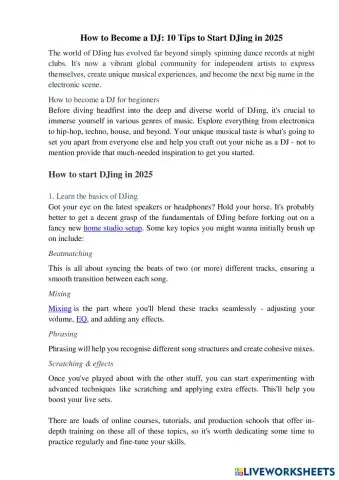
The world of DJing has evolved far beyond simply spinning dance records at night clubs. It's now a vibrant global community for independent artists to express themselves, create unique musical experiences, and become the next big name in the electronic scene.

How to become a DJ for beginners

Before diving headfirst into the deep and diverse world of DJing, it's crucial to immerse yourself in various genres of music. Explore everything from electronica to hip-hop, techno, house, and beyond. Your unique musical taste is what's going to set you apart from everyone else and help you craft out your niche as a DJ - not to mention provide that much-needed inspiration to get you started.

How to start DJing in 2025

1. Learn the basics of DJing

Got your eye on the latest speakers or headphones? Hold your horse. It's probably better to get a decent grasp of the fundamentals of DJing before forking out on a fancy new home studio setup. Some key topics you might wanna initially brush up on include:

Beatmatching

This is all about syncing the beats of two (or more) different tracks, ensuring a smooth transition between each song.

Mixing

Mixing is the part where you'll blend these tracks seamlessly - adjusting your volume, EQ, and adding any effects.

Phrasing

Phrasing will help you recognise different song structures and create cohesive mixes.

Scratching & effects

Once you've played about with the other stuff, you can start experimenting with advanced techniques like scratching and applying extra effects. This'll help you boost your live sets.

There are loads of online courses, tutorials, and production schools that offer in-depth training on these all of these topics, so it's worth dedicating some time to practice regularly and fine-tune your skills.

2. Invest in the right equipment

Basics ticked off. Now you need to pick out the right equipment. 

While professional setups can be expensive, there are loads of budget-friendly options for beginners. Consider purchasing a DJ controller, headphones, and a laptop loaded with DJ software. It might be pricey, but quality equipment is essential for honing your skills and creating top-notch mixes.

But this doesn't necessarily mean splashing out on the most expensive options. Northern Irish Producer & DJ, The Cyclist, has these tips for starting out and developing your skills:

“Start experimenting and learning the tools. There are so many free versions of everything to get started. Try searching for ‘free VSTs’ and go from there.”

3. Build your music library

Your DJ career ultimately hinges on the quality of music you play and how well it goes down with your crowd. To cover your own back during potentially tricky sets, you’ll want to build up a diverse and extensive music library. This will include a mix of tracks that resonate with your style and also the preferences of your target audience. 

Explore electronic music platforms like Beatport, buy sample packs from stores like Splice, and consider subscribing to DJ record pools for access to a wide selection of music.

4. Define your sound

Just as bands and solo artists need to nurture their own specific sound, DJs need to carve out their particular style and decide on the sound that they're going to build their career around.

Use other artists you're a fan of as reference and start playing about with certain sounds or samples that you like. This is the start of your journey so be experimental!

“Writing loops/beats/riffs is great fun and a place to start, but you need to finish tracks. Work on arranging these into a full track format - use other tracks as reference and for ideas on improving your production and arrangement.” - The Cyclist

5. Create your brand and identity

As an independent DJ, your brand is everything. Develop a unique name, logo, and visual style that reflects your personality and musical style. Your music branding should be consistent across all your promotional materials, from social media profiles to event flyers.

Once you’ve established your brand, you’ll be able to get a better understanding of your following and lean further into producing the sounds you're becoming associated with.


Take Fred Again.. as an example. His brand of honest and personal social media marketing lead to him selling out global tours as well as headlining Glastonbury and Coachella in 2023. A lot of the hype built up around Fred's came from his branding, a simple '..' - which was used across his merch and discography as well as used to tease appearances online and get more people chatting about him.

A large-scale example, but good branding strategy which you can apply to your own music.


Modal Auxiliaries

English as a Second Language (ESL)

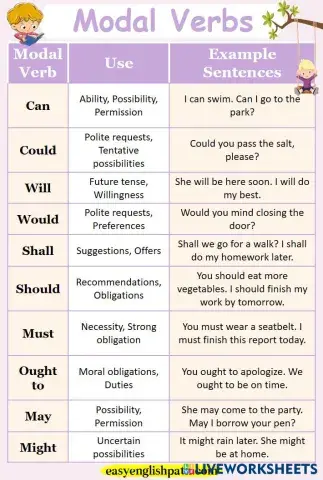
Fill in the blanks choosing the correct modal given within the brackets to suit the sentence.

1. They ……………………….. (can/might) be away for the weekend but I’m not sure.

2. You ……………………….. (may/might) leave now if you want to.

3. ……………………….. (Could/Might) you open the door a bit, please?

4. He ……………………….. (can/could) be a Bengali, judging by his accent.

5 ……………………….. (May/Can) you play the violin?

6. Listen, carefully, you (may not/might not) ……………………….. speak during this exam.

7. They ……………………….. (can’t/may not) still be out!

8. You ……………………….. (mustn’t/might not) smoke on the bus.

9. With luck, tomorrow ……………………….. (can/could) be a rainy day.

10. You (can/might) ……………………….. be right but I’m going back to check anyway.

11. I don’t know Hindi and so I ……………………….. (must/should) learn before I go to Delhi.

12. ……………………….. you stand upside down for a minute? No, I (can’t/could)

13. You ……………………….. leave small objects lying around. Children swallow it by mistake, (shouldn’t /may)

14. This is a public place. You ……………………….. (must/should) not smoke.

15. ……………………….. (May/Can) I ask a question?

16. He had been toiling for the past fifteen hours. He ……………………….. (must/should) be exhausted.

17. Drivers ……………………….. (must/should) stop the vehicle when they see the red signal.

18. According to the weather forecast, it ……………………….. (will/may) rain tomorrow.

19. Please try to reach the venue before me. I ……………………….. (will/may) be late.

20 ……………………….. (Could/Would) you mind lifting this box for me?

Present Simple/Present Continuous Revision

English as a Second Language (ESL)


PART ONE

1.Complete the sentences with the correct form of the verbs in brackets. Use the Present Simple.
 

1 Ross ................................................... (not want) any peas.

2 ..................................... you ..................................... (like) onions?

3 This shop ................................................... (sell) my favourite ice cream.

4 Roy ..................................... often ..................................... (not ride) his motorbike.

5 We rarely ................................................... (have) barbecues.

6 What ..................................... your friends usually ..................................... (wear) to school?

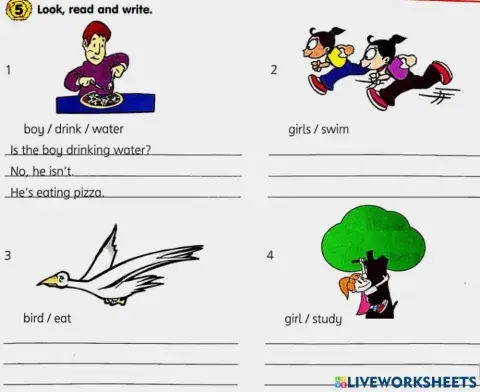
2. Write sentences with the words below. Use the Present Continuous.


1 the tourists / climb / the mountain / now / .

.........................................................................................................................................................

2 I / not clean up / right now / .

.........................................................................................................................................................

3 where / Mary / stay / at the moment / ?

.........................................................................................................................................................

4 she / use / the printer / right now / .

.........................................................................................................................................................

5 the students / run / now / ?

.........................................................................................................................................................

6 my brother / not play / with me / now / .

.........................................................................................................................................................


3. Complete the sentences with the verbs below. Use the Present Simple.


not drive | not believe | finish | study | ride | enjoy

1 I usually ................................................... the school concerts. They’re fun.

2 We ................................................... his story because he isn’t always honest.

3 Jane ...................................................a car. She isn’t old enough.

4 ..................................... the students ..................................... French every day?

5 Our lesson ................................................... at 12.00 on Tuesdays.

6 Greg ................................................... his bicycle to school?

4.Complete the sentences with the verbs in brackets. Use the Present Continuous.

1 We haven’t got our car. The mechanic ................................................... (fix) it now.

2 I ................................................... (not order) pizza because my friends aren’t hungry.

3 Why ..................................... you ..................................... (laugh) at me?

4 Someone ................................................... (call) for help!

5 ..................................... the detective ..................................... (examine) the evidence right now?

6 Mum and Dad ................................................... (not sit) in the garden.


5.Complete the sentences with the verbs in brackets. Use the Present Simple or Present Continuous.

1 My teacher ................................................... (give) us homework every day.

2 Andrea ................................................... (not listen) to music at the moment.

3 ..................................... Joseph ..................................... (go) to a basketball lesson every week?

4 Make-up artists ................................................... (not tell) actors what to do.

5 I can’t go out now. I ................................................... (wait) for my friend.

6 ..................................... your sisters ..................................... (perform) with the school orchestra right now?


สร้างและปรับแต่งใบงานสำหรับทุกห้องเรียน

LiveWorksheets ทำให้คุณครู ผู้ปกครอง และผู้สอนแบบโฮมสคูล สามารถออกแบบและมอบสื่อการเรียนรู้ที่น่าสนใจได้อย่างง่ายดาย เพียงอัปโหลดไฟล์ PDF หรือเริ่มต้นสร้างใหม่ทั้งหมด คุณก็สามารถทำได้ทุกอย่าง ไม่ว่าจะเป็นใบงานคณิตศาสตร์แบบโต้ตอบ ใบงานอ่านจับใจความ ใบงานการคูณ หรือใบงานสำหรับเด็กอนุบาล ด้วยขั้นตอนเพียงไม่กี่คลิก เครื่องมือแก้ไขแบบลากและวางของเรารองรับทุกระดับชั้นและทุกวิชา ช่วยให้คุณปรับเนื้อหาให้ตรงกับแผนการสอน การบ้าน หรือแบบทดสอบ ครูสอนภาษาอังกฤษ (ESL) ยังสามารถสร้างใบงาน ESL แบบเฉพาะ เพิ่มตารางเสียงภาษาอังกฤษ หรือออกแบบกิจกรรม ESL เพื่อให้การเรียนสนุกและมีส่วนร่วมมากขึ้น สร้างกิจกรรมที่ปรับระดับได้ ตรวจอัตโนมัติ ช่วยประหยัดเวลา และสนับสนุนการเรียนรู้ของนักเรียนให้ดียิ่งขึ้น

คลังสื่อการเรียนรู้ครบวงจรสำหรับ K-12 และ ESL

เข้าถึงใบงานที่พร้อมใช้หลายพันชุด ครอบคลุมทุกวิชาในระดับ K-12 รวมถึงใบงานอนุบาล ใบงานคณิตศาสตร์ แบบฝึกการคูณ แบบฝึกอ่านจับใจความ และทรัพยากร ESL เลือกค้นหาตามชั้นเรียน วิชา หรือระดับทักษะ เพื่อให้ได้สิ่งที่คุณต้องการ ไม่ว่าจะสำหรับห้องเรียนประถม ทบทวนในระดับมัธยมต้น หรือการฝึกในระดับมัธยมปลาย ครู ESL ยังสามารถสำรวจคลังใบงาน ESL และกิจกรรมภาษาอังกฤษที่ออกแบบมาเพื่อรองรับผู้เรียนทุกระดับ เนื้อหาใหม่ถูกเพิ่มเข้ามาอย่างต่อเนื่อง LiveWorksheets จึงเป็นทรัพยากรที่ยืดหยุ่นและช่วยสร้างผลลัพธ์การเรียนรู้ที่ยั่งยืน