อยากได้แบบฝึกหัดฟรีนับพัน (ไม่มีสิ่งรบกวนเลย)? Here’s how
$1.99/เดือน ด้วยบัญชีฟรี — ลงทะเบียนได้ในไม่กี่วินาที
ได้รับความนิยมมากที่สุด
Newest
Oldest
A-Z
Z-A
Vocabulary - Language Arts
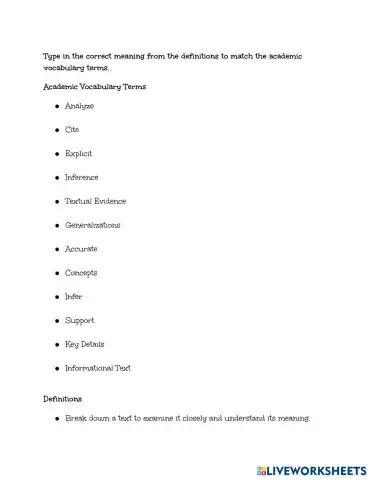
Type in the correct meaning from the definitions to match the academic vocabulary terms.
Academic Vocabulary Terms:
Definitions:
English as a Second Language (ESL)
Memorizing, Identifying, Selecting, Categorizing, Inferring
Reading Comprehension - Language Arts
Read carefully.
Listening - ESL
Follow the instructions
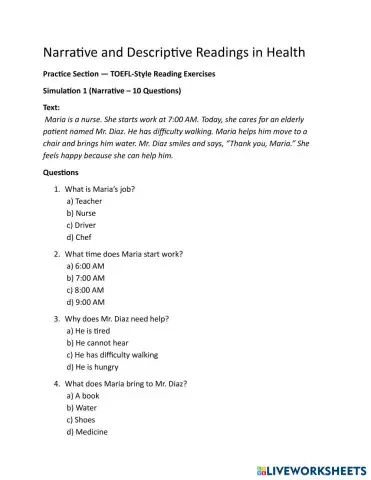
Reading - ESL
Instructions: Students identify possible problems based on the manual then provide appropriate solutions using Problem–Solution Graphic Organizer on Liveworksheets.
Students will infer the meaning of unfamiliar words from an authentic National Geographic article by using:
ESL
English language
Making inferences and taking notes
Reading
This is a reusable worksheet that can be filled in for short practice passages
Anchor Chart
Students will be able to identify ideas, make inferences and understand vocabulary.
Reading and Text Analysis - Language Arts
Read the information provided, and aswer accordingly to the requested.
Identifying Main Ideas, Supporting Details, Contrast, Inference, and Purpose
Physical Science - Science
complete the the table
Listening
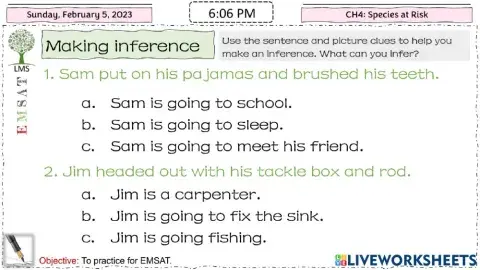
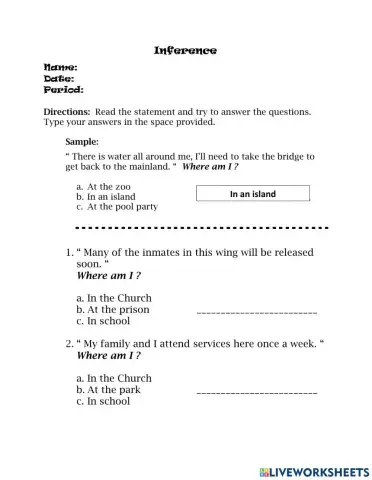
Practice inferring details
English Language Arts (ELA)
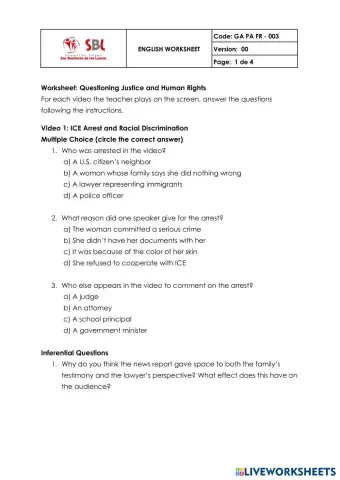
INFERENCING
Science
Observe pictures and write inferences
English as a Foreign Language (EFL)
Inferring the theme
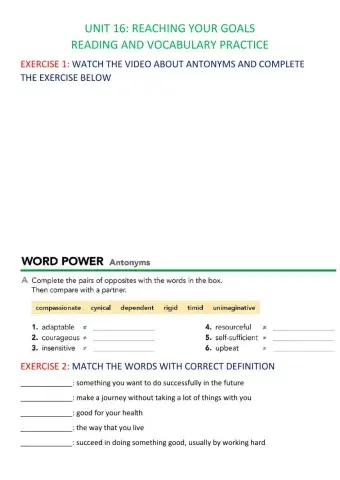
Objective: To analyze and master high-level vocabulary through contextual inference and individual verification.
Step A: Collaborative contextual analysis. With your partner, carefully analyze the quotes provided in the worksheet. Use the surrounding context clues to deduce the meaning of the missing terms. Once you have discussed your findings, we will hold a final collective correction to ensure accuracy.
Step B: Individual competence verification. Once the group correction is complete, access the digital activity platform individually. Complete the test by matching each of the new target terms with their correct definition to verify your individual understanding of the vocabulary.
Grade 10 English ICFES
Student Instructions
Objective: This test evaluates your English vocabulary, grammar, functional reading, and comprehension skills using tasks structured similarly to the Saber 11 exam.
Structure: The exam consists of 25 questions divided into 6 parts:
Part 1 (Questions 1–5): Match descriptions with the correct vocabulary word.
Part 2 (Questions 6–8): Identify the correct location for everyday notices.
Part 3 (Questions 9–11): Select the best response to complete short conversations.
Part 4 (Questions 12–17): Choose the correct word to complete the text in context.
Part 5 (Questions 18–22): Read the passage and answer direct comprehension questions.
Part 6 (Questions 23–25): Read the passage and answer higher-level inference and purpose questions.
Directions:
Read each question carefully before choosing your answer.
Select only one option (A, B, C, or D, depending on the section) for each question.
Complete the exam independently without looking at the answer key or using external translation aids.