CLIL

English as a Foreign Language (EFL)

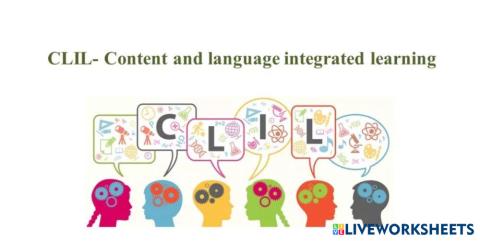
CLIL (Content and Language Integrated Learning), students learn various subjects like history, art, science and math in a foreign language. Rather than being a stand-alone subject, language becomes a skill acquired in the classroom while mastering other types of content.

Tips for Planning and Teaching CLIL Lessons 

As you can see from the lesson plans above, you can get creative with CLIL lessons and include diverse themes! Whether you want to make your own lesson plan or you’ll be working off these examples, here are some ways to make your CLIL lessons even more effective:  

Teach vocabulary separately 

Pick the important concepts and words and teach them in isolation from the main lesson. I usually prep students by doing this beforehand, but you can also choose to wait until after the class.

During the class, assume your students are native speakers of the target language and just teach the subject. For example, when the lesson is about math, teach actual addition and subtraction, not the translation of the word “addition” in German. Teach the math and be a math teacher for the duration of the activity.

In the course of the lesson, kids will be compelled to use their critical thinking skills to figure out the meanings of any unknown words. 

Include authentic materials

Aside from CLIL materials on the subject you want, look for authentic materials too about the subject at hand. For example, on top of CLIL-specific materials about philosophy in German, I’d look for native German discussions, blogs, websites, forums and book excerpts about philosophy too

There are three particular sites that I often check because they’re loaded with authentic materials and educational links:

  • Government sites and ministries. One of the aims of national leadership, for all states, is the education of their populace. So you can be sure that their websites have links to resources that can help you find material for CLIL. For example, the site for France’s Ministry of National Educationhas links to academic sites and even its own search engine.
  • Websites for the top universities in the country. Naturally, these sites are replete with links to the latest research, publications, lessons and journals. You may also find online libraries, databases and even e-books you could use. Take the example of Technische Universität München, one of the top universities in Germany.
  • Forums for native speakers. When you join these forums, you’ll have reached the inner sanctum of the country—at least online. Read the posts and discussion and you’ll have an insider’s look not only at their relationship problems, you’ll find in their postings, links to sites that native speakers actually use and recommend to each other. This one’s big in China.

Give simple worksheets

Keep any CLIL worksheets visually appealing and user-friendly. Avoid overcrowding it or making it too “busy.”

Use a consistent font and style throughout—ideally a basic font that won’t be distracting. Include lots of pictures and graphs to enhance the visual appearance. 

These are my favorite resource websites for worksheets:

  • One Stop English — This site provides unique English CLIL resources that can be adapted to any language. You’ll find puzzles, crosswords, vocabulary worksheets and more catering to a range of ages.
  • Teachers Pay Teachers — As the name suggests, this is a platform where teachers can sell resources that they’ve created to other teachers. Just look up “CLIL Teaching Resources,” and you can even filter for worksheets and select them by subject and grade. 
  • Scholastic’s Teacher Resources — This is a great place to find worksheet ideas to fit any subject you’re teaching through CLIL. You can get grade-appropriate lesson plans here on everything from literature to basic science to economics.
  • Instant Online Crossword Puzzle Maker— This non-traditional worksheet option is great for teaching vocabulary in any subject or language in an engaging way. You can use this instant crossword maker to easily produce fun worksheets targeting any vocabulary set you’re working on. 
  • Pinterest — Mostly known for craft and home decor inspiration, this popular platform is now also a go-to source for great lesson plan ideas, especially for elementary school children. Just type “CLIL” into the search bar plus the name of the target language (e.g. “CLIL italiano”). 

Do scaffolding

Give the students the temporary support they need to reach higher levels of comprehension and mastery, in terms of both the language and the content.

Begin with simple tasks and work your way up to those that are more complex. Give clear directions and explain concepts in multiple ways to ensure understanding.

I sometimes start with intro exercises where students match vocabulary with images, followed by guided readings where key vocabulary is highlighted. After that, students can do more involved discussions and activities that involve problem-solving and research.

Use gestures, visual aids and props. 

You used to just stand there and talk. With CLIL, not anymore. Illustrate what you’re speaking about, and you’ll see that students are better able to grasp your message.

Break up presentations with videos and images that students will find interesting. You can show mind maps or flowcharts to explain more complicated processes. 

I also try to bring props whenever I can. I’ve used 3D models of different shapes in math when explaining concepts like area or volume and even puppets for storytelling. If the subject is history or geography, these might be objects related to what the students are learning.


British families

English language

British Families

British families come in all shapes and sizes. Traditionally, the nuclear family, consisting of two parents and their children, was the norm. However, the structure of British families has evolved over the years.

The traditional British family typically consisted of a father, a mother, and their biological or adopted children, living together under one roof.

In recent years, changes in British family structures include an increase in the number of single-parent households, often due to factors like divorce or separation. Additionally, there has been a rise in stepfamilies where parents from previous relationships come together with their children. Extended families, with multiple generations living together, have also become more common.

British families today often include single-parent households, stepfamilies, and extended families. These changes reflect the diverse society in the United Kingdom.

Diverse family structures in the UK today may include families with same-sex parents, families with a mix of cultural backgrounds, and families with close bonds to relatives who live abroad.

The increasing diversity of British family structures can be attributed to changes in societal norms, more liberal attitudes towards marriage and relationships, and the influence of globalization, which brings people from various cultural backgrounds into contact with one another.

In British culture, family gatherings and celebrations are important. Major holidays like Christmas and Easter are typically celebrated with extended family, and many families have their own unique traditions.

Family gatherings and celebrations in British culture foster a sense of togetherness, strengthen family bonds, and provide an opportunity for people to reconnect with distant relatives. These events are often characterized by festive meals, gift-giving, and traditions that have been passed down through generations.

One unique family tradition in my own family involves an annual summer camping trip where we gather by a lake, share stories around a campfire, and participate in friendly outdoor competitions. It's a special time for us to reconnect and create lasting memories.

Additionally, British families place a strong emphasis on education and typically support their children through various stages of their academic journey. Education is seen as a key to future success.

Education is highly valued in British families because it is seen as the pathway to personal growth, career opportunities, and economic stability. Parents often encourage their children to excel in their studies and may provide additional tutoring or resources to support their learning.

In my own family, support for my education includes my parents helping me with homework, providing access to educational resources, and discussing my academic goals and aspirations.

In recent years, there has been a growing trend of families in the United Kingdom sharing household responsibilities more equally, with both parents taking on roles in childcare and housekeeping.

The trend of sharing household responsibilities equally in British families involves both parents being actively involved in child-rearing and household chores, challenging traditional gender roles. This trend reflects a shift towards gender equality and work-life balance.

I believe that sharing household responsibilities equally is a positive trend because it promotes gender equality, allows parents to share the joys and challenges of parenting, and can lead to more harmonious family dynamics. It also sets a positive example for children, showing them that responsibilities should be shared based on capabilities rather than gender.

1: What was the traditional structure of a British family?

a) A family consisting of a single parent and their children.

b) A family consisting of two parents and their children.

c) A family consisting of grandparents and their grandchildren.

2: In recent years, what changes have occurred in the structure of British families?

a) There has been a decrease in the number of single-parent households.

b) Extended families have become less common.

c) There has been an increase in the number of stepfamilies.

3: What is the role of family gatherings and celebrations in British culture?

a) They are unimportant and rarely celebrated in British culture.

b) They provide an opportunity for family members to bond and reconnect.

c) They are limited to immediate family members only.

4: Why is education highly valued in British families?

a) Education is seen as a way to prevent family members from spending too much time together.

b) Education is a way to maintain traditional family values.

c) Education is seen as a key to personal growth, career opportunities, and economic stability.

5: What is the significance of the trend of sharing household responsibilities equally in British families?

a) It reinforces traditional gender roles.

b) It promotes gender equality and work-life balance.

c) It discourages both parents from being actively involved in child-rearing and housekeeping.


t

  • Social Studies
  • 7th grade

สร้างและปรับแต่งใบงานสำหรับทุกห้องเรียน

LiveWorksheets ทำให้คุณครู ผู้ปกครอง และผู้สอนแบบโฮมสคูล สามารถออกแบบและมอบสื่อการเรียนรู้ที่น่าสนใจได้อย่างง่ายดาย เพียงอัปโหลดไฟล์ PDF หรือเริ่มต้นสร้างใหม่ทั้งหมด คุณก็สามารถทำได้ทุกอย่าง ไม่ว่าจะเป็นใบงานคณิตศาสตร์แบบโต้ตอบ ใบงานอ่านจับใจความ ใบงานการคูณ หรือใบงานสำหรับเด็กอนุบาล ด้วยขั้นตอนเพียงไม่กี่คลิก เครื่องมือแก้ไขแบบลากและวางของเรารองรับทุกระดับชั้นและทุกวิชา ช่วยให้คุณปรับเนื้อหาให้ตรงกับแผนการสอน การบ้าน หรือแบบทดสอบ ครูสอนภาษาอังกฤษ (ESL) ยังสามารถสร้างใบงาน ESL แบบเฉพาะ เพิ่มตารางเสียงภาษาอังกฤษ หรือออกแบบกิจกรรม ESL เพื่อให้การเรียนสนุกและมีส่วนร่วมมากขึ้น สร้างกิจกรรมที่ปรับระดับได้ ตรวจอัตโนมัติ ช่วยประหยัดเวลา และสนับสนุนการเรียนรู้ของนักเรียนให้ดียิ่งขึ้น

คลังสื่อการเรียนรู้ครบวงจรสำหรับ K-12 และ ESL

เข้าถึงใบงานที่พร้อมใช้หลายพันชุด ครอบคลุมทุกวิชาในระดับ K-12 รวมถึงใบงานอนุบาล ใบงานคณิตศาสตร์ แบบฝึกการคูณ แบบฝึกอ่านจับใจความ และทรัพยากร ESL เลือกค้นหาตามชั้นเรียน วิชา หรือระดับทักษะ เพื่อให้ได้สิ่งที่คุณต้องการ ไม่ว่าจะสำหรับห้องเรียนประถม ทบทวนในระดับมัธยมต้น หรือการฝึกในระดับมัธยมปลาย ครู ESL ยังสามารถสำรวจคลังใบงาน ESL และกิจกรรมภาษาอังกฤษที่ออกแบบมาเพื่อรองรับผู้เรียนทุกระดับ เนื้อหาใหม่ถูกเพิ่มเข้ามาอย่างต่อเนื่อง LiveWorksheets จึงเป็นทรัพยากรที่ยืดหยุ่นและช่วยสร้างผลลัพธ์การเรียนรู้ที่ยั่งยืน