Test1

English as a Second Language (ESL)

School Subjects May Soon Be a Thing of the Past in Finland

Despite having one of the best education systems in the world, Finland is introducing some extraordinary changes to classrooms around the country.

Under the new National Curriculum Framework, which came into effect in August 2016, schools must provide one phenomenon based learning (PBL) project per year.

Rather than focusing on a subject, phenomenon based learning focuses on a topic which students explore from multiple perspectives. A topic like climate change, for instance, could be studied form of the perspective of science, economics, environmental studies, and politics.

The aim of PBL is to highlight the connections between subjects, and to show how subjects relate to real world issues.

Kirsti Lonka, a professor of educational psychology at Helsinki University believes that PBL encourages critical thinking. Where traditional education teaches students what to think, PBL teaches students how to think – a skill which Lonka says is essential in the 21st century.

The idea of phenomenon based learning, however, is not without its critics.

Physics teacher Jussi Tanhuanpaa worries that students will not learn enough about individual subjects to be able to study them at a higher level. He also fears that while PBL may benefit brighter students, those who need guidance will struggle.

Some academics are concerned that there is little evidence showing the effectiveness of PBL.

Anneli Rautiainen of Finland's national agency for education recognizes these concerns and says that PBL is being introduced slowly. Education is highly decentralized in Finland, which gives educators in each municipality the freedom to arrange curriculums as they see fit.

Finland’s education system is already unique in many ways. Children start formal schooling at age 7, the school day is only around 5 hours long, class sizes are small, students are rarely assigned homework, and all teachers must have a master’s degree.

Media

English language

STUDENTS THINK FAKE NEWS IS FACT AND ARE USING IT IN THEIR SCHOOLWORK, SAY TEACHERS

Teachers are frustrated that students can’t accept that some stories on social networks are false, while experts suggest that students need better education about online dangers. Students believe that fake news is a fact, and are repeating it in lessons and using it in written work, teachers have warned. More than a third of teachers say their students have used false information that they found online, according to a survey by a teacher’s union.

The union’s general secretary Chris Keates said that the information was "worrying" and it showed that internet companies have a lot of power to influence people’s opinions, especially young people. International education experts are becoming more worried about the situation and say that teachers will need to teach children how to spot fake news. Others were frustrated that students didn’t believe that news they had seen on Facebook and other social media sites was not true, even when the problem was explained to them. One teacher said that students often thought that fake news sites were real, and also that anything that President Donald Trump said was a fact. Last week, German officials said they would give fines of up to 50 million euro to social networks if they didn’t take down illegal fake news posts. The new law would give social networks 24 hours to delete or block the content and seven days to concentrate on more complicated cases. Commenting on the results of the survey, Ms. Keates said that she was worried about the trend, particularly because many young people have never known a world without internet, and are less able to judge whether information that they read online is real or fake. She added that: "It is important for children and young people to be made aware that not everything they see and read online is real."

She said that teachers are trying to help educate students about using false information, but added that it was important for internet providers and websites to take responsibility for any material that is available, and also to deal with people who misuse their services. Last month, Andreas Schleicher, the director of education and skills at OECD (The Organization of Economic co-operation and Development) said that in the modern age, being able to tell the difference between what is real and what is fake is a critical skill. He added that: "This is something that we believe schools can do something about."

Adapted from the Independent by Rachel Pells, April 12th, 2017

CLIL

English as a Foreign Language (EFL)

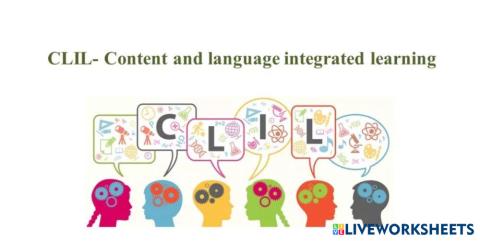
CLIL (Content and Language Integrated Learning), students learn various subjects like history, art, science and math in a foreign language. Rather than being a stand-alone subject, language becomes a skill acquired in the classroom while mastering other types of content.

Tips for Planning and Teaching CLIL Lessons 

As you can see from the lesson plans above, you can get creative with CLIL lessons and include diverse themes! Whether you want to make your own lesson plan or you’ll be working off these examples, here are some ways to make your CLIL lessons even more effective:  

Teach vocabulary separately 

Pick the important concepts and words and teach them in isolation from the main lesson. I usually prep students by doing this beforehand, but you can also choose to wait until after the class.

During the class, assume your students are native speakers of the target language and just teach the subject. For example, when the lesson is about math, teach actual addition and subtraction, not the translation of the word “addition” in German. Teach the math and be a math teacher for the duration of the activity.

In the course of the lesson, kids will be compelled to use their critical thinking skills to figure out the meanings of any unknown words. 

Include authentic materials

Aside from CLIL materials on the subject you want, look for authentic materials too about the subject at hand. For example, on top of CLIL-specific materials about philosophy in German, I’d look for native German discussions, blogs, websites, forums and book excerpts about philosophy too

There are three particular sites that I often check because they’re loaded with authentic materials and educational links:

  • Government sites and ministries. One of the aims of national leadership, for all states, is the education of their populace. So you can be sure that their websites have links to resources that can help you find material for CLIL. For example, the site for France’s Ministry of National Educationhas links to academic sites and even its own search engine.
  • Websites for the top universities in the country. Naturally, these sites are replete with links to the latest research, publications, lessons and journals. You may also find online libraries, databases and even e-books you could use. Take the example of Technische Universität München, one of the top universities in Germany.
  • Forums for native speakers. When you join these forums, you’ll have reached the inner sanctum of the country—at least online. Read the posts and discussion and you’ll have an insider’s look not only at their relationship problems, you’ll find in their postings, links to sites that native speakers actually use and recommend to each other. This one’s big in China.

Give simple worksheets

Keep any CLIL worksheets visually appealing and user-friendly. Avoid overcrowding it or making it too “busy.”

Use a consistent font and style throughout—ideally a basic font that won’t be distracting. Include lots of pictures and graphs to enhance the visual appearance. 

These are my favorite resource websites for worksheets:

  • One Stop English — This site provides unique English CLIL resources that can be adapted to any language. You’ll find puzzles, crosswords, vocabulary worksheets and more catering to a range of ages.
  • Teachers Pay Teachers — As the name suggests, this is a platform where teachers can sell resources that they’ve created to other teachers. Just look up “CLIL Teaching Resources,” and you can even filter for worksheets and select them by subject and grade. 
  • Scholastic’s Teacher Resources — This is a great place to find worksheet ideas to fit any subject you’re teaching through CLIL. You can get grade-appropriate lesson plans here on everything from literature to basic science to economics.
  • Instant Online Crossword Puzzle Maker— This non-traditional worksheet option is great for teaching vocabulary in any subject or language in an engaging way. You can use this instant crossword maker to easily produce fun worksheets targeting any vocabulary set you’re working on. 
  • Pinterest — Mostly known for craft and home decor inspiration, this popular platform is now also a go-to source for great lesson plan ideas, especially for elementary school children. Just type “CLIL” into the search bar plus the name of the target language (e.g. “CLIL italiano”). 

Do scaffolding

Give the students the temporary support they need to reach higher levels of comprehension and mastery, in terms of both the language and the content.

Begin with simple tasks and work your way up to those that are more complex. Give clear directions and explain concepts in multiple ways to ensure understanding.

I sometimes start with intro exercises where students match vocabulary with images, followed by guided readings where key vocabulary is highlighted. After that, students can do more involved discussions and activities that involve problem-solving and research.

Use gestures, visual aids and props. 

You used to just stand there and talk. With CLIL, not anymore. Illustrate what you’re speaking about, and you’ll see that students are better able to grasp your message.

Break up presentations with videos and images that students will find interesting. You can show mind maps or flowcharts to explain more complicated processes. 

I also try to bring props whenever I can. I’ve used 3D models of different shapes in math when explaining concepts like area or volume and even puppets for storytelling. If the subject is history or geography, these might be objects related to what the students are learning.


Types of Institutions

Belizean Studies

Name: ________________

Class: ________________

Date: _________________


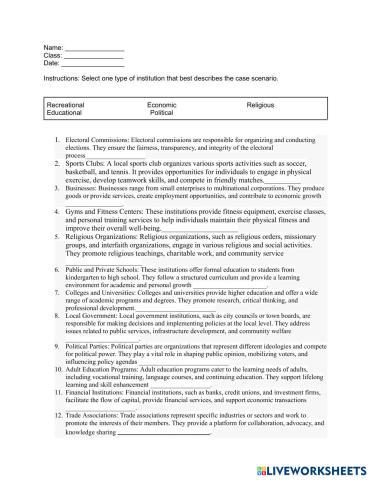
Instructions: Select one type of institution that best describes the case scenario. 


Recreational                                  Economic                                      Religious 

Educational                                     Political 


  1. Electoral Commissions: Electoral commissions are responsible for organizing and conducting elections. They ensure the fairness, transparency, and integrity of the electoral process__________________
  2. Sports Clubs: A local sports club organizes various sports activities such as soccer, basketball, and tennis. It provides opportunities for individuals to engage in physical exercise, develop teamwork skills, and compete in friendly matches.__________
  3. Businesses: Businesses range from small enterprises to multinational corporations. They produce goods or provide services, create employment opportunities, and contribute to economic growth _________________.
  4. Gyms and Fitness Centers: These institutions provide fitness equipment, exercise classes, and personal training services to help individuals maintain their physical fitness and improve their overall well-being._____________________
  5. Religious Organizations: Religious organizations, such as religious orders, missionary groups, and interfaith organizations, engage in various religious and social activities. They promote religious teachings, charitable work, and community service _____________________
  6. Public and Private Schools: These institutions offer formal education to students from kindergarten to high school. They follow a structured curriculum and provide a learning environment for academic and personal growth ______________________.
  7. Colleges and Universities: Colleges and universities provide higher education and offer a wide range of academic programs and degrees. They promote research, critical thinking, and professional development.________________________
  8. Local Government: Local government institutions, such as city councils or town boards, are responsible for making decisions and implementing policies at the local level. They address issues related to public services, infrastructure development, and community welfare ______________________.
  9. Political Parties: Political parties are organizations that represent different ideologies and compete for political power. They play a vital role in shaping public opinion, mobilizing voters, and influencing policy agendas ___________________________
  10. Adult Education Programs: Adult education programs cater to the learning needs of adults, including vocational training, language courses, and continuing education. They support lifelong learning and skill enhancement __________________.
  11. Financial Institutions: Financial institutions, such as banks, credit unions, and investment firms, facilitate the flow of capital, provide financial services, and support economic transactions _____________________.
  12. Trade Associations: Trade associations represent specific industries or sectors and work to promote the interests of their members. They provide a platform for collaboration, advocacy, and knowledge sharing _________________________.
  13. Places of Worship: Churches, mosques, temples, and synagogues are places of worship where individuals gather for religious ceremonies, prayers, and community activities____________.
  14. Religious Education Institutions: These institutions provide religious education and training to individuals, such as Sunday schools, seminaries, and religious colleges ______________.
  15. Town or County Recreation Departments: These departments offer a wide range of recreational programs and facilities for community members. They may organize events like summer camps, swimming lessons, and fitness classes to promote an active and healthy lifestyle.____________________________


สร้างและปรับแต่งใบงานสำหรับทุกห้องเรียน

LiveWorksheets ทำให้คุณครู ผู้ปกครอง และผู้สอนแบบโฮมสคูล สามารถออกแบบและมอบสื่อการเรียนรู้ที่น่าสนใจได้อย่างง่ายดาย เพียงอัปโหลดไฟล์ PDF หรือเริ่มต้นสร้างใหม่ทั้งหมด คุณก็สามารถทำได้ทุกอย่าง ไม่ว่าจะเป็นใบงานคณิตศาสตร์แบบโต้ตอบ ใบงานอ่านจับใจความ ใบงานการคูณ หรือใบงานสำหรับเด็กอนุบาล ด้วยขั้นตอนเพียงไม่กี่คลิก เครื่องมือแก้ไขแบบลากและวางของเรารองรับทุกระดับชั้นและทุกวิชา ช่วยให้คุณปรับเนื้อหาให้ตรงกับแผนการสอน การบ้าน หรือแบบทดสอบ ครูสอนภาษาอังกฤษ (ESL) ยังสามารถสร้างใบงาน ESL แบบเฉพาะ เพิ่มตารางเสียงภาษาอังกฤษ หรือออกแบบกิจกรรม ESL เพื่อให้การเรียนสนุกและมีส่วนร่วมมากขึ้น สร้างกิจกรรมที่ปรับระดับได้ ตรวจอัตโนมัติ ช่วยประหยัดเวลา และสนับสนุนการเรียนรู้ของนักเรียนให้ดียิ่งขึ้น

คลังสื่อการเรียนรู้ครบวงจรสำหรับ K-12 และ ESL

เข้าถึงใบงานที่พร้อมใช้หลายพันชุด ครอบคลุมทุกวิชาในระดับ K-12 รวมถึงใบงานอนุบาล ใบงานคณิตศาสตร์ แบบฝึกการคูณ แบบฝึกอ่านจับใจความ และทรัพยากร ESL เลือกค้นหาตามชั้นเรียน วิชา หรือระดับทักษะ เพื่อให้ได้สิ่งที่คุณต้องการ ไม่ว่าจะสำหรับห้องเรียนประถม ทบทวนในระดับมัธยมต้น หรือการฝึกในระดับมัธยมปลาย ครู ESL ยังสามารถสำรวจคลังใบงาน ESL และกิจกรรมภาษาอังกฤษที่ออกแบบมาเพื่อรองรับผู้เรียนทุกระดับ เนื้อหาใหม่ถูกเพิ่มเข้ามาอย่างต่อเนื่อง LiveWorksheets จึงเป็นทรัพยากรที่ยืดหยุ่นและช่วยสร้างผลลัพธ์การเรียนรู้ที่ยั่งยืน