Present Perfect Tense

Writing - English Language

📝 Student Instruction: Present Perfect Tense

  1. When do we use Present Perfect?
  • To talk about actions or experiences at an unspecified time in the past.

    • I have visited Japan.
  • To talk about actions that started in the past and continue until now.

    • She has lived here for 10 years.
  • To talk about actions that happened in the past but still have a result now.

    • He has broken his leg (he can’t walk now).
  1. Form
  • Affirmative (+): Subject + have/has + past participle (V3)

    • I have eaten breakfast.
    • She has finished her homework.
  • Negative (–): Subject + have/has + not + past participle

    • I haven’t seen that movie.
    • He hasn’t called me.
  • Question (?): Have/Has + subject + past participle

    • Have you visited London?
    • Has she done her homework?
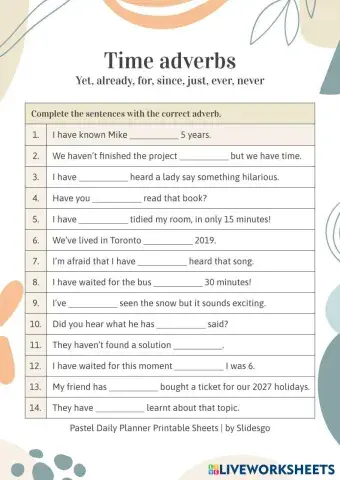
  1. Time expressions used with Present Perfect
  • just → I have just finished my homework.
  • already → She has already eaten.
  • yet → Have you finished yet? / I haven’t finished yet.
  • ever → Have you ever been to Paris?
  • never → I have never seen snow.
  • for (a period of time) → for 5 years
  • since (a starting point) → since 2010
  1. Examples
  • We have studied English for three years.
  • He has never played basketball.
  • Have they arrived yet?

👉 Practice Example:
Change the verb into Present Perfect.

  1. I (see) that movie three times. → I have seen that movie three times.
  2. She (not finish) her homework yet. → She hasn’t finished her homework yet.
  3. (they / travel) to London before? → Have they traveled to London before?

TAREA 6

Research - English Language

Las anteriores imágenes muestran la detención de Nicolás Maduro.

En los grupos creados en la actividad “Think, Pair, Share” tenéis 1 minuto para decidir si estas imágenes son reales o no.


Estas imágenes son FALSAS, como ya han dicho medios como el New York Times, o RTVE.

En esta actividad vamos a aprender cómo distinguir si una noticia ha sido generada por la IA, o no.

Para ello debemos fijarnos en tres cosas

  1. La fuente: ¿Quién publica esta noticia? Es una fuente fiable?
  2. El contenido: ¿La noticia busca provocar una reacción emocional fuerte?
  3. Los detalles: ¿Hay algo que resulte extraño o incoherente?


Paso 1.

Añadid las imágenes proporcionadas en Google Lens.

Cuando las busquéis, os aparecerán las fuentes que han subido esta noticia/imágenes. Rellenad la siguiente checklist:

  • ¿La cuenta o web es oficial, verificada o conocida?
  • ¿Aparece la noticia en varios medios fiables, o solo en una cuenta de redes sociales?
  • ¿Se citan periodistas, instituciones o expertos reales?

Paso 2. 

  • Fijaos en el contenido. Completad la siguiente checklist:

  • Se usan palabras exageradas.
  • Titulares muy llamativos que no se desarrollan bien en el texto.
  • Falta de datos concretos (fechas, lugares, cifras comprobables).

Paso 3.

Ahora fijaos en las fotos.

¿Hay algo en la imagen, el vídeo o el audio que resulte extraño o incoherente?

  • Rasgos físicos raros (manos deformes, caras poco naturales).
  • Objetos que no encajan con la realidad (uniformes incorrectos, textos borrosos).
  • Vídeos o audios sin contexto claro o sin fuente original.

Paso 4.

Ahora volved a las preguntas de reflexión. ¿Ha cambiado vuestra opinión en algo?

La profesora hará sonar una canción y debéis moveros por la clase comentando vuestra opinión sobre este tema hasta que la canción acabe.

สร้างและปรับแต่งใบงานสำหรับทุกห้องเรียน

LiveWorksheets ทำให้คุณครู ผู้ปกครอง และผู้สอนแบบโฮมสคูล สามารถออกแบบและมอบสื่อการเรียนรู้ที่น่าสนใจได้อย่างง่ายดาย เพียงอัปโหลดไฟล์ PDF หรือเริ่มต้นสร้างใหม่ทั้งหมด คุณก็สามารถทำได้ทุกอย่าง ไม่ว่าจะเป็นใบงานคณิตศาสตร์แบบโต้ตอบ ใบงานอ่านจับใจความ ใบงานการคูณ หรือใบงานสำหรับเด็กอนุบาล ด้วยขั้นตอนเพียงไม่กี่คลิก เครื่องมือแก้ไขแบบลากและวางของเรารองรับทุกระดับชั้นและทุกวิชา ช่วยให้คุณปรับเนื้อหาให้ตรงกับแผนการสอน การบ้าน หรือแบบทดสอบ ครูสอนภาษาอังกฤษ (ESL) ยังสามารถสร้างใบงาน ESL แบบเฉพาะ เพิ่มตารางเสียงภาษาอังกฤษ หรือออกแบบกิจกรรม ESL เพื่อให้การเรียนสนุกและมีส่วนร่วมมากขึ้น สร้างกิจกรรมที่ปรับระดับได้ ตรวจอัตโนมัติ ช่วยประหยัดเวลา และสนับสนุนการเรียนรู้ของนักเรียนให้ดียิ่งขึ้น

คลังสื่อการเรียนรู้ครบวงจรสำหรับ K-12 และ ESL

เข้าถึงใบงานที่พร้อมใช้หลายพันชุด ครอบคลุมทุกวิชาในระดับ K-12 รวมถึงใบงานอนุบาล ใบงานคณิตศาสตร์ แบบฝึกการคูณ แบบฝึกอ่านจับใจความ และทรัพยากร ESL เลือกค้นหาตามชั้นเรียน วิชา หรือระดับทักษะ เพื่อให้ได้สิ่งที่คุณต้องการ ไม่ว่าจะสำหรับห้องเรียนประถม ทบทวนในระดับมัธยมต้น หรือการฝึกในระดับมัธยมปลาย ครู ESL ยังสามารถสำรวจคลังใบงาน ESL และกิจกรรมภาษาอังกฤษที่ออกแบบมาเพื่อรองรับผู้เรียนทุกระดับ เนื้อหาใหม่ถูกเพิ่มเข้ามาอย่างต่อเนื่อง LiveWorksheets จึงเป็นทรัพยากรที่ยืดหยุ่นและช่วยสร้างผลลัพธ์การเรียนรู้ที่ยั่งยืน