

The Present Simple tense often seems basic, but don’t let that fool you. Students frequently struggle with it in ways you might not expect. Why do some third graders confidently say, “I play soccer,” but then freeze when asked, “She ___ (play) soccer”?
Understanding the progression of how students learn the Present Simple can make a huge difference in teaching it effectively.
Let’s break it down and see how you can guide your learners from simple sentences to confident communication.
Introduction to the Present Simple
Students usually meet the Present Simple tense in early elementary grades, often around first or second grade for ESL learners, depending on their exposure.
They start by learning the basic subject-verb structure, like “I eat,” “You run,” and “We play.” Teachers often introduce it through everyday routines - talking about habits, daily activities, and familiar actions.
Visual aids, songs, and repetition work wonders here. At this stage, students are more likely to grasp the form if they associate it with concrete actions.
How Students Develop Understanding
Once the basics are in place, students start adding the third-person singular form: “He plays,” “She eats,” “It runs.” This is where many mistakes occur, especially with irregular verbs and the addition of “s” or “es.”
Teachers can scaffold learning by providing practice sentences, games, and oral exercises. Over time, students move from rote repetition to understanding the rules and recognizing patterns in sentences.
By late elementary or early middle school, most students can use the Present Simple confidently in both speech and writing.
Grade-Level Application
Typically, the Present Simple is introduced in grades 1–2 for young ESL learners and reinforced through grade 5. In general education classrooms, it aligns with teaching basic sentence construction, verb agreement, and everyday communication.
By middle school, students are expected to combine the Present Simple with other tenses in more complex sentences, making the early foundation crucial.
Teachers often revisit it in writing assignments, reading comprehension exercises, and oral presentations to strengthen retention.
Classroom Strategies & Examples
Practical classroom activities help solidify understanding. Daily routines or “My Day” exercises encourage students to describe actions using the Present Simple.
Matching games, fill-in-the-blank sentences, and short dialogues can reinforce verb agreement. Another effective method is mini-conversations, where students ask and answer questions about habits and routines.
These strategies not only strengthen grammar but also build confidence in speaking and writing.
Conclusion
Yes, students make mistakes with the Present Simple, and yes, some verbs will always be tricky. But understanding when and how students learn it and providing structured, engaging practice makes a significant difference.
Worksheet Suggestion:
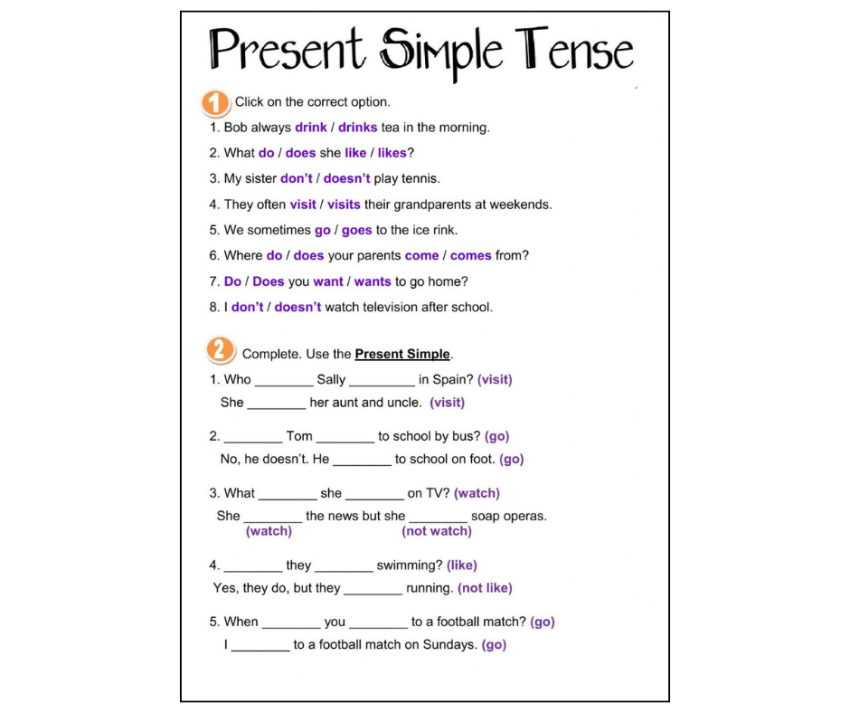
Worksheet: Present Simple Practice – Daily Routines
This worksheet includes fill-in-the-blank sentences, matching activities, and short writing prompts. Students practice subject-verb agreement, third-person singular forms, and sentence construction in the context of daily activities.
It reinforces the progression from simple sentences to accurate and confident usage.