


111 Onomatopoeia Examples (+ How to Use Them in Sentences)
Want to make your writing pop, fizz, and sizzle?
Onomatopoeia words can help. They sound like real-life noises and make writing more fun.
This guide will show you what onomatopoeia is, how to use it, and give you 111 onomatopoeia examples for your next lesson.
What Is Onomatopoeia? (The Buzz on Sound Words)
Onomatopoeia is a term that imitates the actual noise it represents. Try reading out buzz, crackle, or boom. Listen to that? It replicates the sound heard in real life. That's the charm of onomatopoeia.
Authors employ these imitative words to create sentences that are filled with vigor. And here's the interesting bit—children adore them. They are fun and build foundational literacy skills.
Onomatopoeia can be used by teachers to teach phonics, build vocabulary, and enhance reading. The sound words bridge figurative language and written words in a smooth way. That makes it stick with learners.
Need a tip?
The next time someone hears a clap or a chirp, seize the moment. Create a quick writing activity or sound scavenger hunt. Let sound spark learning and bring language teaching to life.
How to Use an Onomatopoeia Word in a Sentence
More Than Just a Bang or a Pow!
Onomatopoeia is not limited to comic books. True, wham and pow are thrilling words, but onomatopoeia has so much more to give. You can use onomatopoeia as verbs, nouns, or adjectives.
Here's a verb: "The bacon sizzled in the pan." That indicates action. Now do an adjective: "I prefer crunchy chips." That adds to the description.
These small adjustments make writing stronger. They assist students in writing with detail and sound.
Here's a good idea: Demonstrate to students how one onomatopoeia word can be used in various ways. That develops grammar knowledge and keeps writing more fascinating.
Onomatopoeia vs. Interjections
Understanding the difference between onomatopoeia and interjections helps students use each one correctly.
An onomatopoeia word, like meow or crackle, imitates a real sound. Meow sounds like a cat. Crackle sounds like fire. These words help readers hear what’s happening.
Interjections are different. They show emotion. Words such as ouch or wow, show emotion, but don’t copy a sound from nature or objects.
Here’s the fun part: some words can be both. Achoo sounds like a sneeze and also shows surprise.
Experiment with both styles in your next writing class. It's an effective way of teaching through doing.
111 Examples of Onomatopoeia That Will Make Your Writing Sizzle
Animal Sounds: From a Howl and a Hiss to a Bark and a Roar
- The cat meows softly when she wants attention.
- The cow moos loudly in the pasture.
- The dog barks at every passing car.
- The lion roars majestically in the wild.
- The bear growls menacingly at intruders.
- A lone wolf howls at the full moon.
- The horse neighs when excited.
- The pig squeals when picked up.
- The puppy whines for its favorite toy.
- The snake hisses when threatened.
- The duck quacks as it waddles to the pond.
- The goose honks while flying south.
- The mother hen clucks to her chicks.
- The rooster cock-a-doodle-doos at dawn.
- The bird chirps cheerfully in the morning.
- Birds tweet outside my window every morning.
- The kitten purrs contentedly on my lap.
- The owl hoots mysteriously in the darkness.
- The frog croaks by the lily pad.
- The bee buzzes from flower to flower.
Human Sounds: A Giggle, a Slurp, a Hiccup, and an Ahem
- The children giggle at the funny joke.
- She cleared her throat with an ahem before speaking.
- The baby hiccups after drinking milk.
- He gasped in surprise at the final reveal.
- The patient groaned softly after the surgery.
- My dad snores so loudly it shakes the walls.
- Dad slurps his soup noisily.
- He gulps nervously before the presentation.
- The witch cackles in the spooky story.
- Grandpa wheezes when climbing stairs.
- The students chatter excitedly during recess.
- Mom hums her favorite lullaby.
- The teenage boy burps loudly at dinner.
- Uncle Joe belches after every meal.
- The detective sniffs for clues.
- He snorts with laughter at the joke.
- The crowd murmurs in anticipation.
- She whispers secrets to her best friend.
- The baby gurgles happily in the bath.
- The tired student mumbles the answer.
- Grandma says achoo when she sneezes.
Impact Sounds: The Boom, Bang, Thump, and Crunch of Collisions
-
- Thunder booms across the stormy sky.

- The door bangs shut in the wind.
- The cars crashed with a deafening sound.
- He heard the window smash into a thousand pieces.
- Heavy books thump onto the desk.
- The heavy package thuds on the porch.
- The superhero bams through the wall.
- The teacher smacks the ruler on the board.
- He gave the ball a good whack with the bat.
- Autumn leaves crunch underfoot.
- The ice cracks under pressure.
- Twigs snap beneath hiking boots.
- The fire crackles in the fireplace.
- Pots and pans clatter in the kitchen.
- Wine glasses clink during the toast.
- Shopping carts bump into each other.
- The chains clank in the dungeon.
- The stone fell into the water with a kerplunk.
Sounds of Movement: The Drip, Whoosh, Sizzle, and Puff of Action
- Wind whooshes through the trees.
- The basketball swooshes through the net.
- The silk dress swished as she walked.
- The race car zoomed past the finish line.
- The wind whipped her hair across her face.
- The flag flapped in the breeze.
- Water drips steadily from the faucet.
- Raindrops plop into the puddle.
- Rain goes pitter-patter on the roof.
- Water gushes from the broken pipe.
- Children splash in the swimming pool.
- Milk sloshes in the container.
- Mud splats against the window.
- Bacon sizzles in the hot pan.
- Soda fizzes when opened.
- The balloon went pop with a loud bang.
- The dragon puffs smoke from its nostrils.
- Leaves rustle in the gentle breeze.
- Butterfly wings flutter gracefully.
- The snake slithered silently through the grass.
- Feet shuffle across the floor.
- He flicked the switch to turn on the light.
This diverse collection of onomatopoeia demonstrates how these words function similarly to basic phonetic patterns that students encounter in early reading instruction, making them excellent tools for reinforcing sound-letter relationships.
Object Sounds: A Jangle, Rattle, Creak, and Tick-Tock
- The clock goes tick-tock rhythmically.
- The alarm clock beeps persistently.
- Electronic devices bleep with notifications.
- The telephone rings loudly.
- The doorbell goes ding-dong.
- Sleigh bells jingle in the winter snow.
- Keys jangle in the pocket.
- The driver honked the horn at the car in front.
- The motorcycle vroomed down the street.
- Cars rumble down the highway.
- The train goes choo-choo down the track.
- The factory machines whir day and night.
- The refrigerator hummed quietly.
- Steam engines sputter to life.
- Old floorboards creak in the night.
- The rusty gate squeaks open.
- Brakes screech on wet pavement.
- Metal pipes clang together.
- She clicked the pen before taking notes.
- Hands clap enthusiastically.
- Springs boing when compressed.
- Guitar strings twang when plucked.
- He could feel the deep thrum of the bass.
- The large gong sounded, signaling dinner.
- The baby’s toy rattles softly.
- Zippers zip up jackets.
- He crinkled the empty chip bag.
- A single raindrop made a plink in the metal bucket.
- Fabric swishes as dancers move.
- The fire extinguisher went whoosh as it sprayed foam.
Famous Onomatopoeia Examples in Culture
Onomatopoeia in Classic Literature
Authors have employed onomatopoeia for centuries to bring their tales to life. Edgar Allan Poe did this in his work The Bells. He coined the term "tintinnabulation" to imitate the sound of bells ringing.
James Joyce took a different path. In Finnegans Wake, he made up super-long words that rumbled like thunder.
Want to spark curiosity in class? Try reading these out loud. These onomatopoeia examples show how sound words in English can create strong emotion, boost imagination, and keep students fully engaged. It’s reading with rhythm—and it sticks.
Onomatopoeia in Branding and Media
Onomatopoeia works great in ads and brands. Sound words stick in your head. Take the Rice Krispies line: “Snap! Crackle! Pop!” Each word matches what the cereal does.
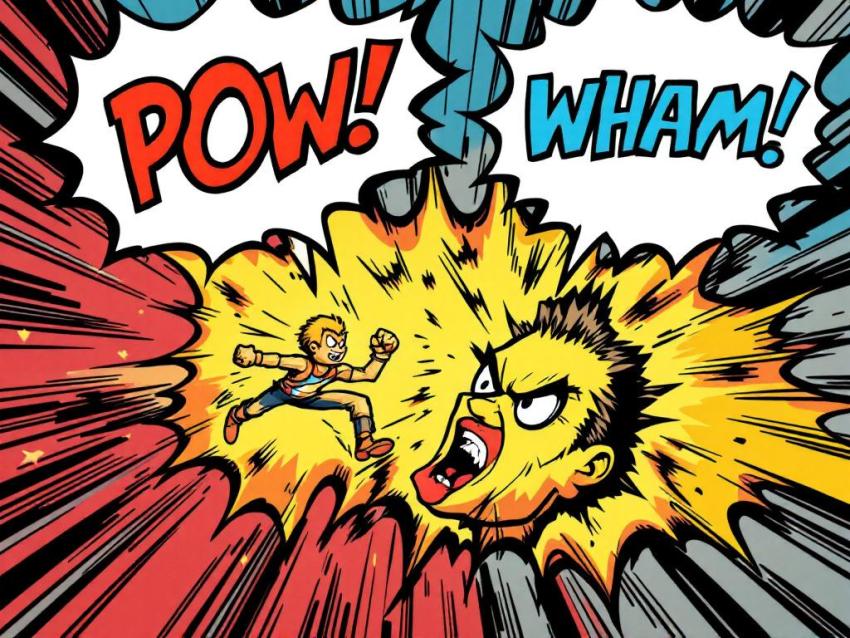
Old Batman shows used words like “Pow!” and “Wham!” to show the action.
Want to have your students observe how words sell? Onomatopoeia enables brands to engage with human beings. It makes for fun messages, speed, and memorability.
Frequently Asked Questions
What makes a word onomatopoeic?
A word is an onomatopoeia when it sounds like what it describes—buzz, bang, or splat. For example, Bang sounds like something crashing. This creates a direct link between the word and the sound.
Can onomatopoeia be used in formal writing?
Not usually. Onomatopoeia terms such as splat, bang, or buzz are reserved for poems, tales, and children's picture books. They allow readers to clearly visualize the sound. Although seldom seen in essays, they're excellent when it comes to creative writing and demonstrating how a sound can influence an instant.
How do different languages handle onomatopoeia?
Yes! Words that imitate sounds are used by people across the globe. A bark from a dog or a crash could sound different in every language, but the concept remains the same.
Are onomatopoeia words considered real words?
They definitely are. There are many onomatopoeia examples in the dictionary. Some of them are fabricated, but they are still included in creative writing.
Can students create their own onomatopoeia words?
Yes! Let them do it. Children enjoy creating funny sound words. Onomatopoeias assist them in considering how letters and sounds made interact. And it's fun!
How can teachers use onomatopoeia in lessons?
Use them in reading and writing classes. They assist with phonics and vocabulary. They also add fun to learning. Experiment with the list of 111 examples to make your classes come alive.