วัสดุศาสตร์

Physical Science - Science

ถังขยะมูลฝอยแบบแยกประเภท

1. สีเขียว รองรับขยะที่เน่าเสียและย่อยสลายได้ สามารถ นำมาหมักทำปุ๋ยได้เช่น ผัก ผลไม้ เศษอาหาร ใบไม้ มีสัญลักษณะที่ถังเป็นรูปก้างปลาหรือเศษอาหาร

2. สีเหลือง รองรับขยะที่สามารถนามารีไซเคิลหรือขาย ได้ เช่น แก้วกระดาษพลาสติก โลหะ

3.สี แดง หรือสีเทาฝาสีส้ม รองรับขยะที่มีอันตรายต่อสิ่งมีชีวิต และสิ่งแวดล้อมเช่น หลอดฟลูออเรสเซนต์ ขวดยา ถ่านไฟฉาย กระป๋องสีสเปรย์ กระป๋องยาฆ่าแมลง ภาชนะบรรจุสารอันตรายต่าง ๆ

4. สีฟ้าหรือสีน้าเงิน รองรับขยะทั่วไป คือ ขยะมูลฝอยประเภทอื่นนอกจากขยะย่อยสลาย ขยะรีไซเคิลและขยะอันตราย ขยะทั่วไปจะมีลักษณะที่ย่อยสลายยาก ไม่คุ้มค่าสาหรับการนากลับไปใช้ประโยชน์ใหม่ เช่น พลาสติกห่อลูกอม ซองบะหมี่สาเร็จรูป ถุงพลาสติกโฟมและฟอล์ยที่เปื้อนอาหาร

ทคโนโลยีการกำจัดมูลฝอยชุมชนสามารถแบ่งเป็น 5 ประเภท ที่เป็นที่ยอมรับในระดับ สากล ดังนี้

1. เทคโนโลยีการผลิตพลังงานมูลฝอยชุมชนโดยใช้เตาเผา (Incinerator)

เทคโนโลยีการก าจัดวัสดุเหลือทิ้งด้วยการเผา สามารถแบ่งรูปแบบของการเผาได้ 2 ประเภท ดังนี้

          1) เตาเผาแบบเชิงตะกอน แบบนี้ง่ายและธรรมดาที่สุดส าหรับเศษวัสดุในครัวเรือนขนาดเล็ก โดยเอาเชื้อไฟและ เศษวัสดุซ้อนกันเป็นชั้นๆบนพื้นดิน แล้วจุดไฟเผาเลย การเผาแบบนี้ ไม่ควรท าในแหล่งชุมชน เพราะถ้ามีลมพัดอาจท าให้เกิดอัคคีภัย หรือเศษเขม่าไฟปลิวเข้าบ้านเรือนได้ นอกจากในพื้นที่ นอกเมืองที่บางครั้งชาวบ้านต้องการเผาตอไม้หรือเศษตกค้างเพื่อเตรียมดินส าหรับการ เพาะปลูก

           2) เตาเผาแบบถังเผา การเตาเผาแบบถังเผา จะใช้ถังเหล็กขนาด 200 ลิตรเจาะรูด้านข้างให้อากาศเข้า ซึ่งจะ ปลอดภัยกว่าแบบเชิงตะกอน แม้มีลมพัด เปลวไฟและเศษวัสดุติดไฟก็จะถูกจ ากัดอยู่ในถังเหล็ก นี้ อย่างไรก็ตาม การก าจัดเศษวัสดุของตนเองภายในบ้านควรต้องระมัดระวังเป็นอย่างมาก เพราะเศษวัสดุบางชนิดอาจมีพิษหรือมีกลิ่นรบกวนชาวบ้านได้ ควรท าครั้งละน้อย ๆ จะดีกว่า และควรรับผิดชอบถ้าเกิดความเสียหายแก่ผู้อื่น

2. เทคโนโลยีการผลิตก๊าซเชื้อเพลิงจากมูลฝอยชุมชน (MSW Gasification)

          เตาเผาแบบตะกรับเคลื่อนที่ ซึ่งเป็นเทคโนโลยีที่ใช้กันแพร่หลาย โดยการเคลื่อนที่ของ ตะกรับ ทำให้เศษวัสดุที่ถูกเผาเคลื่อนไปในห้องเผาไหม้ ถูกเผาได้อย่างสมบูรณ์มากยิ่งขึ้น เตาเผาแบบนี้บางทีถูกเรียกว่าเตาเผาเศษวัสดุชุมชน (Municipal Solid Waste Incinerator) เศษวัสดุจะถูกป้อนด้วยเครนเข้าไปใน"คอหอย" ซึ่งเป็นปลายของตะกรับด้านหนึ่งที่อยู่ด้านบน จากนั้นตะกรับจะเลื่อนลง พาเศษวัสดุไปที่ตะกรับบานล่าง ต่อๆกันไปยังบ่อขี้เถ้าที่ปลายอีกด้าน หนึ่ง ขี้เถ้าจะถูกคัดออกผ่านม่านน้ า ของแข็งที่เผาไม่หมด จะตกลงที่พื้นด้านล่าง

3. เทคโนโลยีการผลิตเชื้อเพลิงขยะ (Refuse Derived Fuel)

    หลักการทำงานของเทคโนโลยีเชื้อเพลิงขยะ (RDF) เริ่มจากการคัดแยกขยะที่ไม่สามารถ เผาไหม้ได้ (โลหะ แก้ว เศษ หิน) ขยะอันตราย และขยะรีไซเคิลออกจากขยะรวม โดยคัดแยก มูลฝอยที่มีเหล็กและอลูมิเนียมเป็นส่วนประกอบออกจากมูลฝอย จากนั้นจึงป้อนขยะมูลฝอยไป เข้าเครื่องสับ-ย่อยเพื่อลดขนาด และป้อนเข้าเตาอบเพื่อลดความชื้นของมูลฝอย โดยการใช้ ความร้อนจากไอน้ าหรือลมร้อนเพื่ออบขยะให้แห้งซึ่งจะท าให้น้ าหนักลดลงเกือบ ร้อยละ 50 (ความชื้นเหลือไม่เกิน ร้อยละ 15) และสุดท้ายจะส่งไปเข้าเครื่องอัดเม็ด (Pellet) เพื่อท าให้ได้ เชื้อเพลิงขยะอัดเม็ดที่มีขนาดและความหนาแน่นเหมาะสมต่อการขนส่งไปจ าหน่ายเป็น เชื้อเพลิง

4. เทคโนโลยีการย่อยสลายแบบไม่ใช้ออกซิเจน (Anaerobic Digestion)

      การย่อยสลายแบบไม่ใช้ออกซิเจน (Anaerobic Digestion) ซึ่งเป็นขั้นตอน การผลิตก๊าซชีวภาพจากขยะมูลฝอยอินทรีย์ส าหรับน าไปใช้เป็นพลังงาน และเพื่อท าให้ขยะมูล ฝอยอินทรีย์ถูกย่อยสลายเปลี่ยนเป็นอินทรียวัตถุที่มีความคงตัว ไม่มีกลิ่นเหม็น ปราศจากเชื้อ โรคและเมล็ดวัชพืช โดยอาศัยการท างานของจุลินทรีย์ในสภาพที่ไร้ออกซิเจน ซึ่งขั้นตอนการ ย่อยสลายแบบไม่ใช้ออกซิเจนนี้สามารถแบ่งออกได้ 2 ประเภทหลักๆ คือ Dry Digestion Process และ Wet Digestion Process ซึ่งมีการควบคุมการป้อนสารอินทรีย์เข้าสู่ระบบ ให้ ปริมาณของแข็งทั้งหมด (Total Solid Content) ให้เป็นประมาณร้อยละ 20-40 และน้อยกว่า ร้อยละ 20 ตามล าดับ

5. เทคโนโลยีการผลิตพลังงานโดยใช้ก๊าซชีวภาพจากหลุมฝังกลบมูลฝอยชุมชน (Landfill Gas-to-Enaergy)

     การกำจัดขยะชุมชนด้วยวิธีการฝังกลบนั้น เป็นการน าขยะชุมชนมากองหรือฝังกลบใน พื้นที่จัดเตรียมไว้ แล้วเครื่องจักรเกลี่ยและบดอัดให้ขยะมูลฝอยยุบตัวลงจนมีความหนาแน่นนข องชั้นขยะมูลฝอยตามที่ก าหนด จากนั้นใช้ดินบดทับและอัดให้แน่นอีกครั้งหนึ่งแล้วจึงน าขยะมูล ฝอยชุมชนมาเกลี่ยและบดอัดอีกเป็นชั้น ๆ สลับด้วยชั้นดินกลบทับเพื่อป้องกันปัญหาเรื่องกลิ่น แมลง น้ำชะขยะ และเหตุเดือนร้อนรำคาญอื่น ๆ ปฏิกิริยาการย่อยสลายสารอินทรีย์ในขยะ

Our Senses

Psychology

Our five senses include __________, _____________, _______________, ______________,_____________

Sure! Here's a worksheet with 25 questions about the senses of smell and taste:

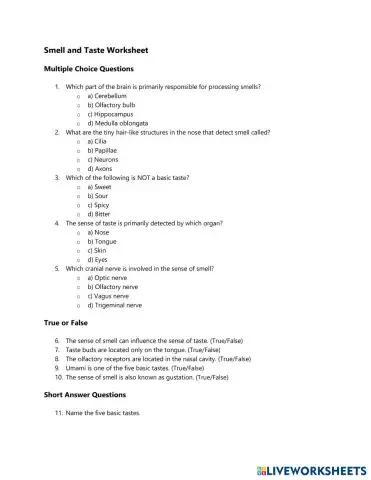
Smell and Taste Worksheet

Multiple Choice Questions

  1. Which part of the brain is primarily responsible for processing smells?

    • a) Cerebellum
    • b) Olfactory bulb
    • c) Hippocampus
    • d) Medulla oblongata
  2. What are the tiny hair-like structures in the nose that detect smell called?

    • a) Cilia
    • b) Papillae
    • c) Neurons
    • d) Axons
  3. Which of the following is NOT a basic taste?

    • a) Sweet
    • b) Sour
    • c) Spicy
    • d) Bitter
  4. The sense of taste is primarily detected by which organ?

    • a) Nose
    • b) Tongue
    • c) Skin
    • d) Eyes
  5. Which cranial nerve is involved in the sense of smell?

    • a) Optic nerve
    • b) Olfactory nerve
    • c) Vagus nerve
    • d) Trigeminal nerve

True or False

  1. The sense of smell can influence the sense of taste. (True/False)
  2. Taste buds are located only on the tongue. (True/False)
  3. The olfactory receptors are located in the nasal cavity. (True/False)
  4. Umami is one of the five basic tastes. (True/False)
  5. The sense of smell is also known as gustation. (True/False)

Short Answer Questions

  1. Name the five basic tastes.
  2. Describe the role of the olfactory bulb in the sense of smell.
  3. How do taste buds detect different flavors?
  4. Explain how the sense of smell can affect the sense of taste.
  5. What is the function of cilia in the nasal cavity?

Fill in the Blanks

  1. The sense of taste is also known as __.
  2. __ are the sensory receptors for smell.
  3. The __ nerve carries signals from the taste buds to the brain.
  4. __ is the taste associated with savory flavors.
  5. The __ is the part of the brain that processes smell information.

Matching

  1. Match the taste with its description:

    • Sweet
    • Sour
    • Salty
    • Bitter
    • Umami

    a) Associated with amino acids and savory flavors b) Often found in citrus fruits c) Commonly found in sugary foods d) Typically found in salty snacks e) Often associated with bitter compounds like caffeine

  2. Match the term with its definition:

    • Olfactory bulb
    • Taste buds
    • Cilia
    • Papillae
    • Olfactory nerve

    a) Structures on the tongue that contain taste receptors

  3. b) Hair-like structures in the nasal cavity
  4. c) Nerve that transmits smell information to the brain
  5. d) Brain structure involved in processing smells e) Small bumps on the tongue that contain taste buds

Essay Questions

  1. Discuss the relationship between the senses of smell and taste and how they work together to create the perception of flavor.
  2. Explain the process of olfaction from the detection of odor molecules to the perception of smell in the brain.
  3. Describe how different factors, such as age and health, can affect the senses of smell and taste.

Feel free to adjust or add more questions as needed! If you need any further assistance, just let me know.

Create and Customize Worksheets for Every Classroom

LiveWorksheets makes it easy for teachers, parents and homeschool educators to design and deliver engaging learning materials. Upload a PDF or start from scratch to create what you need: anything from interactive math worksheets to reading comprehension worksheets, multiplication worksheets, and kindergarten worksheets in just a few clicks. Our drag-and-drop editor works across all grade levels and subjects, so you can tailor content to your lesson plans, homework, or assessments. ESL teachers can also build custom ESL worksheets, add a common sound chart, or integrate ESL activities to make each class more engaging. Easily create differentiated, auto-graded activities that save valuable time and support better student learning.

A Complete Library of Learning Resources for K-12 and ESL

Access thousands of ready-to-use worksheets across K-12 subjects, including kindergarten worksheets, math worksheets, multiplication practice, reading comprehension exercises, and ESL resources. Filter by grade, subject, or skill level to find exactly what you need, whether it’s for an elementary classroom, middle school review, or high school practice. ESL teachers can explore our growing collection of ESL worksheets and English as a Second Language activities designed to support all levels of learners. With new content added regularly, LiveWorksheets is a flexible resource that helps build lasting learning outcomes.