New: Give students instant feedback with Practice Mode Learn how
English as a Second Language (ESL)
Most Popular
Newest
Oldest
A-Z
Z-A
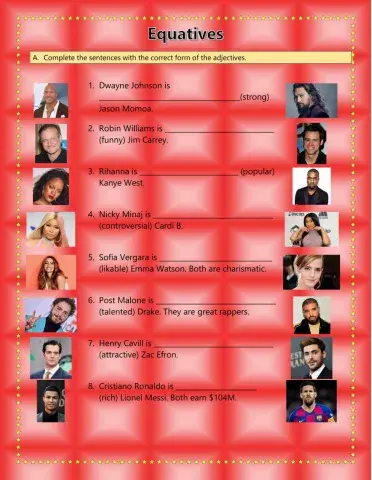
With this worksheet students can complete sentences to compare celebrities.
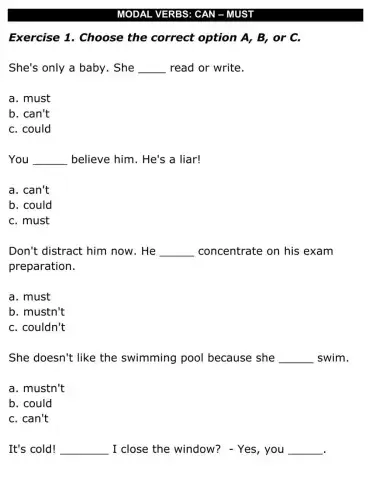
Modals: Can and Must
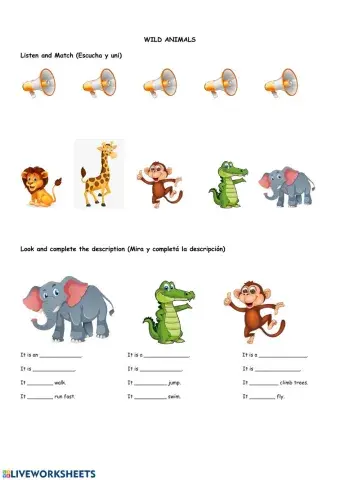
A worksheet to practise animals, can and can't and has got.
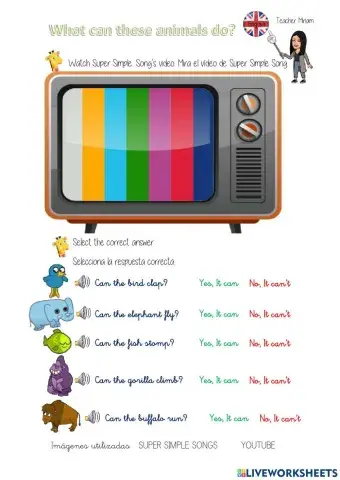
what can they do?
Watch Super Simple Song’s video. Select the correct answer.
Animals vocabulary and can/can't
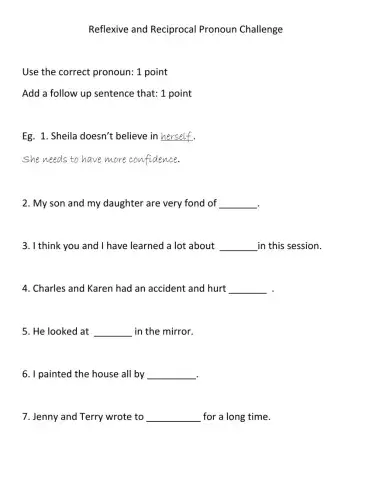
Learners can get immediate feedback on reflexive and reciprocal pronouns. They are also challenged to write a follow up sentence to create more context. Perhaps have them share their work in groups (break out rooms).
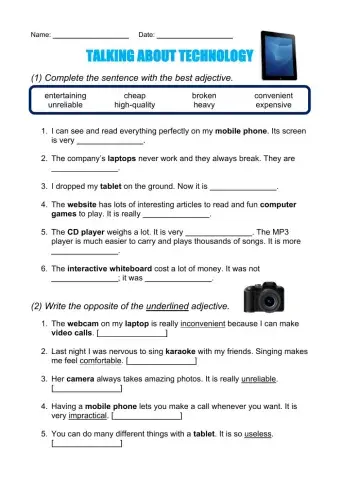
An useful practice on adjectives, so we can express opinions about new technologies.
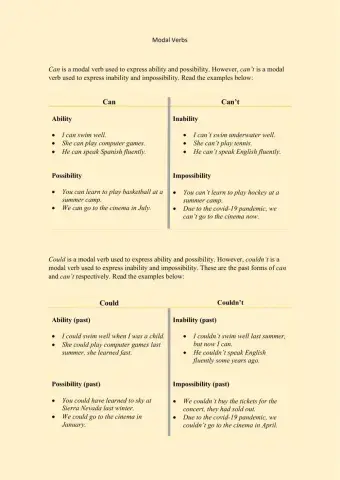
Modal verbs: can, could, should, must. Language functions: ability, inability, possibility, impossibility, advice, prohibition, obligation.
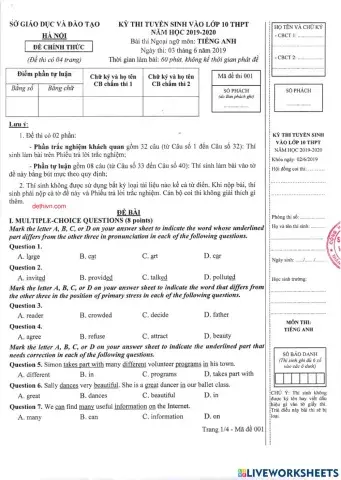
Students can test their knowledge they have learnt for 4 years at 2nd school
it's good for practicing and can be used as a test
Listening and reading tasks
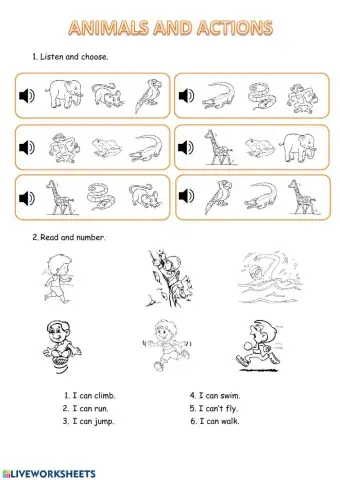
A worksheet to practise animals, can, has got and order sentences
You can know more about food, quantities of food and food containers.
Can for abilities and permissions
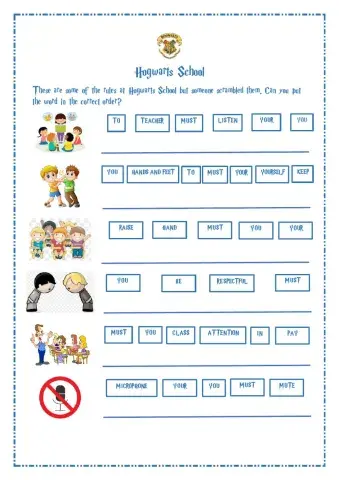
Can you put these words in order?
Put the words in order.
Listen and drag
Count the objects and then match the name with the correct picture
Obtain information from the audio
Students can practice counting bugs
can can't activities
Let's talk about sports and abilities.
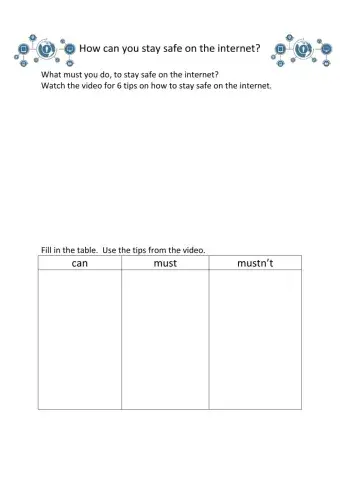
a short video and then table of must / can / mustn't


 Switch to New Search Page