
Created by

Angie0126
Author's Instructions
Theoretical Framework
🔹 What is Conflict?
A conflict is a disagreement or struggle between people or groups caused by different interests, needs, values, or goals. Conflicts are natural, but the way we handle them determines whether they have positive or negative consequences.
“Conflict is inevitable, but violence is not.” – Johan Galtung (Peace Theorist)
🔹 Types of Conflict:
- Interpersonal: Between individuals (e.g., classmates, friends, family).
- Social/Community: Between groups or sectors of society (e.g., protests, discrimination).
- Internal: Within oneself (e.g., moral dilemmas, decisions).
- Political/Citizen-State: Related to the exercise of rights, inequality, and social justice.
🔹 Why Do Conflicts Arise?
- Lack of communication
- Misunderstanding or stereotypes
- Violation of rights
- Inequality or exclusion
- Power struggles
- Cultural differences
🌍 2. Conflict and Citizenship
A good citizen doesn’t avoid conflict, but works to resolve it respectfully and fairly.
In a democratic society, citizens have both rights and responsibilities. When conflicts arise, solutions must be based on:
- Human rights: Everyone deserves respect, safety, and dignity.
- Social values: Respect, tolerance, solidarity, justice, responsibility.
Conflict Resolution, Social Values & Citizens’ Rights

Created by
Angie0126
Author's Instructions
Theoretical Framework
🔹 What is Conflict?
A conflict is a disagreement or struggle between people or groups caused by different interests, needs, values, or goals. Conflicts are natural, but the way we handle them determines whether they have positive or negative consequences.
“Conflict is inevitable, but violence is not.” – Johan Galtung (Peace Theorist)
🔹 Types of Conflict:
- Interpersonal: Between individuals (e.g., classmates, friends, family).
- Social/Community: Between groups or sectors of society (e.g., protests, discrimination).
- Internal: Within oneself (e.g., moral dilemmas, decisions).
- Political/Citizen-State: Related to the exercise of rights, inequality, and social justice.
🔹 Why Do Conflicts Arise?
- Lack of communication
- Misunderstanding or stereotypes
- Violation of rights
- Inequality or exclusion
- Power struggles
- Cultural differences
🌍 2. Conflict and Citizenship
A good citizen doesn’t avoid conflict, but works to resolve it respectfully and fairly.
In a democratic society, citizens have both rights and responsibilities. When conflicts arise, solutions must be based on:
- Human rights: Everyone deserves respect, safety, and dignity.
- Social values: Respect, tolerance, solidarity, justice, responsibility.
Explore Worksheets

IDEA UTAMA & SAMPINGAN
- Language Arts
- 8th grade
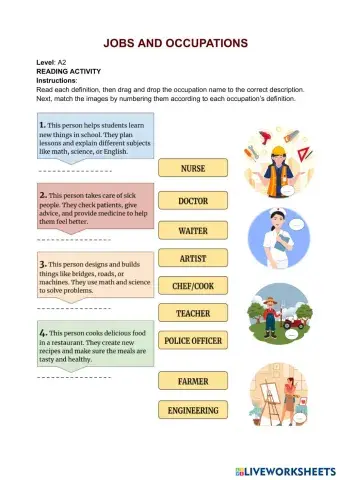
JOBS AND OCCUPATIONS
- Language Arts
- 8th grade

Слово про похід Ігорів
- Language Arts
- 8th grade
