



- English
- Modals in past
- Age 14+
-
level: Highschool
- English
Author's Instructions
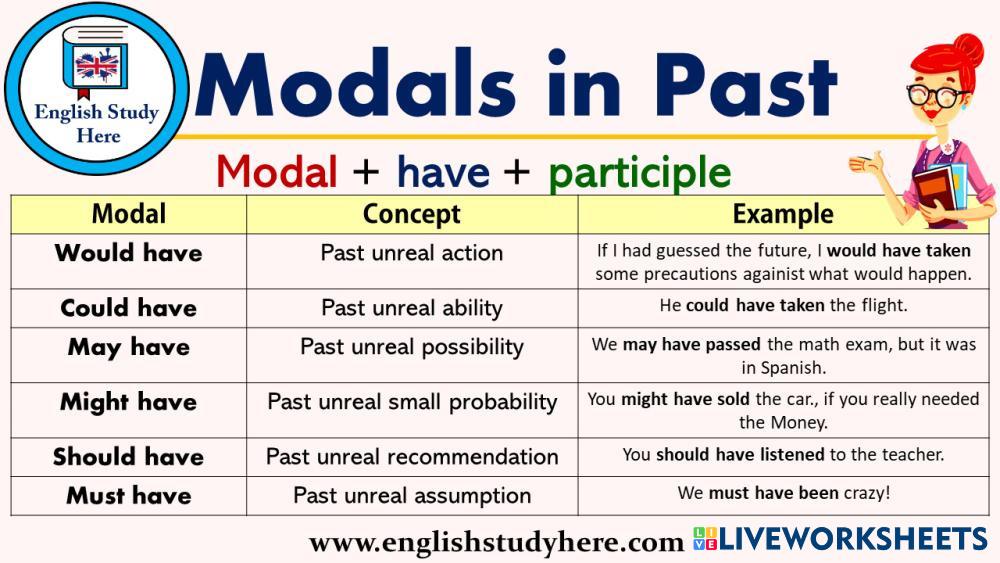
Modal verbs in the past, also known as modal preterite or modal past, are used to express modalities like possibility, necessity, obligation, or permission in the past. In English, the modal verbs "could," "might," "should," and "would" are typically used to convey these modal meanings in the past tense. Here's a brief explanation of each:
-
Could: In the past, "could" is used to express past ability, permission, or possibility. For example:
- "When I was younger, I could run very fast."
- "She said I could borrow her car."
-
Might: "Might" in the past is used to indicate a possibility or uncertainty about past events. For example:
- "I thought it might rain yesterday."
- "They might have already left by the time we arrive."
-
Should: In the past, "should" is used to express obligation, expectation, or probability. For example:
- "You should have studied for the exam."
- "He should have known better."
-
Would: "Would" in the past tense is used to express past habits, preferences, or repeated actions. For example:
- "Every morning, he would walk his dog in the park."
- "When we were kids, we would play outside all day."
My Google Classroom Courses

Quick Access
All Classes

Modals in past.


Active — user can report
 Report this worksheet
Author's Instructions
Modal verbs in the past, also known as modal preterite or modal past, are used to express modalities like possibility, necessity, obligation, or permission in the past. In English, the modal verbs "could," "might," "should," and "would" are typically used to convey these modal meanings in the past tense. Here's a brief explanation of each:
-
Could: In the past, "could" is used to express past ability, permission, or possibility. For example:
- "When I was younger, I could run very fast."
- "She said I could borrow her car."
-
Might: "Might" in the past is used to indicate a possibility or uncertainty about past events. For example:
- "I thought it might rain yesterday."
- "They might have already left by the time we arrive."
-
Should: In the past, "should" is used to express obligation, expectation, or probability. For example:
- "You should have studied for the exam."
- "He should have known better."
-
Would: "Would" in the past tense is used to express past habits, preferences, or repeated actions. For example:
- "Every morning, he would walk his dog in the park."
- "When we were kids, we would play outside all day."