Jarosława Pełszyk

Vocabulary - Language Arts

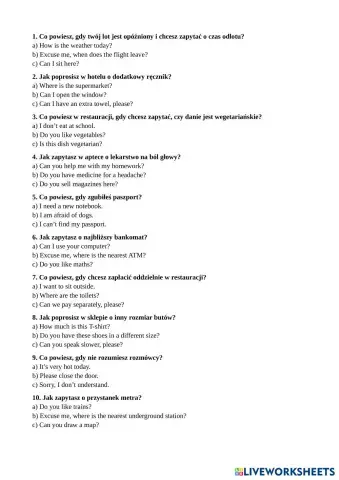
1. Co powiesz, gdy twój lot jest opóźniony i chcesz zapytać o czas odlotu?
a) How is the weather today?
b) Excuse me, when does the flight leave?
c) Can I sit here?

2. Jak poprosisz w hotelu o dodatkowy ręcznik?
a) Where is the supermarket?
b) Can I open the window?
c) Can I have an extra towel, please?

3. Co powiesz w restauracji, gdy chcesz zapytać, czy danie jest wegetariańskie?
a) I don’t eat at school.
b) Do you like vegetables?
c) Is this dish vegetarian?

4. Jak zapytasz w aptece o lekarstwo na ból głowy?
a) Can you help me with my homework?
b) Do you have medicine for a headache?
c) Do you sell magazines here?

5. Co powiesz, gdy zgubiłeś paszport?
a) I need a new notebook.
b) I am afraid of dogs.
c) I can’t find my passport.

6. Jak zapytasz o najbliższy bankomat?
a) Can I use your computer?
b) Excuse me, where is the nearest ATM?
c) Do you like maths?

7. Co powiesz, gdy chcesz zapłacić oddzielnie w restauracji?
a) I want to sit outside.
b) Where are the toilets?
c) Can we pay separately, please?

8. Jak poprosisz w sklepie o inny rozmiar butów?
a) How much is this T-shirt?
b) Do you have these shoes in a different size?
c) Can you speak slower, please?

9. Co powiesz, gdy nie rozumiesz rozmówcy?
a) It’s very hot today.
b) Please close the door.
c) Sorry, I don’t understand.

10. Jak zapytasz o przystanek metra?
a) Do you like trains?
b) Excuse me, where is the nearest underground station?
c) Can you draw a map?

11. Co powiesz, gdy chcesz sprawdzić godzinę odjazdu pociągu do Paryża?
a) What time does the train to Paris leave?
b) Do you have tickets for the concert?
c) Where do you usually eat?

12. Jak poprosisz w hotelu o budzenie na rano?
a) Can I have a wake-up call at 7 a.m., please?
b) Can I have the bill, please?
c) What’s your favourite sport?

13. Co powiesz, gdy chcesz wymienić pieniądze?
a) I don’t have enough time.
b) Do you like shopping?
c) Where can I change money?

14. Jak zapytasz o bezpłatne Wi-Fi w hotelu?
a) Is there a swimming pool?
b) Can I buy a ticket here?
c) Do you have free Wi-Fi?

15. Co powiesz, gdy chcesz zamówić taksówkę na rano?
a) Can you order a taxi for me at 8 a.m.?
b) Can I sit near the window?
c) What’s the time now?

16. Jak poprosisz o polecenie dobrej restauracji?
a) Where is the school?
b) Do you like this restaurant?
c) Can you recommend a good restaurant nearby?

17. Co powiesz, gdy chcesz kupić bilet w dwie strony?
a) I’d like a return ticket, please.
b) Can I have a coffee, please?
c) I want a one-way street.

18. Jak zapytasz o godzinę otwarcia muzeum?
a) Do you like history?
b) How much is the ticket?
c) What time does the museum open?

19. Co powiesz, gdy chcesz zapytać o najbliższą aptekę?
a) Can I have some water?
b) Excuse me, where is the nearest pharmacy?
c) Where are my keys?

20. Jak poprosisz o pomoc, gdy nie możesz znaleźć hotelu?
a) Can you help me with my bag?
b) Excuse me, can you help me find my hotel?
c) I like this city very much.


listenning

Vocabulary - Language Arts

Presenter:
Welcome to the show. Today we are talking about online prank videos. Anya is here with us.

Anya:
If you search for prank videos online, you will find thousands. Millions of people watch them. Some famous creators make a lot of money from these videos.

Many popular channels make videos about trending topics. These videos get a lot of views.

Presenter:
What is a prank?

Anya:
A prank is a joke. Many pranks are funny and harmless. For example, asking people silly questions. When people discover it is a joke, they laugh.

But sometimes pranks are not harmless.

One channel made a video with fake police officers stopping motorbike riders. They asked them to say poems or do exercises. Many people thought it was funny. But pretending to be a police officer is illegal. Some people felt scared.

Presenter:
Can people get in trouble for prank videos?

Anya:
Yes. Four men from London made a fake robbery in an art gallery. They dressed like thieves. People inside the museum were very scared and ran away.

The men went to prison for several weeks.

Now they say they are sorry. They want to make positive videos. Websites like YouTube now ban dangerous prank videos.

Presenter:
Why are prank videos so popular?

Anya:
People like to laugh. Jokes have existed for thousands of years. The internet just makes it easier to share them.

Some videos are really funny.

I saw one with a dog in a fake hamburger stand. There was a sign that said “Bark to order.” People barked to order food! The dog looked like it was working there. People laughed and enjoyed it.

Presenter:
What rules should prank creators follow?

Anya:
Pranks should not hurt people. They should not be dangerous or illegal.
It is important to ask permission before posting a video online.
Creators should think of original ideas.
They should also be respectful and responsible.

Presenter:
Thank you, Anya!

2º UNIT 5

Vocabulary - Language Arts

Ficha de repaso de unidad 5. La ficha se completa y se le da a "finalizar". A continuación aparecerá corregida y con una nota que es orientativa. En ningún caso será una nota que cuente para evaluar a los alumnos. Las actividades se completan de la siguiente forma:

- Actividad 1. Vocabulario: elegir las palabras que faltan para completar el vocabulario. Después, elegir la letra del dibujo que corresponde con la palabra del vocabulario.Si se acerca el cursor a los números, pueden escuchar cómo se pronuncian para repasar para le examen. 

- Actividad 2. Vocabulario: deben elegir la palabra correcta que ven en la imagen. Si se acerca el cursor a los números pueden escuchar cómo se pronuncian para repasar para le examen. 

- Actividad 3. Deben elegir entre I want (yo quiero) y I don´t want (yo no quiero), según se observe en los dibujos de los niños. Si pasan el cursor por los números, pueden escuchar como se pronuncian para repasar para el examen. 

- Actividad 4. Deben escribir para completar: Do you want to+ la palabra del vocabulario que corresponda? (para preguntar si quiere hacer X), fijándose los dibujos (si tienen v es que si y si tienen X es que no). Después viendo las imágenes, deben elegir "Yes, please (si, gracias) o No, thank you (no, gracias) Si ponen el cursor en los números y aparece el altavoz, pueden escuchar la pronunciación de las preguntas. La pronunciación de las respuestas se escucha al poner el cursor en la tabla en la "V" o la "X"

สร้างและปรับแต่งใบงานสำหรับทุกห้องเรียน

LiveWorksheets ทำให้คุณครู ผู้ปกครอง และผู้สอนแบบโฮมสคูล สามารถออกแบบและมอบสื่อการเรียนรู้ที่น่าสนใจได้อย่างง่ายดาย เพียงอัปโหลดไฟล์ PDF หรือเริ่มต้นสร้างใหม่ทั้งหมด คุณก็สามารถทำได้ทุกอย่าง ไม่ว่าจะเป็นใบงานคณิตศาสตร์แบบโต้ตอบ ใบงานอ่านจับใจความ ใบงานการคูณ หรือใบงานสำหรับเด็กอนุบาล ด้วยขั้นตอนเพียงไม่กี่คลิก เครื่องมือแก้ไขแบบลากและวางของเรารองรับทุกระดับชั้นและทุกวิชา ช่วยให้คุณปรับเนื้อหาให้ตรงกับแผนการสอน การบ้าน หรือแบบทดสอบ ครูสอนภาษาอังกฤษ (ESL) ยังสามารถสร้างใบงาน ESL แบบเฉพาะ เพิ่มตารางเสียงภาษาอังกฤษ หรือออกแบบกิจกรรม ESL เพื่อให้การเรียนสนุกและมีส่วนร่วมมากขึ้น สร้างกิจกรรมที่ปรับระดับได้ ตรวจอัตโนมัติ ช่วยประหยัดเวลา และสนับสนุนการเรียนรู้ของนักเรียนให้ดียิ่งขึ้น

คลังสื่อการเรียนรู้ครบวงจรสำหรับ K-12 และ ESL

เข้าถึงใบงานที่พร้อมใช้หลายพันชุด ครอบคลุมทุกวิชาในระดับ K-12 รวมถึงใบงานอนุบาล ใบงานคณิตศาสตร์ แบบฝึกการคูณ แบบฝึกอ่านจับใจความ และทรัพยากร ESL เลือกค้นหาตามชั้นเรียน วิชา หรือระดับทักษะ เพื่อให้ได้สิ่งที่คุณต้องการ ไม่ว่าจะสำหรับห้องเรียนประถม ทบทวนในระดับมัธยมต้น หรือการฝึกในระดับมัธยมปลาย ครู ESL ยังสามารถสำรวจคลังใบงาน ESL และกิจกรรมภาษาอังกฤษที่ออกแบบมาเพื่อรองรับผู้เรียนทุกระดับ เนื้อหาใหม่ถูกเพิ่มเข้ามาอย่างต่อเนื่อง LiveWorksheets จึงเป็นทรัพยากรที่ยืดหยุ่นและช่วยสร้างผลลัพธ์การเรียนรู้ที่ยั่งยืน