Present Simple

English as a Second Language (ESL)

Завдання 1: Заповніть пропуски правильними формами дієслів у Present Simple.

  1. She __________ (work) in a hospital.
  2. They usually __________ (go) to the park on Sundays.
  3. My father __________ (like) to watch football on TV.
  4. Cats __________ (hunt) for mice.

Завдання 2: Перетворіть речення у запитання та запитання у речення у Present Simple.

  1. He reads books. Запитання: __________________________? Заперечення: __________________________.

  2. They eat breakfast in the morning. Запитання: __________________________? Заперечення: __________________________.

Завдання 3: Оберіть правильну форму дієслова (позитивну, заперечну або питальну) для поданих речень.

  1. She (watches / not watch / do you watch) TV in the evening.
  2. I (don't like / doesn't like / like) coffee.
  3. (Do they play / Plays she / Does he play) soccer on Saturdays?

Завдання 4: Виправте помилки у поданих реченнях і переведіть їх у Present Simple.

  1. I am not liking spicy food. Виправлене речення: _______________________________.

  2. He usually going to work by bus. Виправлене речення: _______________________________.

  3. Do she like to swim? Виправлене речення: _______________________________.

Draft 1

Grammar - Language Arts

# Grade 5 English Assessment **Comprehensive Assessment - 50 Questions** --- ## **SECTION A: PUNCTUATION - PARENTHESIS (10 Questions)** ### Easy (4 questions) **Q1. Multiple Choice** Which punctuation mark is NOT used for parenthesis? - A) Commas - B) Brackets - C) Dashes - D) Apostrophes **Answer:** D --- **Q2. True or False** This sentence uses parenthesis correctly: "My teacher Mr. Collins (who loves cricket) assigned us homework today." **Answer:** True --- **Q3. Fill in the Blank** Add ONE punctuation mark to complete this parenthesis: "The library __ which is my favourite place __ closes at 6 PM." **Answer:** Commas (accepts: commas / , ) --- **Q4. Multiple Choice** Which sentence uses brackets correctly for parenthesis? - A) The concert [it was amazing] ended late. - B) The concert (it was amazing ended late). - C) The concert it was (amazing) ended late. - D) The concert it was amazing [ended late. **Answer:** A --- ### Medium (4 questions) **Q5. Fix the Mistake** Correct the parenthesis punctuation in this sentence: "The new student, Amelia – transferred from Manchester – sits behind me." **Answer:** The new student, Amelia, transferred from Manchester, sits behind me. OR The new student – Amelia, transferred from Manchester – sits behind me. (Accept either consistent pair) --- **Q6. Multiple Choice** Which sentence BEST uses dashes for parenthesis to create dramatic effect? - A) The winner, surprisingly, was announced. - B) The winner (surprisingly) was announced. - C) The winner – surprisingly – was announced. - D) The winner "surprisingly" was announced. **Answer:** C --- **Q7. Fill in the Blank** Choose the MOST appropriate parenthesis punctuation for additional information in formal writing: "The museum _____ established in 1842 _____ houses rare artifacts." **Answer:** Brackets or ( ) (accepts: brackets, parentheses, ( )) --- **Q8. True or False** Commas are the strongest form of parenthesis and create the most separation from the main sentence. **Answer:** False --- ### Difficult (2 questions) **Q9. Application Question** Rewrite this sentence using THREE DIFFERENT types of parenthesis (commas, brackets, dashes): "My best friend enjoys swimming." Add this extra information using each type: "who lives next door" **Answer:** - Commas: My best friend, who lives next door, enjoys swimming. - Brackets: My best friend (who lives next door) enjoys swimming. - Dashes: My best friend – who lives next door – enjoys swimming. --- **Q10. Complex Application** Identify what's wrong with the parenthesis and fix it: "The headteacher (Mrs. Rahman, announced – surprisingly) that we would have extra break time." **Answer:** The headteacher, Mrs. Rahman, announced (surprisingly) that we would have extra break time. OR The headteacher – Mrs. Rahman – announced (surprisingly) that we would have extra break time. (Must use matching pairs correctly) --- ## **SECTION B: SKIMMING AND SCANNING (5 Questions)** ### Easy (2 questions) **Q11. Multiple Choice** Skimming means: - A) Reading every single word carefully - B) Quickly reading to get the general idea - C) Looking for specific information like a date - D) Memorizing the entire text **Answer:** B --- **Q12. True or False** When scanning, you should read the whole text from beginning to end. **Answer:** False --- ### Medium (2 questions) **Q13. Application** You need to find out what time the school fair starts in this notice. Should you use SKIMMING or SCANNING? **Answer:** Scanning --- **Q14. Multiple Choice** Which of these would you do when SKIMMING a story? - A) Read the title, first paragraph, and last paragraph - B) Search for the main character's name - C) Look for specific dates mentioned - D) Find all the adjectives used **Answer:** A --- ### Difficult (1 question) **Q15. Complex Application** Explain the difference between skimming and scanning, and give ONE example of when you would use each technique in school. **Ans

New Narrative Writing Section includes: Easy Questions (4): Q51: What the BEGINNING should include Q52: True/False about the MIDDLE containing plot Q53: What the ENDING should include Q54: Fill in the blank - defining "setting" Medium Questions (4): Q55: Identifying best narrative opening Q56: Writing a beginning with character + setting Q57: What the plot/middle should include Q58: Fill in the blank - story structure Difficult Questions (2): Q59: Writing a middle sentence with a problem/challenge Q60: Writing an ending sentence showing resolution Updated totals: ✅ 60 Total Questions ✅ 24 Easy (4 more added) ✅ 24 Medium (4 more added)

Grammar points

English Grammar

  • Present Simple Tense

    • Structure: Subject + base verb (s/es for he/she/it)
    • Example: "I work in an office." / "She goes to school every day."
  • Present Continuous Tense

    • Structure: Subject + am/are/is + verb-ing
    • Example: "I am studying right now." / "They are playing football."
  • Past Simple Tense

    • Structure: Subject + past form of verb
    • Example: "She visited the museum yesterday." / "I watched a movie last night."
  • Past Continuous Tense

    • Structure: Subject + was/were + verb-ing
    • Example: "I was reading when the phone rang." / "They were sleeping at 10 PM."
  • Future Simple Tense (will)

    • Structure: Subject + will + base verb
    • Example: "I will call you tomorrow." / "They will come to the party."
  • Future with "going to"

    • Structure: Subject + am/are/is + going to + base verb
    • Example: "I’m going to visit my grandparents." / "He is going to study abroad."
  • Present Perfect Simple

    • Structure: Subject + have/has + past participle
    • Example: "I have finished my homework." / "She has lived in this city for five years."
  • Comparatives and Superlatives

    • Comparatives: Subject + verb + adjective + -er / more + adjective (for longer adjectives)
      • Example: "This book is cheaper than that one." / "She is more intelligent than him."
    • Superlatives: The + adjective + -est / most + adjective (for longer adjectives)
      • Example: "This is the tallest building." / "He is the most hardworking person."
  • There is/There are

    • Structure: There + is/are + noun
    • Example: "There is a book on the table." / "There are many people in the park."
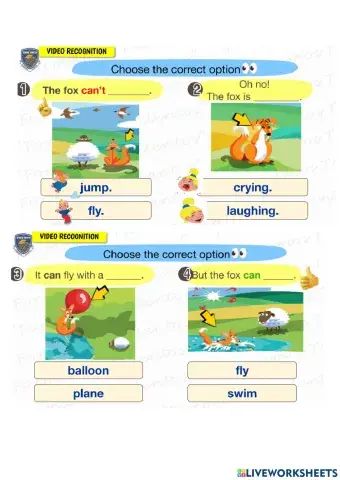
  • Can (ability and permission)

    • Structure: Subject + can + base verb
    • Example: "I can swim." / "Can I go to the bathroom?"
  • Some and Any

    • Some: Used in positive statements, offers, and requests.
      • Example: "I have some friends." / "Would you like some tea?"
    • Any: Used in negative statements and questions.
      • Example: "I don’t have any money." / "Do you have any pens?"
  • First Conditional

    • Structure: If + present simple, will + base verb
    • Example: "If it rains, I will stay at home." / "If I see her, I will say hello."
  • Second Conditional

    • Structure: If + past simple, would + base verb
    • Example: "If I were rich, I would travel the world." / "If she studied more, she would pass the exam."
  • Prepositions of Place and Time

    • Examples: "in," "on," "at"
    • "The book is on the table." / "We have a meeting at 3 PM." / "I live in New York."
  • Questions with Wh- words

    • Examples: "What," "Where," "When," "Why," "How"
    • "What is your name?" / "Where do you live?" / "How are you?"

สร้างและปรับแต่งใบงานสำหรับทุกห้องเรียน

LiveWorksheets ทำให้คุณครู ผู้ปกครอง และผู้สอนแบบโฮมสคูล สามารถออกแบบและมอบสื่อการเรียนรู้ที่น่าสนใจได้อย่างง่ายดาย เพียงอัปโหลดไฟล์ PDF หรือเริ่มต้นสร้างใหม่ทั้งหมด คุณก็สามารถทำได้ทุกอย่าง ไม่ว่าจะเป็นใบงานคณิตศาสตร์แบบโต้ตอบ ใบงานอ่านจับใจความ ใบงานการคูณ หรือใบงานสำหรับเด็กอนุบาล ด้วยขั้นตอนเพียงไม่กี่คลิก เครื่องมือแก้ไขแบบลากและวางของเรารองรับทุกระดับชั้นและทุกวิชา ช่วยให้คุณปรับเนื้อหาให้ตรงกับแผนการสอน การบ้าน หรือแบบทดสอบ ครูสอนภาษาอังกฤษ (ESL) ยังสามารถสร้างใบงาน ESL แบบเฉพาะ เพิ่มตารางเสียงภาษาอังกฤษ หรือออกแบบกิจกรรม ESL เพื่อให้การเรียนสนุกและมีส่วนร่วมมากขึ้น สร้างกิจกรรมที่ปรับระดับได้ ตรวจอัตโนมัติ ช่วยประหยัดเวลา และสนับสนุนการเรียนรู้ของนักเรียนให้ดียิ่งขึ้น

คลังสื่อการเรียนรู้ครบวงจรสำหรับ K-12 และ ESL

เข้าถึงใบงานที่พร้อมใช้หลายพันชุด ครอบคลุมทุกวิชาในระดับ K-12 รวมถึงใบงานอนุบาล ใบงานคณิตศาสตร์ แบบฝึกการคูณ แบบฝึกอ่านจับใจความ และทรัพยากร ESL เลือกค้นหาตามชั้นเรียน วิชา หรือระดับทักษะ เพื่อให้ได้สิ่งที่คุณต้องการ ไม่ว่าจะสำหรับห้องเรียนประถม ทบทวนในระดับมัธยมต้น หรือการฝึกในระดับมัธยมปลาย ครู ESL ยังสามารถสำรวจคลังใบงาน ESL และกิจกรรมภาษาอังกฤษที่ออกแบบมาเพื่อรองรับผู้เรียนทุกระดับ เนื้อหาใหม่ถูกเพิ่มเข้ามาอย่างต่อเนื่อง LiveWorksheets จึงเป็นทรัพยากรที่ยืดหยุ่นและช่วยสร้างผลลัพธ์การเรียนรู้ที่ยั่งยืน