อยากได้แบบฝึกหัดฟรีนับพัน (ไม่มีสิ่งรบกวนเลย)? Here’s how
Search
$1.99/เดือน ด้วยบัญชีฟรี — ลงทะเบียนได้ในไม่กี่วินาที
ได้รับความนิยมมากที่สุด
Newest
Oldest
A-Z
Z-A
English as a Second Language (ESL)
Practice makes perfect
English Language Arts (ELA)
Past Participle #2
English language
Didactic material
Lithuanian - infinitive- past- past participle
Find the base verb, past simple and past participle in English for the Spanish verbs which are given.
Uso de pasta participle y just
Practice makes perfect!
Let's get to know the difference between past participle verbs & simple past verbs.
french as a second or third language
write the past participle in small alphabets
Participles
Group past participle
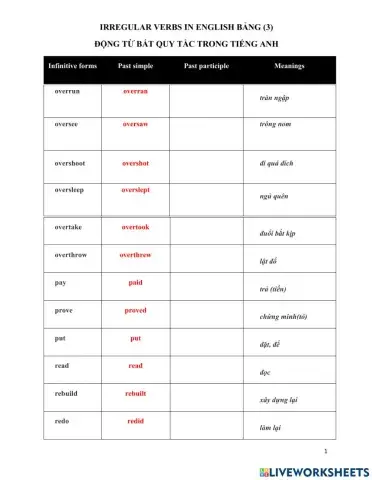
Irregular verbs: Infinirive, past, past participle and meaning.
Vocabulary - Language Arts
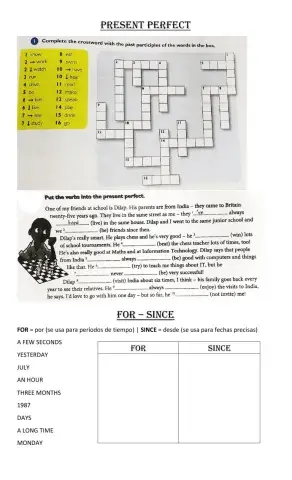
The present perfect simple is have/has + past participle. The past participle oft en ends in -ed (finished/decided etc.), but many verbs are irregular (lost/done/written etc.).
Grammar - ESL
Present perfect and past participle
Grammar - Language Arts
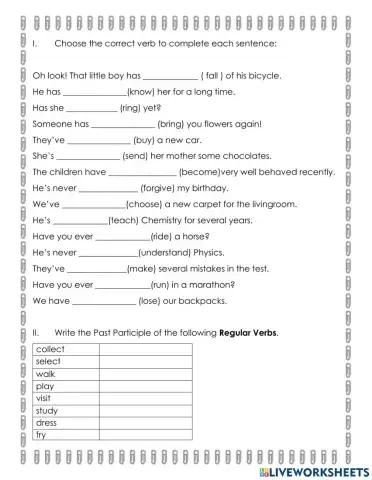
For reviewing Past Participles of Regular and Irregular Verbs
Vocabulary - ESL
Listen, then classify the verbs into regular and irregular verbs and write the corresponding past participle. find 15 words related to reconciliation and peace in the word search.
Practice using participle - to infinitive and concession clauses
Regrets. Presentation of "should have + past participle
Letter soup
Listening activity. Vocabulary practice and past participles.
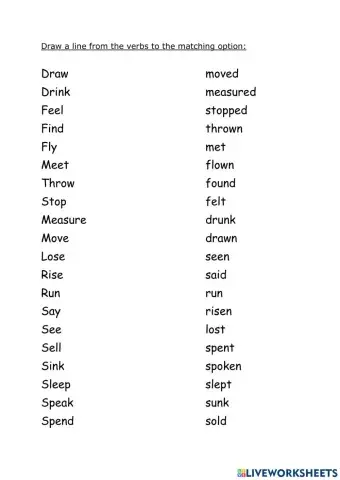
Write the meaning , Past Simple and Past Participle
Make the sentences in the present perfect. Find the past participles of the verbs
Choose correct alternative
Passive voice Worksheet and past participle verbs.
 Switch to New Search Page