Present Simple

English language

​​​​​​

Что такое Present Simple?

Это простое настоящее время, обозначающее действие в самом широком смысле этого слова. Одна из самых распространенных и простых форм в английском языке для описания действий.

Действия могут быть связаны с привычками, хобби, ежедневным событием вроде подъема по утрам или чем-то, что случается регулярно.


Как образуется Present Simple?

Нет ничего проще, чем поставить глагол в форму Present Simple. Для этого нужно убрать у глагола в инфинитиве частицу «to» и поставить глагол после подлежащего. Это и есть основное правило Present Simple.


Утверждение:

I / We / You / They + V

She / He / It + V + s (es)

I go to work every day — Я хожу на работу каждый день.

They usually play tennis every weekend — Они обычно играют в теннис каждые выходные.

She brings me coffee every morning — Она приносит мне кофе каждое утро.

It snows in winter — Зимой идет снег.

ВАЖНО: В Present Simple форма глагола практически всегда совпадает с изначальной. Исключение составляет третье лицо единственного числа (he / she / it) — к нему прибавляется окончание -s:

I ride — She rides

I dream — He dreams

Если глагол оканчивается на -s, -ss, -sh, -ch, -x, -o, то к нему прибавляется окончание -es

I wish — She wishes

I teach — She teaches

Если глагол оканчивается на -y, а ему предшествует согласная, то к нему прибавляется окончание -es, но -y заменяется на -i

I try — She tries

I fly — He flies

Если глагол оканчивается на -y, а ему предшествует гласная, то к нему также прибавляется окончание -s, но -y не меняется.

I play — She plays

I stay — He stays


Отрицание:

Чтобы составить отрицательное предложение — нужно поставить вспомогательный глагол между подлежащим и глаголом.

I / We / You / They + do not (don’t) + V

She / He / It + does not (doesn’t) + V

I don’t go to school every day — Я не хожу в школу каждый день

They don’t drink beer — Они не пьют пиво

She doesn’t like the weather in London — Ей не нравится погода в Лондоне

He doesn't drive the car — Он не водит машину

Отрицание также можно выразить при помощи отрицательных местоимений и наречий.

Nobody speaks Arabic — Никто не говорит по-арабски

I do nothing — Я ничего не делаю


Вопрос:

При составлении вопросительных предложений вспомогательный глагол ставится перед подлежащим и последующим глаголом. Обычно — в начало предложения.

Do + I / we / you / they + V ?

Does + she / he / it  + V ?

Do you like pizza? — Тебе нравится пицца?

Do they play football? — Они играют в футбол?

Does she learn Russian? — Она изучает русский язык?

Does he live in Spain? — Он живет в Испании?

Иногда в вопросительном предложении употребляются question words (вопросительные слова) и фразы, которые помогают задать более точный и корректный вопрос собеседнику.

К таким словам относятся: how long (как долго), why (почему), where (где) и другие. Как и в других временах, они ставятся в самом начале предложения перед вопросительной конструкцией Present Simple.

QW + do (does) + I / We / You / They / She / He / It + V ?

Where does he live in Prague? — Где он живет в Праге?

Why do you drink green tea? — Почему ты пьешь зеленый чай?

Когда в предложении с Present Simple появляется вспомогательный глагол — у основного глагола пропадает окончание -s. Считайте, что это такой своеобразный «магнит», который «перетягивает» к себе это окончание. Это касается отрицательной и вопросительной форм Present Simple.

ВАЖНО: иногда вспомогательный глагол do / does можно встретить и в утвердительных предложениях, чтобы добавить экспрессии и яркости высказыванию.

I do want to try this — Я действительно хочу это попробовать

Mary does know how to cook — Мэри действительно умеет готовить


Глагол to be в Present Simple

Глагол to be (быть) всегда является особенным и его употребление во времени Present Simple зависит от подлежащего. Он имеет 3 разных формы:


  • am (для 1-го лица единственного числа: I)
  • is (для 3-го лица единственного числа: she / he / it)
  • are (для 1-го, 2-го и 3-го лица множественного числа: we / you / they)

I am ready — Я готов

She is ready — Она готова

We are ready — Мы готовы


Когда используется Present Simple?

Present Simple используется в описании действий, которые происходят постоянно, на регулярной

основе, но не привязаны к моменту речи.

Употребление Present Simple уместно в тех случаях, когда мы хотим рассказать о нашей ежедневной рутине, достоверно известных фактах, действиях в широком смысле слова или расписании поездов.


Регулярные, повторяющиеся действия:

I often go to the bar — Я часто хожу в бар

They play music every Sunday — Они играют музыку каждое воскресенье


Действие в широком смысле слова (без привязки к моменту речи):

I live in Dublin — Я живу в Дублине.

She speaks Chinese — Она говорит по-китайски.


Факты, о которых знают все:

The Earth rotates around its axis — Земля вращается вокруг своей оси.

Moscow is the largest city in Russia — Москва самый большой город в России


Будущие действия, которые произойдут согласно расписанию:

The airplane takes off at 4.30 am — Самолет взлетит в 4.30 утра.

The train leaves at 9 pm tomorrow — Поезд отходит завтра в 9 вечера.


Рецепты и инструкции (используется вместо повелительного наклонения):

You push the red button to turn on the radio — Нажмите на красную кнопку, чтобы включить радио

First you turn left and then you go down the street — Сперва поверните налево, затем идите до конца улицы

При перечислении каких-то действий и их определенной последовательности также используется время Present Simple

You take the bus into the city center and then you take a taxi to the restaurant — Вы едете на автобусе до центра города, а затем берете такси до ресторана.

Иногда время Present Simple используется в отношении прошедшего времени. Например, в заголовках газет (указывают на факт произошедшего действия) или в рассказе о событии (когда мы говорим о ком-то и его действиях).

The bus with American tourists crashes in India — В Индии разбился автобус с американскими туристами

I met John last week. He comes to me and says: “Hello, old friend” — На прошлой неделе я встретил Джона. Он подошел ко мне и сказал: «Привет, старый друг»


Маркеры времени Present Simple

Для того, чтобы лучше сориентироваться где и когда употребляются глаголы Present Simple — обратите внимание на особые маркеры в тексте.

Такими «маячками» для Present Simple являются наречия (often, always, usually, etc.) и указатели времени (every day, in the morning, on Fridays, etc.).

She always drinks coffee in the morning — Она всегда пьет кофе по утрам

I usually wake up at 6 am — Обычно я просыпаюсь в 6 утра

They often talk about sport — Они часто говорят о спорте

Mid-course test MIFA301 LIVE

English

GRAMMAR AND VOCABULARY TEST

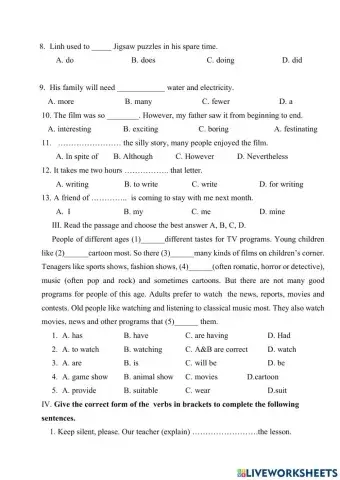
I - Choose the correct answer (14 points)

1. Thomas Edison, ____________ was American, invented many things, including the light bulb.

A. which                    B. who                        C. was                         D. that

2. My MP3 player is better than __________!

A. you                         B. your                       C. yours                      D. mine

3. "What happened to the old postman?"

- "He ____________ to a new neighborhood to work".

A. has sent                  B. was send                C. was sent                 D. sent

4. This job is much ____________ than the last one!

A. hard                       B. hardest                   C. harder                    D. more hard

5. Our company is moving into a ____________ building next week.

A. larger                     B. largest                    C. more large             D. most large

6. What’s the ___________job you’ve ever had?

A. most good             B. best                        C. better                      D. good

7. Those towns ____________ you were looking at in Gaul are small.

A. who                        B. where                     C. which                     D. whom

8. The women ____________ I gave the money were glad.

A. to whom                B. to who                    C. for whom               D. for that

9. I know a boy ____________ name is John.


A. who                        B. whose                    C. whom                    D. that

10. This is the place ____________ we have tea.

A. what                       B. where                      C. which                    D. that

11. The house ____________ in the storm has now been rebuilt.

A. destroyed              B. destroying              C. which destroyed    D. was destroyed

12. The man ____________ at the blackboard is our teacher.

A. stood                     B. stands                     C. standing                 D. to stand

13. Gold ____________ in California in the nineteenth century.

A. was discovered        B. has been discovered     C. was discovere       D. they discovered

14. If I ____________ 20 years younger, I ____________ her.

A. were/would love   B. am/will love                 C. were/ loves      D. had/would love


II - Change the verbs in the brackets (10 points)

1. My bike ________________ (steal)! Call the police!

2. “The longest fish in the contest was eighteen inches long.”

- “It ________________ (catch) by Thelma Rivers.”

3. “What ____________________ (you do) when you saw the man?”, the police officer asked.

4. Do you think Curtis ___________________ (win) the car race tomorrow?

5. It’s the first time I ___________________ (get) all the answers right in a test!

6. Watch out, or you __________________ (fall) off the boat!

7. The exam ___________________ (already start) when Jimmy finally found the right room.

8. I’m tired because I ___________________ (work) since eight this morning.

9. I broke my leg when Tony and I ___________________ (practice) for the school sports day.

10. I ______________________ (travel) around the world one day.


III - Finish the following sentences without changing the meaning of the sentences printed before them. (10 points)

1. I usually get up earlier than my wife.

=> My wife __________________________________________________________________ .

2. You drink too much coffee, that’s why you can’t sleep.

=> If you ____________________________________________________________________ .

3. I’ve never played this game before.

=> This is the first time _________________________________________________________ .

4. He hides the broken cup in the drawer.

=> The broken cup ____________________________________________________________ .

5. The new words are very difficult. I have to learn them. (use “which”)

=> The new words ____________________________________________________________ .

6. Mary’s coat is more expensive than Kate’s.

=> Kate’s coat ________________________________________________________________ .

7. My mother is retired. She has decided to learn Chinese. (use “who”)

=> My mother ________________________________________________________________ .

8. I’m not good at persuading people. (use “Wish”)

=> I  ________________________________________________________________________ .

9. I missed the bus yesterday. I still went to school on time. (use “Although”) =>__________________________________________________________________________ .

10. Lucy came down with a flu last week. She didn’t go to work yesterday. (use “because”) =>__________________________________________________________________________ .


IV. Fill in the blank with one word (15 points)  and make 3 compound sentences, 3 complex sentences using the words given. (6 points)

1. Have a talent ________

2. _______ the exam(s) with flying colors

3. Be a _________ learner

4. Miss/meet the ___________

5. Get __________ in heavy traffic

6. Have a healthy and balanced _______

7. Fall _____ with

8. Strike up a _______________

9. Have a lot ______ common

10. _______ my own business

11. Have good promotion ________________

12. Get _______ shape

13. Have a heavy ___________

14. ___________ a work-life balance

15. Earn a _________ salary

Mid-course test MIFA301 LIVE

English

GRAMMAR AND VOCABULARY TEST

I - Choose the correct answer (14 points)

1. Thomas Edison, ____________ was American, invented many things, including the light bulb.

A. which                    B. who                        C. was                         D. that

2. My MP3 player is better than __________!

A. you                         B. your                       C. yours                      D. mine

3. "What happened to the old postman?"

- "He ____________ to a new neighborhood to work".

A. has sent                  B. was send                C. was sent                 D. sent

4. This job is much ____________ than the last one!

A. hard                       B. hardest                   C. harder                    D. more hard

5. Our company is moving into a ____________ building next week.

A. larger                     B. largest                    C. more large             D. most large

6. What’s the ___________job you’ve ever had?

A. most good             B. best                        C. better                      D. good

7. Those towns ____________ you were looking at in Gaul are small.

A. who                        B. where                     C. which                     D. whom

8. The women ____________ I gave the money were glad.

A. to whom                B. to who                    C. for whom               D. for that

9. I know a boy ____________ name is John.


A. who                        B. whose                    C. whom                    D. that

10. This is the place ____________ we have tea.

A. what                       B. where                      C. which                    D. that

11. The house ____________ in the storm has now been rebuilt.

A. destroyed              B. destroying              C. which destroyed    D. was destroyed

12. The man ____________ at the blackboard is our teacher.

A. stood                     B. stands                     C. standing                 D. to stand

13. Gold ____________ in California in the nineteenth century.

A. was discovered        B. has been discovered     C. was discovere       D. they discovered

14. If I ____________ 20 years younger, I ____________ her.

A. were/would love   B. am/will love                 C. were/ loves      D. had/would love


II - Change the verbs in the brackets (10 points)

1. My bike ________________ (steal)! Call the police!

2. “The longest fish in the contest was eighteen inches long.”

- “It ________________ (catch) by Thelma Rivers.”

3. “What ____________________ (you do) when you saw the man?”, the police officer asked.

4. Do you think Curtis ___________________ (win) the car race tomorrow?

5. It’s the first time I ___________________ (get) all the answers right in a test!

6. Watch out, or you __________________ (fall) off the boat!

7. The exam ___________________ (already start) when Jimmy finally found the right room.

8. I’m tired because I ___________________ (work) since eight this morning.

9. I broke my leg when Tony and I ___________________ (practice) for the school sports day.

10. I ______________________ (travel) around the world one day.


III - Finish the following sentences without changing the meaning of the sentences printed before them. (10 points)

1. I usually get up earlier than my wife.

=> My wife __________________________________________________________________ .

2. You drink too much coffee, that’s why you can’t sleep.

=> If you ____________________________________________________________________ .

3. I’ve never played this game before.

=> This is the first time _________________________________________________________ .

4. He hides the broken cup in the drawer.

=> The broken cup ____________________________________________________________ .

5. The new words are very difficult. I have to learn them. (use “which”)

=> The new words ____________________________________________________________ .

6. Mary’s coat is more expensive than Kate’s.

=> Kate’s coat ________________________________________________________________ .

7. My mother is retired. She has decided to learn Chinese. (use “who”)

=> My mother ________________________________________________________________ .

8. I’m not good at persuading people. (use “Wish”)

=> I  ________________________________________________________________________ .

9. I missed the bus yesterday. I still went to school on time. (use “Although”) =>__________________________________________________________________________ .

10. Lucy came down with a flu last week. She didn’t go to work yesterday. (use “because”) =>__________________________________________________________________________ .


IV. Fill in the blank with one word (15 points)  and make 3 compound sentences, 3 complex sentences using the words given. (6 points)

1. Have a talent ________

2. _______ the exam(s) with flying colors

3. Be a _________ learner

4. Miss/meet the ___________

5. Get __________ in heavy traffic

6. Have a healthy and balanced _______

7. Fall _____ with

8. Strike up a _______________

9. Have a lot ______ common

10. _______ my own business

11. Have good promotion ________________

12. Get _______ shape

13. Have a heavy ___________

14. ___________ a work-life balance

15. Earn a _________ salary

สร้างและปรับแต่งใบงานสำหรับทุกห้องเรียน

LiveWorksheets ทำให้คุณครู ผู้ปกครอง และผู้สอนแบบโฮมสคูล สามารถออกแบบและมอบสื่อการเรียนรู้ที่น่าสนใจได้อย่างง่ายดาย เพียงอัปโหลดไฟล์ PDF หรือเริ่มต้นสร้างใหม่ทั้งหมด คุณก็สามารถทำได้ทุกอย่าง ไม่ว่าจะเป็นใบงานคณิตศาสตร์แบบโต้ตอบ ใบงานอ่านจับใจความ ใบงานการคูณ หรือใบงานสำหรับเด็กอนุบาล ด้วยขั้นตอนเพียงไม่กี่คลิก เครื่องมือแก้ไขแบบลากและวางของเรารองรับทุกระดับชั้นและทุกวิชา ช่วยให้คุณปรับเนื้อหาให้ตรงกับแผนการสอน การบ้าน หรือแบบทดสอบ ครูสอนภาษาอังกฤษ (ESL) ยังสามารถสร้างใบงาน ESL แบบเฉพาะ เพิ่มตารางเสียงภาษาอังกฤษ หรือออกแบบกิจกรรม ESL เพื่อให้การเรียนสนุกและมีส่วนร่วมมากขึ้น สร้างกิจกรรมที่ปรับระดับได้ ตรวจอัตโนมัติ ช่วยประหยัดเวลา และสนับสนุนการเรียนรู้ของนักเรียนให้ดียิ่งขึ้น

คลังสื่อการเรียนรู้ครบวงจรสำหรับ K-12 และ ESL

เข้าถึงใบงานที่พร้อมใช้หลายพันชุด ครอบคลุมทุกวิชาในระดับ K-12 รวมถึงใบงานอนุบาล ใบงานคณิตศาสตร์ แบบฝึกการคูณ แบบฝึกอ่านจับใจความ และทรัพยากร ESL เลือกค้นหาตามชั้นเรียน วิชา หรือระดับทักษะ เพื่อให้ได้สิ่งที่คุณต้องการ ไม่ว่าจะสำหรับห้องเรียนประถม ทบทวนในระดับมัธยมต้น หรือการฝึกในระดับมัธยมปลาย ครู ESL ยังสามารถสำรวจคลังใบงาน ESL และกิจกรรมภาษาอังกฤษที่ออกแบบมาเพื่อรองรับผู้เรียนทุกระดับ เนื้อหาใหม่ถูกเพิ่มเข้ามาอย่างต่อเนื่อง LiveWorksheets จึงเป็นทรัพยากรที่ยืดหยุ่นและช่วยสร้างผลลัพธ์การเรียนรู้ที่ยั่งยืน