FF3 - Midterm

English

Part 1: Fill in the Blanks

  1. (Simple present with "be")
    My brother (is/are) a student.
  2. (Simple past with "be")
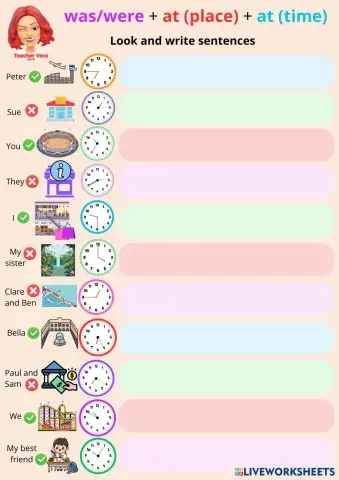
    Yesterday, they (was/were) at the park.
  3. (Comparatives)
    This book is (more interesting/most interesting) than that one.
  4. (Simple Present)
    She (go/goes) to school every day.
  5. (Like + verb + ing)
    (like/likes) swimming in the pool.
  6. (You/our/their)
    Is this (your/our/their) book?
  7. (Can for permission/requests)
    (Can/May) you help me with my homework?
  8. (Present progressive: affirmative)
    They (is/are) playing soccer now.
  9. (Present progressive: negative)
    She (isn't/aren't) studying at the moment.
  10. (Present continuous: questions)
    (Is/Are) you reading a book?
    (Yes/No), I am.
  11. (Present simple: Affirmative)
    He (like/likes) pizza.
  12. (Present simple: Negative)
    They (don't/doesn't) like carrots.
  13. (Present simple: Questions)
    (Do/Does) you have a pet?
    (Yes/No), I do.

Part 2: Multiple Choice

  1. Which sentence is correct? (Simple present with "be")

    • a) I am happy.
    • b) I is happy.
    • c) I are happy.
  2. Which sentence is correct? (Simple past with "be")

    • a) He were here yesterday.
    • b) He was here yesterday.
    • c) He be here yesterday.
  3. Which sentence is correct? (Comparatives)

    • a) This car is faster than that one.
    • b) This car is the faster than that one.
    • c) This car is more faster than that one.
  4. Which sentence is correct? (Simple Present)

    • a) She go to the market every day.
    • b) She goes to the market every day.
    • c) She going to the market every day.
  5. Which sentence is correct? (Like + verb + ing)

    • a) He like playing football.
    • b) He likes playing football.
    • c) He like to playing football.
  6. Which sentence is correct? (You/our/their)

    • a) That is your pen.
    • b) That is our pen.
    • c) That is their pen.
  7. Which sentence is correct? (Can for permission/requests)

    • a) Can I go to the bathroom?
    • b) Can I to go to the bathroom?
    • c) Can I going to the bathroom?
  8. Which sentence is correct? (Present progressive: affirmative)

    • a) They is running now.
    • b) They are running now.
    • c) They running now.
  9. Which sentence is correct? (Present progressive: negative)

    • a) She isn't sleeping now.
    • b) She aren't sleeping now.
    • c) She not sleeping now.
  10. Which question is correct? (Present continuous: questions)

    • a) Are you eating lunch?
    • b) Do you eating lunch?
    • c) You are eating lunch?
  11. Which sentence is correct? (Present simple: Affirmative)

    • a) We enjoys the game.
    • b) We enjoy the game.
    • c) We enjoying the game.
  12. Which sentence is correct? (Present simple: Negative)

    • a) They doesn't play tennis.
    • b) They don't play tennis.
    • c) They not play tennis.
  13. Which question is correct? (Present simple: Questions)

    • a) Does he like music?
    • b) Do he like music?
    • c) He does like music?

Part 3: Sentence Correction

Correct the mistakes in the following sentences:

  1. He is not playing football now. (Present progressive: negative)

    • Correct: ______________________
  2. They was at the zoo last week. (Simple past with "be")

    • Correct: ______________________
  3. She like going to the beach. (Like + verb + ing)

    • Correct: ______________________
  4. Do you has a pen? (Present simple: questions)

    • Correct: ______________________
  5. This cake is more delicious than that one. (Comparatives)

    • Correct: ______________________

The Past Simple Revision

English

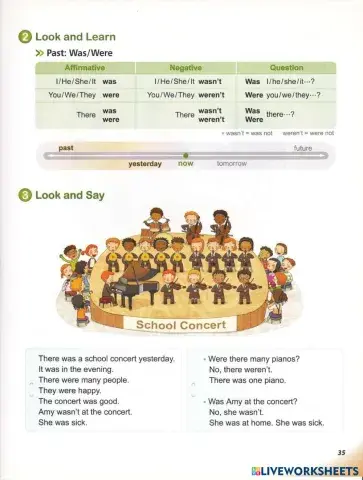
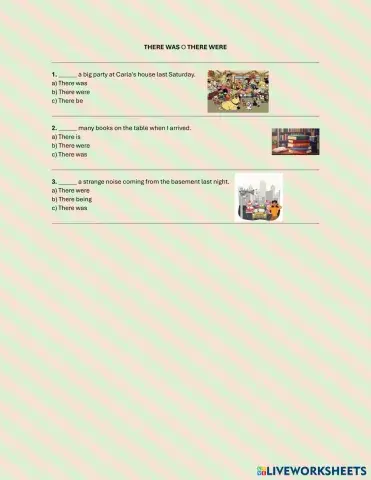
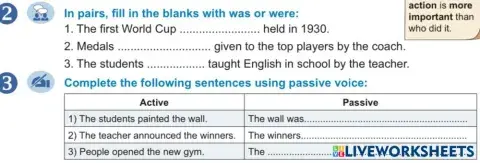
Exercise 1: Complete the sentences with there was or there were in affirmative, negative or question form.

1. ________________ a new student in your class last week? Yes, ________________.

2. ________________ any students in the library at 3 o'clock yesterday.

3. I think ________________ a boy waiting for you yesterday.

4. ________________ any chicken left when I arrived home at lunchtime.

5. ________________ any water in the fridge last night? I don't think so.

6. ________________ any people at the museum?

Exercise 2: Fill in the blanks with was, were, there was or there were.

1. William Shakespeare ________________ a famous poet and playwright.

2. ________________ some people waiting for you at the door.

3. How many apples ________________ in the cupboard?

4. We ________________ very tired when we finished the PE lesson.

5. Your sister ________________ at the cinema with her friends last Friday.

6. How much milk ________________ in the fridge yesterday?

7. Miguel de Cervantes ________________ born in 1920.

8. The police ________________ investigating a crime in my area.

9. ________________ a lot of people at the concert last night.

10. We ________________ happy with the exam results.

Exercise 3: Give the past form of the following verbs.

1. meet → __________

2. do → __________

3. laugh → __________

4. help → __________

5. cry → __________

6. try → __________

7. speak → __________

8. stand → __________

9. tidy → __________

10. live → __________

11. play → __________

12. enjoy → __________

13. write → __________

14. stay → __________

15. plan → __________

16. study → __________

17. ask → __________

18. drive → __________

19. put → __________

20. sing → __________

21. sit → __________

22. stop → __________

23. agree → __________

24. buy → __________

25. run → __________

26. break → __________

27. build → __________

28. begin → __________

29. bring → __________

30. be → __________

Exercise 4: Change the given sentences into affirmative (+), negative (-), and question (?) form.

1. (+) He wrote a book.

                  (-) ___________________________

                  (?) ___________________________

2. (+) She was my boss.

                  (-) ___________________________

                  (?) ___________________________

3. (+) ___________________________

                 (-) They didn’t build a new house.

                 (?) ___________________________

4. (+) ___________________________

                 (-) I wasn’t at the concert last Sunday.

                 (?) ___________________________

5. (+) ___________________________

                 (-) ___________________________

                 (?) Did you buy clothes in this clothes shop?

6. (+) ___________________________

                 (-) ___________________________

                 (?) Were they born in Korea?

7. (+) He swam in the lake.

                 (-) ___________________________

                 (?) ___________________________

8. (+) We were at the gym last week.

                 (-) ___________________________

                 (?) ___________________________

9. (+) ___________________________

                 (-) She didn’t go to her office by car.

                 (?) ___________________________

10. (+) ___________________________

                 (-) He wasn’t a good person.

                 (?) ___________________________

Exercise 5: Give the past form of the verb in brackets.

1. I knew Sarah was busy, so I (not disturb) ________________ her.

2. I was very tired, so I (leave) ________________ the party.

3. The bed was very uncomfortable. I (not sleep) __________ very well.

4. The window was open and a bird (fly) ________________ into the room.

5. The hotel wasn’t expensive. It (not cost) ________________ much.

6. I was in a hurry, so I (not have) ________________ time to phone you.

7. It was hard carrying the bags. They (be) ________________ very heavy.

8. Linda (buy) ________________ that car last week.

9. She (do) ________________ doing gymnastics when she was four.

10. Last winter my family (go) ________________ on a skiing holiday in France.

11. My dad (decide) ________________ to travel around the world after university.

12. I (compete) __________ in a skateboarding competition last week.

13. I haven’t got any homework this weekend because I (do) __________ it all last night!

14. There (not be) _______________ any money in my wallet.

15. Jennifer Lawrence (become) ________________ famous after The Hunger Games.

16. Tom Schaar (start) ________________ to skateboard when he was very young.

17. We (win) __________ the school basketball match last year!

18. They (live) __________ in Paris in 2010.

19. Yesterday there (be) __________ a fire in the town centre.

20. There (be not) _______________ any eggs for breakfast this morning.

Passive Voice

Vocabulary - English Language

Вітаю! Сьогодні ми навчимося переносити фокус із того, хто виконує дію, на сам об'єкт або результат. Це зробить вашу англійську мову більш професійною та різнобічною. На виконання всіх завдань у вас є 30 хвилин.

Крок 1. Орієнтація у теорії (Grammar Reference) Перш ніж братися за вправи, зверніть увагу на інформаційну панель у верхній частині аркуша. Вона допоможе вам пригадати основну формулу пасивного стану: Subject + to be (am/is/are/was/were) + Past Participle (V3). Пам’ятайте, що в теперішньому часі ми використовуємо is/are, а в минулому — was/were. Якщо ми хочемо вказати, хто саме виконав дію, використовуємо прийменник by.

Крок 2. Зміна фокусу (Вправа 1) Ваше перше завдання — перетворити речення з активного стану в пасивний, використовуючи теперішній час (Present Simple Passive). Пам'ятайте, що додаток із першого речення стає головним героєм (підметом) у другому. Наприклад, якщо шеф-кухар готує страву, то «страва готується шеф-кухарем».

Крок 3. Робота з часовими формами (Вправа 2) Тут вам потрібно поставити дієслово в дужках у правильну пасивну форму. Будьте уважними до «підказок часу» (Tense clues): якщо подія відбулася в минулому (наприклад, у 1892 році), використовуйте was/were, а якщо вона повторюється регулярно (щороку) — is/are.

Крок 4. Ідентифікація стану (Вправа 3) Прочитайте речення та визначте, у якому стані воно написане. Поставте літеру A, якщо це активний стан (підмет сам виконує дію), або літеру P, якщо пасивний (дія спрямована на підмет). Звертайте увагу на наявність дієслова to be та закінчення -ed або третьої форми дієслова.

Крок 5. Додавання виконавця (Вправа 4) У цій вправі вам потрібно завершити пасивні речення, додавши виконавця дії за допомогою конструкції by + agent. Оберіть правильну особу чи організацію з довідки (наприклад, Томас Едісон чи поліція), щоб речення набуло логічного завершення.

Крок 6. Фінальна перевірка Залиште 2 хвилини наприкінці, щоб переглянути свої записи. Перевірте, чи правильно ви утворили третю форму дієслова (V3) та чи узгодили дієслово to be з підметом (однина чи множина).

Успіхів! Я впевнена, що ви впораєтеся на відмінно!

สร้างและปรับแต่งใบงานสำหรับทุกห้องเรียน

LiveWorksheets ทำให้คุณครู ผู้ปกครอง และผู้สอนแบบโฮมสคูล สามารถออกแบบและมอบสื่อการเรียนรู้ที่น่าสนใจได้อย่างง่ายดาย เพียงอัปโหลดไฟล์ PDF หรือเริ่มต้นสร้างใหม่ทั้งหมด คุณก็สามารถทำได้ทุกอย่าง ไม่ว่าจะเป็นใบงานคณิตศาสตร์แบบโต้ตอบ ใบงานอ่านจับใจความ ใบงานการคูณ หรือใบงานสำหรับเด็กอนุบาล ด้วยขั้นตอนเพียงไม่กี่คลิก เครื่องมือแก้ไขแบบลากและวางของเรารองรับทุกระดับชั้นและทุกวิชา ช่วยให้คุณปรับเนื้อหาให้ตรงกับแผนการสอน การบ้าน หรือแบบทดสอบ ครูสอนภาษาอังกฤษ (ESL) ยังสามารถสร้างใบงาน ESL แบบเฉพาะ เพิ่มตารางเสียงภาษาอังกฤษ หรือออกแบบกิจกรรม ESL เพื่อให้การเรียนสนุกและมีส่วนร่วมมากขึ้น สร้างกิจกรรมที่ปรับระดับได้ ตรวจอัตโนมัติ ช่วยประหยัดเวลา และสนับสนุนการเรียนรู้ของนักเรียนให้ดียิ่งขึ้น

คลังสื่อการเรียนรู้ครบวงจรสำหรับ K-12 และ ESL

เข้าถึงใบงานที่พร้อมใช้หลายพันชุด ครอบคลุมทุกวิชาในระดับ K-12 รวมถึงใบงานอนุบาล ใบงานคณิตศาสตร์ แบบฝึกการคูณ แบบฝึกอ่านจับใจความ และทรัพยากร ESL เลือกค้นหาตามชั้นเรียน วิชา หรือระดับทักษะ เพื่อให้ได้สิ่งที่คุณต้องการ ไม่ว่าจะสำหรับห้องเรียนประถม ทบทวนในระดับมัธยมต้น หรือการฝึกในระดับมัธยมปลาย ครู ESL ยังสามารถสำรวจคลังใบงาน ESL และกิจกรรมภาษาอังกฤษที่ออกแบบมาเพื่อรองรับผู้เรียนทุกระดับ เนื้อหาใหม่ถูกเพิ่มเข้ามาอย่างต่อเนื่อง LiveWorksheets จึงเป็นทรัพยากรที่ยืดหยุ่นและช่วยสร้างผลลัพธ์การเรียนรู้ที่ยั่งยืน