B2 - Grammar

English Language

Past tenses

B2 Narrative tenses, used to, would


Future

B2 Future forms – expressing future time

B2 Other ways to express future – be about to, be due to, etc.

B2 Future in the past


Modals, the imperative, etc .

B2 Modal verbs – permission, obligation, prohibition, necessity

B2 Speculation and deduction – modal verbs and expressions

B2 Verbs of the senses

B2 Get – different meanings


Conditionals, if, wish, etc.

B2 All conditionals – mixed conditionals, alternatives to if, inversion

B2 Mixed conditionals – If I were you, I wouldn’t have done it

B2 Wish, rather, if only, it’s time – unreal uses of past tenses

B2 Unless, even if, provided, as long as, etc. – other expressions in conditionals


Passive

B2 Distancing – expressions and passive of reporting verbs

B2 Passive verbs with two objects


-ing and the infinitive

B2 Verb + object + infinitive/gerund – verb patterns

B2 Gerunds and infinitives – complex forms


Articles, nouns, pronouns, and determiners.

B2 Reflexive and reciprocal pronouns

B2 Generic pronouns – common-gender pronouns

B2 Compound nouns and possessive forms

B2 Possessive ’s with time expressions – Two hours’ walk


Relative clauses, relative pronouns and adverbs

B2 Relative clauses – defining and non-defining


there and it

B2 There and it – preparatory subjects


Auxiliary verbs

B2 Have – auxiliary or main verb

B2 Ellipsis and substitution


Adjectives and adverbs

B2 Inversion with negative adverbials – adding emphasis


Conjunctions and clauses

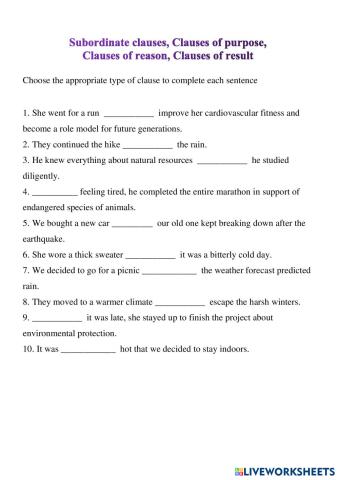
B2 Clauses of contrast, purpose, reason and result

B2 Discourse markers – linking words

B2 Participle claus

es


Word order


B2 Cleft sentences – adding emphasis


Smartphones

English

The pace of technological advancement in the mobile phone industry is nothing short of astonishing. Ten years ago, mobiles were just about making calls. Today, they are cameras,
video cameras,
portable media
players, and so much more. How else might mobile phone technology advance in the future?
High-speed Internet connections on mobiles make it possible to watch TV and also play interactive games.
The problem is the size of the picture. Who wants to watch a movie on a 5-inch screen? The solution will be built-in projectors. Televisions may soon become a thing of the past thanks to technology that will allow people to create a big-screen experience on their living room wall with their mobiles.
Another new
development is the flexible screen.
Scientists have already developed the technology that would allow mobile screens to take on various forms.
Imagine being able to roll out the screen from your phone so it is closer to the size of a laptop, then roll it back up to fit in your pocket. This kind of technology could make laptops and desktops obsolete.
Mobile phones will also replace our wallets, turning us into a cashless society. Technology will turn our phones into credit cards, IDs, keys for our cars and homes, and more. In some countries, many users already purchase products with their phones.
Smartphones will also inform us of goods and services we might like wherever we are. We will need to be comfortable with having large amounts of information about our lifestyles on our phones for this to happen.
But this is already the case for people who regularly use social networking websites.
Looking further into the future it is certain that smartphones will incorporate nanotechnology, allowing us to use our phones to scan our food for harmful toxins, for example. In short, the smartphone of the future will be the ultimate do-anything gadget. In the words of Eric Schmidt, Google's chairman and CEO, "it will be our alter ego - fundamental to everything we do".


Read the article and choose the correct option (A, B, C or D).
1 The reason people may use TVs less in the future is
A smartphones will have bigger screen displays.
B TV programmes will be made especially for smartphones.
C smartphones will be able to project images
onto walls.
D TV programmes will all be watched on PCs.
2 Smartphone screens will soon be
A unbreakable.
C expandable.
B rigid.
D exchangeable.
3 In the future, cash could become A more valuable.
B no longer necessary.
C used in only some countries.
D made of plastic.
4 In order for our phones to suggest goods and services to us, we would have to A make changes to our lifestyle.
B join a social networking site.
C provide location details.
D sacrifice some privacy.
5 The nanotechnology of the future may
A replace smartphones.
B release harmful toxins.
C be used in a number of gadgets.
D revolutionize smartphones.
5x2=10 marks

Create and Customize Worksheets for Every Classroom

LiveWorksheets makes it easy for teachers, parents and homeschool educators to design and deliver engaging learning materials. Upload a PDF or start from scratch to create what you need: anything from interactive math worksheets to reading comprehension worksheets, multiplication worksheets, and kindergarten worksheets in just a few clicks. Our drag-and-drop editor works across all grade levels and subjects, so you can tailor content to your lesson plans, homework, or assessments. ESL teachers can also build custom ESL worksheets, add a common sound chart, or integrate ESL activities to make each class more engaging. Easily create differentiated, auto-graded activities that save valuable time and support better student learning.

A Complete Library of Learning Resources for K-12 and ESL

Access thousands of ready-to-use worksheets across K-12 subjects, including kindergarten worksheets, math worksheets, multiplication practice, reading comprehension exercises, and ESL resources. Filter by grade, subject, or skill level to find exactly what you need, whether it’s for an elementary classroom, middle school review, or high school practice. ESL teachers can explore our growing collection of ESL worksheets and English as a Second Language activities designed to support all levels of learners. With new content added regularly, LiveWorksheets is a flexible resource that helps build lasting learning outcomes.