✅ New: Give students instant feedback with Practice Mode 👉 Learn how
12th grade
Most Popular
Newest
Oldest
A-Z
Z-A
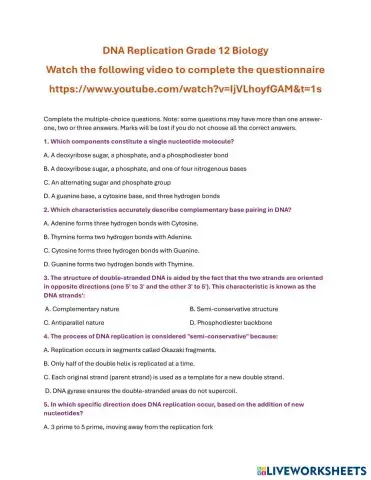
Biology - Science
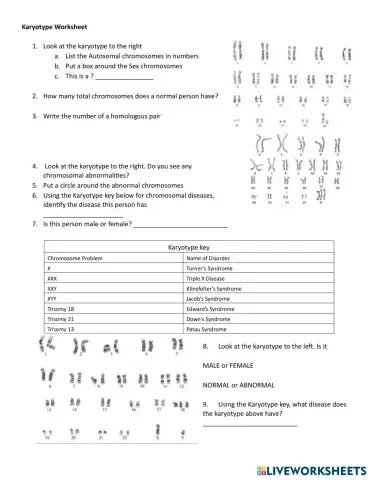
Watch the video to complete the multiple choice questions. Some questions have more than one answers
Environmental Science - Science
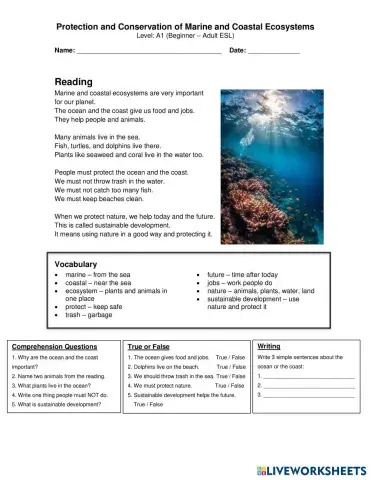
Read the text and complete the activities.
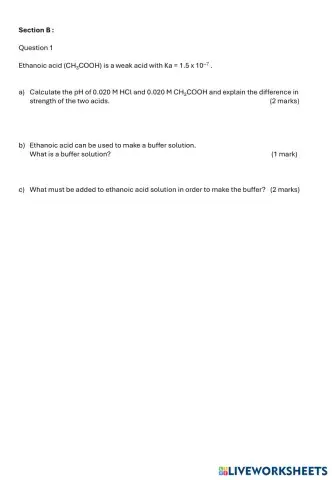
Chemistry - Science
MUFY 0041 Q1
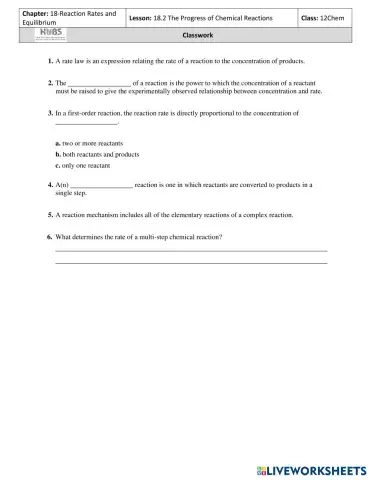
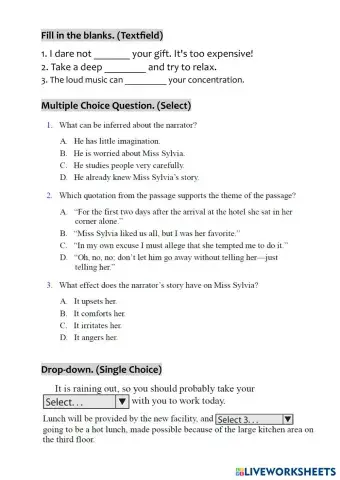
Answer the questions to the best of your ability. do not click finish until all answers have been filled in as you will not be able to edit after clicking finish.
Use correct spelling please
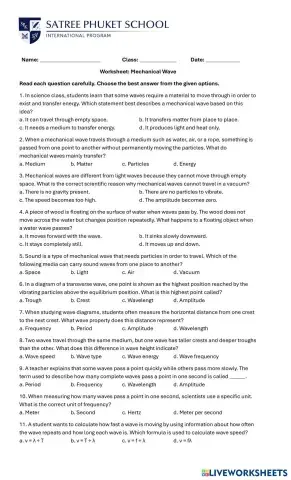
Physics - Science
Read each question carefully. Choose the best answer from the given options. Write the letter of your answer (a, b, c, or d) on the space provided. Label the parts of the wave shown in the diagram. Write the correct term on each line.
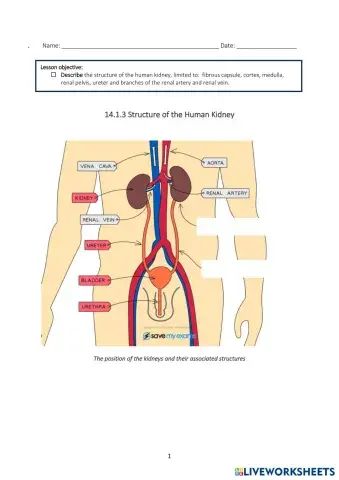
Identify different parts of Kidney and Nephrone
Answer all questions with correct spelling please
View the video and then answer the questions
https://www.youtube.com/watch?v=sQK3Yr4Sc_k
Go to PHET simulations and choose the pH scale simulation.
Make sure you click on Macro. Follow your document and use the PHET simulation to answer the following worksheet. Watch out for spelling and make sure you answered everything before clicking on finish/submit.
Please pay attention to spelling.
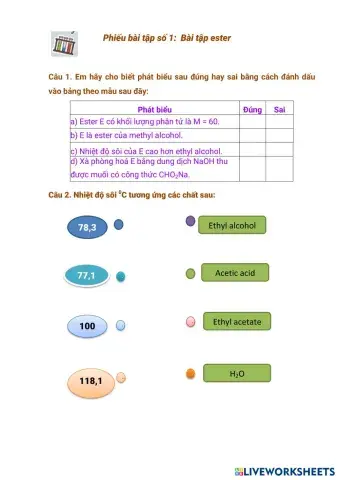
ESTER
Read and complete the worksheet
Metabolism of purine nucleotides
Read the instructions carefully.
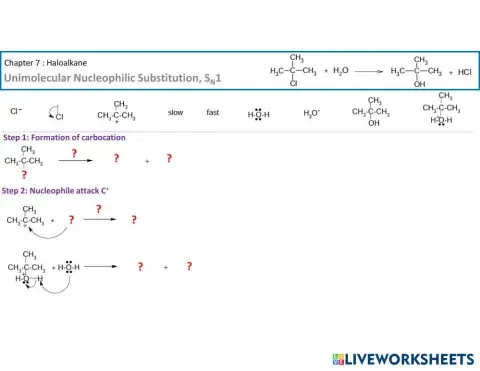
Unimolecular Nucleophilic Substitution. Involved one species (RX). Rate = k[RX]. First order reaction. Two steps mechanism. Tertiery haloalkane is the most reactive toward SN1.
complete the worksheets
Mouth parts involved in digestion
Endocrine glands in the human body
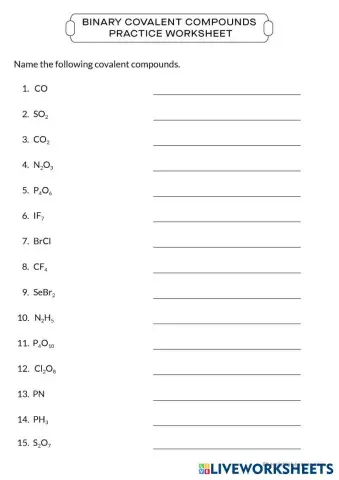
Name the following covalent compounds. Use CAPITAL LETTERS
Complete the activity below
Study theoretical questions and write down the tasks


 Switch to Legacy Search Page