Что такое Present Simple?
Это простое настоящее время, обозначающее действие в самом широком смысле этого слова. Одна из самых распространенных и простых форм в английском языке для описания действий.
Действия могут быть связаны с привычками, хобби, ежедневным событием вроде подъема по утрам или чем-то, что случается регулярно.
Как образуется Present Simple?
Нет ничего проще, чем поставить глагол в форму Present Simple. Для этого нужно убрать у глагола в инфинитиве частицу «to» и поставить глагол после подлежащего. Это и есть основное правило Present Simple.
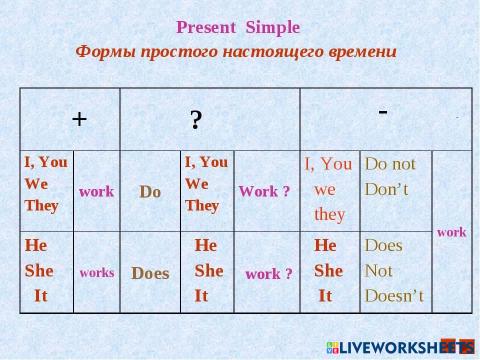
Утверждение:
I / We / You / They + V
She / He / It + V + s (es)
I go to work every day — Я хожу на работу каждый день.
They usually play tennis every weekend — Они обычно играют в теннис каждые выходные.
She brings me coffee every morning — Она приносит мне кофе каждое утро.
It snows in winter — Зимой идет снег.
ВАЖНО: В Present Simple форма глагола практически всегда совпадает с изначальной. Исключение составляет третье лицо единственного числа (he / she / it) — к нему прибавляется окончание -s:
I ride — She rides
I dream — He dreams
Если глагол оканчивается на -s, -ss, -sh, -ch, -x, -o, то к нему прибавляется окончание -es
I wish — She wishes
I teach — She teaches
Если глагол оканчивается на -y, а ему предшествует согласная, то к нему прибавляется окончание -es, но -y заменяется на -i
I try — She tries
I fly — He flies
Если глагол оканчивается на -y, а ему предшествует гласная, то к нему также прибавляется окончание -s, но -y не меняется.
I play — She plays
I stay — He stays
Отрицание:
Чтобы составить отрицательное предложение — нужно поставить вспомогательный глагол между подлежащим и глаголом.
I / We / You / They + do not (don’t) + V
She / He / It + does not (doesn’t) + V
I don’t go to school every day — Я не хожу в школу каждый день
They don’t drink beer — Они не пьют пиво
She doesn’t like the weather in London — Ей не нравится погода в Лондоне
He doesn't drive the car — Он не водит машину
Отрицание также можно выразить при помощи отрицательных местоимений и наречий.
Nobody speaks Arabic — Никто не говорит по-арабски
I do nothing — Я ничего не делаю
Вопрос:
При составлении вопросительных предложений вспомогательный глагол ставится перед подлежащим и последующим глаголом. Обычно — в начало предложения.
Do + I / we / you / they + V ?
Does + she / he / it + V ?
Do you like pizza? — Тебе нравится пицца?
Do they play football? — Они играют в футбол?
Does she learn Russian? — Она изучает русский язык?
Does he live in Spain? — Он живет в Испании?
Иногда в вопросительном предложении употребляются question words (вопросительные слова) и фразы, которые помогают задать более точный и корректный вопрос собеседнику.
К таким словам относятся: how long (как долго), why (почему), where (где) и другие. Как и в других временах, они ставятся в самом начале предложения перед вопросительной конструкцией Present Simple.
QW + do (does) + I / We / You / They / She / He / It + V ?
Where does he live in Prague? — Где он живет в Праге?
Why do you drink green tea? — Почему ты пьешь зеленый чай?
Когда в предложении с Present Simple появляется вспомогательный глагол — у основного глагола пропадает окончание -s. Считайте, что это такой своеобразный «магнит», который «перетягивает» к себе это окончание. Это касается отрицательной и вопросительной форм Present Simple.
ВАЖНО: иногда вспомогательный глагол do / does можно встретить и в утвердительных предложениях, чтобы добавить экспрессии и яркости высказыванию.
I do want to try this — Я действительно хочу это попробовать
Mary does know how to cook — Мэри действительно умеет готовить
Глагол to be в Present Simple
Глагол to be (быть) всегда является особенным и его употребление во времени Present Simple зависит от подлежащего. Он имеет 3 разных формы:
- am (для 1-го лица единственного числа: I)
- is (для 3-го лица единственного числа: she / he / it)
- are (для 1-го, 2-го и 3-го лица множественного числа: we / you / they)
I am ready — Я готов
She is ready — Она готова
We are ready — Мы готовы
Когда используется Present Simple?
Present Simple используется в описании действий, которые происходят постоянно, на регулярной
основе, но не привязаны к моменту речи.
Употребление Present Simple уместно в тех случаях, когда мы хотим рассказать о нашей ежедневной рутине, достоверно известных фактах, действиях в широком смысле слова или расписании поездов.
Регулярные, повторяющиеся действия:
I often go to the bar — Я часто хожу в бар
They play music every Sunday — Они играют музыку каждое воскресенье
Действие в широком смысле слова (без привязки к моменту речи):
I live in Dublin — Я живу в Дублине.
She speaks Chinese — Она говорит по-китайски.
Факты, о которых знают все:
The Earth rotates around its axis — Земля вращается вокруг своей оси.
Moscow is the largest city in Russia — Москва самый большой город в России
Будущие действия, которые произойдут согласно расписанию:
The airplane takes off at 4.30 am — Самолет взлетит в 4.30 утра.
The train leaves at 9 pm tomorrow — Поезд отходит завтра в 9 вечера.
Рецепты и инструкции (используется вместо повелительного наклонения):
You push the red button to turn on the radio — Нажмите на красную кнопку, чтобы включить радио
First you turn left and then you go down the street — Сперва поверните налево, затем идите до конца улицы
При перечислении каких-то действий и их определенной последовательности также используется время Present Simple
You take the bus into the city center and then you take a taxi to the restaurant — Вы едете на автобусе до центра города, а затем берете такси до ресторана.
Иногда время Present Simple используется в отношении прошедшего времени. Например, в заголовках газет (указывают на факт произошедшего действия) или в рассказе о событии (когда мы говорим о ком-то и его действиях).
The bus with American tourists crashes in India — В Индии разбился автобус с американскими туристами
I met John last week. He comes to me and says: “Hello, old friend” — На прошлой неделе я встретил Джона. Он подошел ко мне и сказал: «Привет, старый друг»
Маркеры времени Present Simple
Для того, чтобы лучше сориентироваться где и когда употребляются глаголы Present Simple — обратите внимание на особые маркеры в тексте.
Такими «маячками» для Present Simple являются наречия (often, always, usually, etc.) и указатели времени (every day, in the morning, on Fridays, etc.).
She always drinks coffee in the morning — Она всегда пьет кофе по утрам
I usually wake up at 6 am — Обычно я просыпаюсь в 6 утра
They often talk about sport — Они часто говорят о спорте


 Switch to New Search Page

 ¿Quieres miles de fichas gratuitas (y cero distracciones)?
Here’s how
¿Quieres miles de fichas gratuitas (y cero distracciones)?
Here’s how