Tenses exercise

Exercise

Complete the sentences using the correct tense with the given verb in the parenthesis.

You should use one of these tenses: “Simple Present Tense, Simple Past Tense or Present Continuous Tense”


1. They _________ ( watch ) a movie every Friday evening.


2. Yesterday, we __________ ( visit ) our grandparents.


3. The train _________ ( depart ) from the station at 9:30 a.m. tomorrow.


4. Alex is not here now, he __________ ( play ) football with his friends.


5. Last year, we __________ ( travel ) to Spain.


6. We  _______ (visit) the museum on Saturday.


7. Our flight _______ (leave) at 6:45 p.m. on Friday.


8. The bus _______ (arrive) at our stop at 7:15 a.m. every day.


9. She (take) _______ her driving test next Wednesday.


10. Last weekend, we _________ (go) to a concert and _________ (have) a great time.


11. Right now, he __________ (prepare) dinner, so we can’t talk.


12. They often ___________ ( take ) the bus, but yesterday they ________ (drive) to work.


13. The kids _________ (play) quietly now, but earlier they _________ (make) a lot of noise.


14. Every summer, we (go / went / are going) camping, but this year we (stay / stayed / are staying) home.


15. They  _______ (leave)  for their vacation next week.


16. Last week, she __________ (buy) a new car.


17. I (see) _______ the doctor for a check-up tomorrow afternoon.


18. When she _______ (get) home, she usually ________ (make) a cup of tea.


Road not Taken

English

1. Describe how the poet/speaker acts at the end and explain why you think he acts that way.

The speaker acts with a sense of acceptance at the end, saying that his choice "has made all the difference." He reflects on his decision calmly, knowing it shaped his life. This shows he understands that life choices have lasting effects. I think he acts this way because he realizes his journey is unique to him.


2. How do the poet's thoughts affect him?

The poet’s thoughts make him reflect deeply about his life and the choices he made. He wonders how different life might have been if he had chosen the other road. This thinking brings some regret but also pride. His thoughts show he values his journey.


3. Explain why you think the poet does not choose the road that many people trod by.

The poet avoids the common path because he wants a unique experience. By choosing the less-traveled road, he believes he can have a life that stands out. This choice shows his desire to explore and be different. It also suggests he values making his own path.


 4. Explain the poet's thinking pattern throughout the poem. Does it change at the end? Explain why or why not.

The poet’s thinking is reflective and hesitant at first, as he wonders which path to take. He carefully considers each road, not wanting to miss an opportunity. At the end, he accepts his choice with some mixed feelings, showing that he’s at peace with his decision. His thinking pattern does change from uncertainty to acceptance.


5. Is the setting important to the story? How?

Yes, the setting is very important because the two roads symbolize choices in life. The fork in the woods represents a moment when the poet must make a decision. This setting highlights the theme of life’s different paths. Without this setting, the poem would lose its central meaning.


 6. What is the turning point of the story? Who/What changes as a result? How? Why?

The turning point is when the poet finally chooses one road over the other. This decision shapes his life, making him realize that choices define our journey. The poet changes by accepting his choice, understanding it’s a part of who he is now. He realizes that he cannot go back.


7. What problem does the speaker in the poem face? How does he/she solve it?

The speaker faces the problem of choosing between two paths, each leading to different futures. He solves it by picking the road less traveled, accepting that it’s his personal choice. By doing this, he takes responsibility for his life path. This decision helps him feel unique.


 8. Analyzing the poet's thinking pattern and choices, explain why you would/would not like to have him/her as a friend.

I would like to have the poet as a friend because he is thoughtful and reflective. He considers his choices deeply, which shows he values life and decisions. This quality would make him a supportive and understanding friend. I think he could give good advice.


 9. Write about what would happen if you brought the poet to school or home for a day.

If I brought the poet home, he might observe everything closely and think deeply about ordinary things. He would likely enjoy nature and quiet spaces to reflect. I think he would be a calm guest, talking about how every choice has meaning. His thoughts would make simple things feel special.


 10. Pick a stanza in which you disagreed with how the poet handled a situation and rewrite it in the way you think it should have happened.

In the second stanza, instead of hesitating, I would write, "Without a doubt, I chose the path ahead / With courage, I walked and never looked back." This version shows more confidence in choosing. It shows the poet embracing life boldly, without second thoughts.


11. What quality of the poet strikes you as a good characteristic to develop within yourself over the years? Why? Describe how the poet demonstrates this quality.

The poet’s courage to take a different path is a quality worth developing. This shows bravery in facing unknown challenges, which is important for a meaningful life. He demonstrates this quality by choosing the less-traveled road, even though it’s uncertain. This makes him unique.


 12. How would the poem be different if told through another speaker's eyes?

If another speaker told the poem, they might see the two paths differently, maybe without hesitation. They might describe the paths with different emotions, like excitement or fear. This would change the poem’s tone. The story might feel less reflective and more practical.


 13. What is the main conflict for the speaker in the poem? How does he resolve it? Do you think he resolved the conflict well or not? Explain.

The main conflict is choosing between two paths, representing different life choices. He resolves it by choosing the less-traveled road and accepting his choice. I think he resolves it well because he finds meaning in his decision. He doesn’t seem unhappy, showing he made peace with his choice.


Activities + Adverbs of Frequency

English as a Second Language (ESL)

Adverbs of Frequency + Present Simple
Today, you will practice adverbs of frequency and present simple and collocations (make, do, play, write, ride).

1. Circle the correct answer
Circle the correct adverb of frequency based on the percentage.
a) I play video games 100% of the time. (always / never)
b) She rides her bike 50% of the time. (sometimes / always)
c) We do homework 90% of the time. (usually / never)
d) He makes pizza 0% of the time. (never / always)
e) They write songs 70% of the time. (usually / sometimes)

2. Match the sentence to the celebrity
Write the correct name next to each sentence: Damian Betular, Bad Bunny, Chappell Roan.
a) __________ always makes delicious desserts.
b) __________ usually writes songs in her bedroom.
c) __________ sometimes plays concerts in Puerto Rico.
d) __________ never rides a bike.
e) __________ always plays with new flavours.

3. Unscramble or correct the sentences
Put the words in the correct order or fix the mistakes.

a) always / music / writes / Chappell Roan
__________________________________________
b) Bad Bunny never ride a bike
__________________________________________
c) do / usually / I / yoga / on Saturdays
__________________________________________
d) makes / Betular / desserts / never / delicious
__________________________________________
e) play / sometimes / they / football
__________________________________________

4. Write about you
Write 3 things you always, usually, sometimes or never do. Use the correct verb.
1. _________________________________________
2. _________________________________________

3. _________________________________________

Mr. Brightside (present simple)

English

  • Scramble the sentences:

Coming out of my cage
It was only a kiss
And I've been doing just fine
Because I want it all

It started out with a kiss
Gotta, gotta be down
How did it end up like this?
Because I want it all
 

  • Select the correct option:

It was only a kiss

Now ____ falling asleep
And ____ calling a cab
While _____ having a smoke                                    she's (3)
And _____ taking a drag                                            he's

Now _____ going to bed                                             is
And my stomach ___ sick                                          they're
And ____ all in my head                                             it's

But ____ touching his chest now
He takes off her dress now
Let me go

Scramble the words:

just/ And/ can't/ I/ look
killing/ It's/ me
And / control/ taking
 

Jealousy
Turning saints into the ______                                    me
Swimming _______ sick lullabies                               sea
Choking on your alibis                                                through
But _____ just the price I pay                                     it's
Destiny is calling ____                                                I'm 
Open up my eager ______                                         eyes
'Cause ____ Mr. Brightside


  • Complete with the missing pronoun

I'm coming out of my cage
And I've been doing just fine
Gotta, gotta be down
Because I want ___ all

___ started out with a kiss
How did ___ end up like this?
(___ was only a kiss)
____ was only a kiss
 

  • Complete with the correct connector

Now I'm falling asleep
____ she's calling a cab
______ he's having a smoke
____ she's taking a drag

Now they're going to bed
____ my stomach is sick
____ it's all in my head

____ she's touching his chest now
He takes off her dress now
Let me go
 

'Cause I just can't look
It's killing me
And taking control
 

Jealousy
Turning saints into the sea
Swimming through sick lullabies
Choking on your alibis
But it's just the price I pay
Destiny is calling me
Open up my eager eyes
'Cause I'm Mr. Brightside

I never
I never
I never
I never

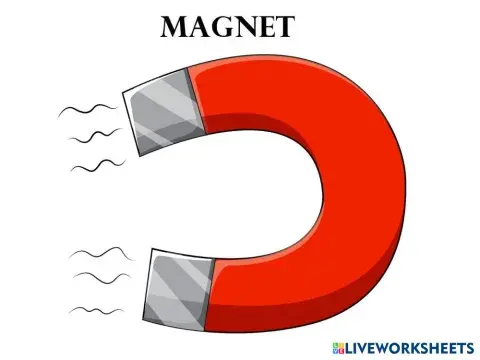
LKPD KONSEP DASAR KEMAGNETAN KELAS 9

Ilmu Pengetahuan Alam (IPA) SMP

LKPD 1 KONSEP DASAR KEMAGNETAN


Nama                                     :

Kelas                                     :

Kelompok                            :

Nama anggota kelompok : 1. ………………………………………

   2. ………………………………………

   3. ………………………………………

   4. ………………………………………

   5. ………………………………………


A. KOMPETENSI DASAR

3.6 Menerapkan konsep kemagnetan  magnet, termasuk dalam kehidupan sehari-hari termasuk pergerakan/navigasi hewan untuk mencari makanan dan migrasi.

4.6 Membuat karya sederhana yang memanfaatkan prinsip elektromagnetik dan/atau induksi elektromagnetik.

B. TUJUAN PERCOBAAN:

  1. Peserta didik dapat menguji sifat magnet suatu bahan melalui kegiatan  praktikum dan literasi bahan ajar dengan benar.
  2. Peserta didik dapat menganalisis cara-cara membuat magnet melalui kegiatan praktikum dan literasi bahan ajar secara kreatif dengan benar.
  3. Peserta didik dapat menyimpulkan hasil praktikum konsep dasar kemagnetan melalui kegiatan diskusi dengan baik.


C. INFORMASI UMUM

  1. Alat dan bahan

Percobaan 1 (Sifat Bahan Magnet):

    1. Magnet batang 1 buah
    2. Pensil 1 buah
    3. Pulpen 1 buah
    4. Mistar plastik 1 buah
    5. Paku besi 1 buah
    6. Sendok alumunium 1  buah


Percobaan 2 (Cara membuat magnet)

    1. Magnet batang  buah
    2. Isi staples/penjepit kertas secukupnya
    3. Kawat tembaga 1 lilitan
    4. Paku baja/paku besi yang besar dan yang kecil secukupnya
    5. Baterai besar 2 buah, dengan tegangan 1,5 Volt
    6. Statif 1 buah


  1. Prosedur kerja

Percobaan 1 (Sifat Bahan Magnet)

    1. Gantung           benda     yang    akan     diuji     sifat      kemagnetannya       dengan menggunakan tali dan statif.
    2. Dekatkan magnet pada benda yang telah digantung.


    1. Amati peristiwa yang terjadi pada benda saat didekati oleh magnet!
      • Benda apa saja yang ditarik oleh magnet?
      • Benda apa saja yang tidak dapat ditarik oleh magnet?
    2. Jika benda sudah menempel pada magnet, cobalah untuk menjauhkan benda dari magnet!
      • Benda apa saja yang dapat ditarik kuat oleh magnet?
      • Benda apa saja yang dapat ditarik lemah oleh magnet?


Amati dengan teliti, kuat atau lemah tarikan yang ditimbulkan oleh magnet!


Percobaan 2 (Cara membuat magnet)

  1. Image removed.


    Dengan cara menggosok


  1. letakkan paku besar yang ingin dijadikan magnet seperti pada gambar diatas.
  2. Gosok paku dengan magnet batang.
  3. Lakukan berulang sampai 3 menit.
  4. Dekatkan paku besar tersebut ke isi staples/penjepit kertas
  5. Catatlah hasil yang di dapat pada LKPD


  1. Image removed.


    Dengan cara Induksi
  1. rangkailah alat dan bahan seperti pada gambar diatas.
  2. Catatlah hasil yang didapat pada LKPD


  1. Image removed.


    dengan cara Elektromagnet


  1. rangkailah alat dan bahan seperti pada gambar di atas.
  2. Catatlah hasil yang didapat pada LKPD


E. HASIL PENGAMATAN


      1. Percobaan 1 (Sifat Bahan Magnet).

Tuliskanlah hasil pengamatan kalian pada tabel di bawah ini!


Tabel 1. Sifat magnet benda

No.

Nama Benda

Ditarik/Ditolak

Kuat/lemah

  1.  

Pensil


  1.  

Pulpen


  1.  

Mistar plastik


  1.  

Paku besi


  1.  

Sendok alumunium


  1. Pertanyaan
      1. Apakah penjepit kertas/isi staples dapat tertarik dengan paku besar  setelah digosokkan?
      2. Apakah penjepit kertas/isi staples dapat tertarik  setelah diinduksi dengan magnet batang?
      3. Apakah penjepit kertas/isi staples dapat tertarik dengan paku besar setelah dirangkai secara elektromagnet?


F. KESIMPULAN

Crea y personaliza fichas interactivas para cada aula

LiveWorksheets facilita a profesorado, familias y personas que educan en casa el diseño y la entrega de materiales de aprendizaje atractivos. Solo tienes que subir un PDF o empezar desde cero para crear lo que necesites: desde fichas interactivas de matemáticas hasta ejercicios de comprensión lectora, fichas de multiplicación o actividades para infantil, todo en unos pocos clics. Nuestro editor de arrastrar y soltar funciona en todos los cursos y asignaturas, lo que te permite adaptar el contenido a tus programaciones, deberes o evaluaciones. Quienes enseñan inglés como segunda lengua (ESL) también pueden crear sus propias fichas, añadir cuadros de sonidos comunes o integrar actividades de ESL para hacer cada clase más participativa. Además, podrás diseñar fácilmente tareas diferenciadas y autocorregidas que ahorran tiempo y apoyan un mejor aprendizaje del alumnado.

Una biblioteca completa de recursos para K-12 y ESL

Accede a miles de fichas listas para usar en todas las asignaturas de K-12, incluidas actividades para infantil, matemáticas, práctica de multiplicación, comprensión lectora y recursos de ESL. Filtra por curso, materia o nivel de competencia para encontrar exactamente lo que necesitas, ya sea para un aula de primaria, una revisión en secundaria o actividades de práctica en bachillerato. El profesorado de ESL puede explorar nuestra colección en constante crecimiento de fichas y actividades de inglés como segunda lengua, diseñadas para apoyar a estudiantes de todos los niveles. Con nuevo contenido añadido de forma regular, LiveWorksheets es un recurso flexible que ayuda a lograr aprendizajes duraderos.