Grade 5C Vocab Worksheet + Assignment Activity

English

Grade 5 Vocabulary Worksheet

Vocabulary Words:

  1. Reduce
  2. Conscious
  3. Implying
  4. Contradict
  5. Cascading
  6. Depleted
  7. Perform
  8. Environment

Instructions:

  1. Read each sentence carefully.
  2. Fill in the blank with the correct vocabulary word from the list.
  3. Use each word only once.

Worksheet:

  1. We need to _____ the amount of plastic we use to help protect the environment.
  2. She was _____ of her actions and tried to make better choices.
  3. His words were _____ that he didn't want to go to the party.
  4. Her actions seemed to _____ what she had said just moments before.
  5. The water flowed down the mountain in a _____ waterfall.
  6. The constant use of natural resources has _____ the earth's supply.
  7. The dancers will _____ a beautiful routine at the recital.
  8. We must take care of our _____ to ensure a healthy planet for future generations.

Assignment: Choose five of the vocabulary words from the list. Write a sentence for each word to show its meaning. Use each word correctly in a sentence.


-----------------------------------------------------------------------------------------------------------------------------------------------------------


Word Bank:

  1. Reduce
  2. Conscious
  3. Implying
  4. Contradict
  5. Cascading
  6. Depleted
  7. Perform
  8. Environment

Directions: Match each vocabulary word with its correct definition or use it in a sentence.

  1. Reduce: a) To make something smaller in size, amount, or number. b) To increase the size or amount of something.
  2. Conscious: a) Unaware or not noticing. b) Aware of and able to think and notice things.
  3. Implying: a) Stating something directly. b) Suggesting something without saying it outright.
  4. Contradict: a) To agree with something. b) To say or do something that goes against what has been said or done before.
  5. Cascading: a) A sudden rush of water down a steep slope. b) Something flowing or falling in stages, like a waterfall.
  6. Depleted: a) Filled up or overflowing. b) Used up or emptied, especially of natural resources.
  7. Perform: a) To fail to do something. b) To carry out a task or put on a show or display.
  8. Environment: a) The natural world, including all living and non-living things. b) The air, water, and land in which people, animals, and plants live.

Assignment:

Part A: Vocabulary Matching

Match each vocabulary word with its correct definition by writing the corresponding letter in the blank provided.

  1. Reduce: _____
  2. Conscious: _____
  3. Implying: _____
  4. Contradict: _____
  5. Cascading: _____
  6. Depleted: _____
  7. Perform: _____
  8. Environment: _____

Part B: Sentence Completion

Complete each sentence below by filling in the blanks with the appropriate vocabulary word from the word bank.

  1. We need to _______________ the amount of waste we produce to help protect the environment.
  2. Sarah was _______________ of her surroundings and noticed every little detail.
  3. His words seemed to be _______________ that he didn't want to go to the party without directly saying it.
  4. The witness's testimony seemed to _______________ the evidence presented by the defense.
  5. The heavy rain caused a _______________ flow of water down the mountainside.
  6. After years of overfishing, the once abundant fish population in the lake has been _______________.
  7. The actors will _______________ a play for the school assembly next Friday.
  8. It's important to take care of our _______________ to ensure a healthy planet for future generations.

Part C: Creative Writing

Write a short paragraph (4-5 sentences) describing a scenario where someone consciously takes actions to reduce their environmental impact. Use at least three of the vocabulary words in your paragraph.

Revision 1

English

REVISION 1 (U1-3)


PART 1: GRAMMAR

Identify the error (A, B, C or D) in each sentence and write the correct words/ phrases

Example:  What’s (A) his (B) name ? - His (C) name are (D) Alan

                    ANS: D-is

  1. Is this (A) a (B) orange or a (C) lemon? - It is a (D) lemon.
  2. Their son, James, is (A) an (B) mechanical engineer for a (C) company in (D) France.
  3. Anna Miller and Tom Brown are (A) my friends (B). Them (C) are from (D) England.
  4. My (A) boyfriend is (B) very funny, so people love (C) he (D) a lot.
  5. Our teacher is (A) Selena and she (B) is very kind (C) to we (D).
  6. Pamela and I am (A) Canadian, now we (B) live in a (C) small town in Spain (D).
  7. My car’s parents (A) is not very (B) expensive. It (A) is only 1000 dollars D).
  8. Lara’s (A) children are (B) in they (C) room upstairs in her house.
  9. Nancy is (A) from England (B). She (C) husband is a (D) doctor.

10. There isn’t (A) any books on (B) your desk but there are two English books (C) under it (D).
11. There are (A) two bookshelfs (B) with a lot of technical books and (C) a big table in (D) my room.

12. My (A) boyfriend is (B) very funny, so people love (C) he (D) a lot.
13. Look at that (A) screwdrivers over (B) there. They (C) are new but (D) very expensive.

14. The keys (A) are between the lamp or (B) some papers on the desk but the hammer is (C) under it (D).

15. Lee’s factory is (A) quite small. There are (B) a manager (C) and five workers (D).

16. I study (A) at Hanoi University of Industry. There are (B) 45 student (C) in my class (D).

17. What (A) is the language (B) in your (C) country? – We speak America (D).

18. I is (A) from Spain (B). I am not (C) from Germany (D).

19. Are (A) there an (B) English book (C) in the schoolbag on (D) the chair?

20. Mary is (A) a student (B). She goes (C) to school with she (D) friend by motorbike.


PART 2: VOCABULARY

Complete each sentence with a suitable word/ phrase. The first letter is given.

Example:  Sorry I’m late, may I c_ _ _ in please?

Answer: come

21. First, let’s do the h _ _ _ _ _ _ _ on page 25 together and check your answer with a partner.

22. I’m sorry, can you speak more s_ _ _ _ _?. I can’t understand what you say.

23. Can you write the answers on the b _ _ _ _  please?. You will get one point for a correct answer  

24. I have a little b _ _ _ _ _ _. He is very naughty but lovely. My parents love him a lot.

25. My g _ _ _ _ _ _ _ _ _ _ is eighty years old but he still remembers everything about his school days.

26. My mother is my father’s w _ _ _. She is the person I love the most in my family.

27. I have two c _ _ _ _ _ _ _, a son and a daughter. The son is five and the daughter is seven.

28. Alice is from the United States. She is A _ _ _ _ _ _ _. She has a boyfriend from Australia.

29. There are four members in my f_ _ _ _ _: my father, my mother, my sister and me. 

30. My parents use an e-_ _ _ _ _ _ to read news on the internet when they are at home.

31. Mary is married, her h _ _ _ _ _ _ is an engineer. He works for an automobile factory.

32. My s_ _ _ _ _ _ _ often go to the school library to study. They are very interested in learning at this university.

33. Duncan is English. He is from _ _ _ _ _ _. He learns with many students from different countries.

34. There are a lot of s_ _ _ _ _ _ in the living room. Put books on them.

35. I can’t find my u_ _ _ _ _ _ _ to go out. It is raining outside.

36. I carry my books to school in my b_ _ _ _ _ _ _. I usually put it on my bed when I come home.

37. The man cuts his wood stick with a s_ _. He often keeps it together with the hammer in the box.

38. Don’t sit on that c_ _ _ _. Its leg is broken. I need to fix it with some screws.

39. She has a l_ _ _ _ _ c_ _ _ to keep her laptop safe. It is on the table behind the lamp.

40. I can’t hear it from here. The room is so noisy. Can you r_ _ _ _ _ that?

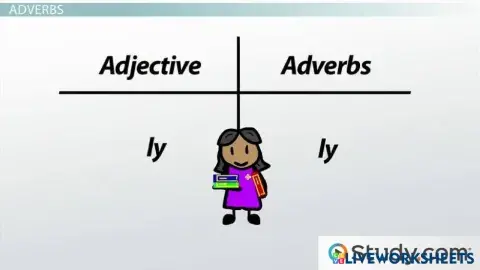
phân biệt tính trạng vị trí enough và tính từ thêm đuôi ED, ING

English

1. Check your work…..

==a. carefully                              b. careful

c. carefulness                               d. care                               

2. I know them…..

a. good                                       ==b. well

c. best                                         d. better

3. She sometimes goes to school …..

a. laterly                                     b. lately

c. later                                        ==d. late

4. Jane is … because her job is …..

a. tired/tired                                 ==b. tired/tiring

c. tiring/tired                               d. tiring/tiring

5.  He has lived in London for some years so he speaks …..

a. fluently English                                 b. English fluent

c. fluent English                                             ==d. English fluently

6. "How does Amy like her new school?"

"Fine. And she's doing_____ in her courses"

a. extreme good                                    ==b. extremely well

c. extremely good                                 d. extreme well

7. "Your son seems to be an excellent skier"

"They say he's_____ for his age".

==a. surprisingly competent                            b. surprising competent

c. competently surprising                                d. surprising competently

8. "The students all went to the circus yesterday".

"I heard it was really_____".

a. amused                                                      ==b. amusing

c. amuse                                                       d. amusingly

9. "I was_____ that Jan couldn't come to the party".

"Her boss made her work overtime"

==a. disappointing                                         b. disappointedly

c. disappoint                                         d. disappointed

10. "I can’t believe that Jim is marrying the vice-president's daughter".

"That they would get married is_____".

a. surprised                                          b. surprising

==c. surprisingly                                            d. surprise

11 . My brother is_________to drive a car.

==A. Old enough

B. Enough old

12. I don’t think you are ___________ to lift this table.

==A. Strong enough

B. Enough strong

13. Mike doesn’t have __________ to meet her.

A. Time enough

==B. Enough time

14. He is __________ to eat 10 apples.

==A. Hungry enough

B. Enough hungry

15. Is your cake _____________?

==A. Sweet enough

B. Enough sweet

16. Helen doesn’t have_____________to buy a new phone

==A. enough money

B. money enough

17.  She isn’t _____________to carry this bag

A. enough strong

==B. strong enough

18. Bill isn’t _____________to understand what I say

==A. intelligent enough

B. enough intelligent

19. She lost the match simply because she didn’t play

==A. well enough

B. enough well

20. Even if you use a green house, it will never be_____________to grow bananas in this climate

==A. warm enough

B enough warm

21. We went to the cinema but the film was really

A. bored

==B. boring

22. It’s an___________book

A. amazed

==B. amazing

23. The direction he gave us were really___________

A. confused

==B. confusing

24. I felt___________after running a marathon

==A. exhausted

B. exhausting

25. I was___________to see my best friend at the party

==A. surprised

B. surprising

26. The challenging puzzle was___________and required careful thought to solve

==A. puzzling

B. puzzled

27. You should take a rest. You look really___________

==A. tired

B. tiring

28. The journey was___________. Twenty hours by train made us___________

A. bored/exhausted

B. boring/exhausting

==C. boring/exhausted

D. bored/exhausting

29. Don’t show my baby photos to others, Mum! It’s so___________!

==A. embarrassing

B. embarrased

30. She got really___________ yesterday because someone threw rubbish in front of her house

==A. annoyed

B. annoying


Present Perfect Tense

Writing - English Language

📝 Student Instruction: Present Perfect Tense

  1. When do we use Present Perfect?
  • To talk about actions or experiences at an unspecified time in the past.

    • I have visited Japan.
  • To talk about actions that started in the past and continue until now.

    • She has lived here for 10 years.
  • To talk about actions that happened in the past but still have a result now.

    • He has broken his leg (he can’t walk now).
  1. Form
  • Affirmative (+): Subject + have/has + past participle (V3)

    • I have eaten breakfast.
    • She has finished her homework.
  • Negative (–): Subject + have/has + not + past participle

    • I haven’t seen that movie.
    • He hasn’t called me.
  • Question (?): Have/Has + subject + past participle

    • Have you visited London?
    • Has she done her homework?
  1. Time expressions used with Present Perfect
  • just → I have just finished my homework.
  • already → She has already eaten.
  • yet → Have you finished yet? / I haven’t finished yet.
  • ever → Have you ever been to Paris?
  • never → I have never seen snow.
  • for (a period of time) → for 5 years
  • since (a starting point) → since 2010
  1. Examples
  • We have studied English for three years.
  • He has never played basketball.
  • Have they arrived yet?

👉 Practice Example:
Change the verb into Present Perfect.

  1. I (see) that movie three times. → I have seen that movie three times.
  2. She (not finish) her homework yet. → She hasn’t finished her homework yet.
  3. (they / travel) to London before? → Have they traveled to London before?

Crea y personaliza fichas interactivas para cada aula

LiveWorksheets facilita a profesorado, familias y personas que educan en casa el diseño y la entrega de materiales de aprendizaje atractivos. Solo tienes que subir un PDF o empezar desde cero para crear lo que necesites: desde fichas interactivas de matemáticas hasta ejercicios de comprensión lectora, fichas de multiplicación o actividades para infantil, todo en unos pocos clics. Nuestro editor de arrastrar y soltar funciona en todos los cursos y asignaturas, lo que te permite adaptar el contenido a tus programaciones, deberes o evaluaciones. Quienes enseñan inglés como segunda lengua (ESL) también pueden crear sus propias fichas, añadir cuadros de sonidos comunes o integrar actividades de ESL para hacer cada clase más participativa. Además, podrás diseñar fácilmente tareas diferenciadas y autocorregidas que ahorran tiempo y apoyan un mejor aprendizaje del alumnado.

Una biblioteca completa de recursos para K-12 y ESL

Accede a miles de fichas listas para usar en todas las asignaturas de K-12, incluidas actividades para infantil, matemáticas, práctica de multiplicación, comprensión lectora y recursos de ESL. Filtra por curso, materia o nivel de competencia para encontrar exactamente lo que necesitas, ya sea para un aula de primaria, una revisión en secundaria o actividades de práctica en bachillerato. El profesorado de ESL puede explorar nuestra colección en constante crecimiento de fichas y actividades de inglés como segunda lengua, diseñadas para apoyar a estudiantes de todos los niveles. Con nuevo contenido añadido de forma regular, LiveWorksheets es un recurso flexible que ayuda a lograr aprendizajes duraderos.