7 Day Travel Itinerary

English as a Second Language (ESL)

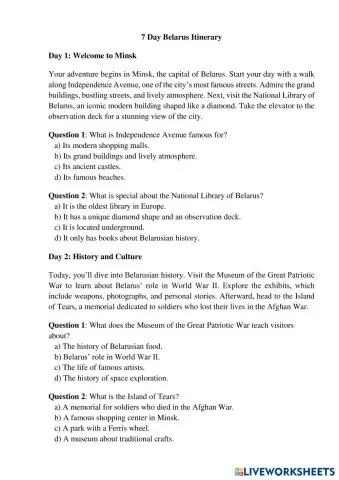
                                 7-дневный маршрут по Беларуси

День 1: Добро пожаловать в Минск

Ваше приключение начинается в Минске, столице Беларуси. Начните свой день с прогулки по проспекту Независимости, одной из самых известных улиц города. Полюбуйтесь величественными зданиями, оживленными улицами и оживленной атмосферой. Затем посетите Национальную библиотеку Беларуси, знаковое современное здание в форме бриллианта. Поднимитесь на лифте на смотровую площадку, чтобы полюбоваться потрясающим видом на город.


Вопрос 1: Чем знаменит проспект Независимости?

a) Современными торговыми центрами.

b) Величественными зданиями и оживленной атмосферой.

c) Древними замками.

d) Знаменитыми пляжами.


Вопрос 2: Чем примечательна Национальная библиотека Беларуси?

a) Это старейшая библиотека в Европе.

b) Она имеет уникальную форму бриллианта и смотровую площадку.

c) Она находится под землей.

d) В ней есть только книги об истории Беларуси.


День 2: История и культура

Сегодня вы погрузитесь в историю Беларуси. Посетите Музей Великой Отечественной войны, чтобы узнать о роли Беларуси во Второй мировой войне. Изучите экспонаты, среди которых оружие, фотографии и личные истории. После этого отправляйтесь на Остров слез, мемориал, посвященный солдатам, погибшим в Афганской войне.


Вопрос 1: Чему учит посетителей Музей Великой Отечественной войны?

a) История белорусской кухни.

b) Роль Беларуси во Второй мировой войне.

c) Жизнь известных художников.

d) История освоения космоса.


Вопрос 2: Что такое Остров слез?

a) Мемориал солдатам, погибшим в Афганской войне.

b) Известный торговый центр в Минске.

c) Парк с колесом обозрения.

d) Музей традиционных ремесел.


День 3: Природа и дикая природа

Приготовьтесь исследовать природу! Отправляйтесь в национальный парк Беловежская пуща, объект Всемирного наследия ЮНЕСКО и один из старейших лесов в Европе. Здесь вы увидите редких животных, таких как зубры, олени и кабаны. Отправьтесь на экскурсию, чтобы узнать об уникальной экосистеме парка.


Вопрос 1: Чем Беловежская пуща особенная?

a) Это один из старейших лесов в Европе и объект Всемирного наследия ЮНЕСКО.

b) Это самая большая пустыня в Европе.

c) Она славится своей современной архитектурой.

d) Это популярный горнолыжный курорт.


Вопрос 2: Назовите двух животных, которых вы можете увидеть в парке.

a) Слоны и тигры.

b) Зубры и олени.

c) Пингвины и белые медведи.

d) Кенгуру и коалы.


День 4: Традиционная белорусская культура

Сегодня вы познакомитесь с традиционной белорусской жизнью в Музее народных ремесел «Дудутки». Посмотрите, как ремесленники изготавливают гончарные изделия, плетут корзины и пекут хлеб. Не забудьте попробовать традиционную белорусскую еду, например, драники (картофельные оладьи) или квас (напиток на основе ферментации).


Вопрос 1: Что можно увидеть в музее Дудутки?

a) Выставки современного искусства.

b) Мастера по изготовлению гончарных изделий и плетению корзин.

c) Коллекция старинных монет.

d) Выставка, посвященная науке и технике.


Вопрос 2: Назовите одну традиционную белорусскую еду.

a) Пицца.

b) Суши.

c) Драники.

d) Тако.


День 5: Искусство и архитектура

Перенеситесь в прошлое, посетив два объекта Всемирного наследия ЮНЕСКО: Мирский замок и Несвижский дворец. Эти потрясающие здания наполнены историей и прекрасной архитектурой. Исследуйте башни, сады и музеи внутри.


Вопрос 1: Чем славятся Мирский замок и Несвижский дворец?

a) Их современный дизайн и технологии.

b) Их прекрасная архитектура и история как объектов Всемирного наследия ЮНЕСКО.

c) Их знаменитые пляжи и курорты.

d) Их роль в освоении космоса.


Вопрос 2: Что вы можете исследовать внутри этих зданий?

a) Башни, сады и музеи.

b) Аквапарк и бассейны.

c) Зоопарк с экзотическими животными.

d) Кинотеатр и торговый центр.


День 6: Современная Беларусь

Сегодня вы увидите современную сторону Беларуси. Посетите Минск-Арену, большой спортивно-развлекательный комплекс. Затем исследуйте современные части Минска, включая торговые центры, кафе и парки.


Вопрос 1: Для чего используется Минск-Арена?

a) Фермерство и сельское хозяйство.

b) Спортивные и развлекательные мероприятия.

c) Традиционный рынок ремесел.

d) Исторический музей.


Вопрос 2: Какие современные места вы можете посетить в Минске?

a) Торговые центры, кафе и парки.

b) Древние замки и руины.

c) Тропический лес.

d) Сафари-парк в пустыне.


День 7: Размышления и прощание

В последний день отдохните в Парке Горького, популярном месте среди местных жителей и туристов. Прокатитесь на колесе обозрения или насладитесь прогулкой по реке. Используйте это время, чтобы поразмышлять о своей поездке и обо всех удивительных вещах, которые вы увидели и узнали.


Вопрос 1: Что можно сделать в Парке Горького?

a) Покататься на колесе обозрения или прогуляться по реке.

b) Посетить музей Второй мировой войны.

c) Исследовать традиционную ремесленную деревню.

d) Покататься на лыжах.


Вопрос 2: О чем стоит подумать в последний день?

a) Что вам больше всего понравилось и чему вы научились.

b) Ваши планы на следующее лето.

c) Ваш любимый фильм или книга.

d) Что вы хотите съесть на ужин.

How to Become a DJ: 10 Tips to Start DJing in 2025

English as a Second Language (ESL)

How to Become a DJ: 10 Tips to Start DJing in 2025

The world of DJing has evolved far beyond simply spinning dance records at night clubs. It's now a vibrant global community for independent artists to express themselves, create unique musical experiences, and become the next big name in the electronic scene.

How to become a DJ for beginners

Before diving headfirst into the deep and diverse world of DJing, it's crucial to immerse yourself in various genres of music. Explore everything from electronica to hip-hop, techno, house, and beyond. Your unique musical taste is what's going to set you apart from everyone else and help you craft out your niche as a DJ - not to mention provide that much-needed inspiration to get you started.

How to start DJing in 2025

1. Learn the basics of DJing

Got your eye on the latest speakers or headphones? Hold your horse. It's probably better to get a decent grasp of the fundamentals of DJing before forking out on a fancy new home studio setup. Some key topics you might wanna initially brush up on include:

Beatmatching

This is all about syncing the beats of two (or more) different tracks, ensuring a smooth transition between each song.

Mixing

Mixing is the part where you'll blend these tracks seamlessly - adjusting your volume, EQ, and adding any effects.

Phrasing

Phrasing will help you recognise different song structures and create cohesive mixes.

Scratching & effects

Once you've played about with the other stuff, you can start experimenting with advanced techniques like scratching and applying extra effects. This'll help you boost your live sets.

There are loads of online courses, tutorials, and production schools that offer in-depth training on these all of these topics, so it's worth dedicating some time to practice regularly and fine-tune your skills.

2. Invest in the right equipment

Basics ticked off. Now you need to pick out the right equipment. 

While professional setups can be expensive, there are loads of budget-friendly options for beginners. Consider purchasing a DJ controller, headphones, and a laptop loaded with DJ software. It might be pricey, but quality equipment is essential for honing your skills and creating top-notch mixes.

But this doesn't necessarily mean splashing out on the most expensive options. Northern Irish Producer & DJ, The Cyclist, has these tips for starting out and developing your skills:

“Start experimenting and learning the tools. There are so many free versions of everything to get started. Try searching for ‘free VSTs’ and go from there.”

3. Build your music library

Your DJ career ultimately hinges on the quality of music you play and how well it goes down with your crowd. To cover your own back during potentially tricky sets, you’ll want to build up a diverse and extensive music library. This will include a mix of tracks that resonate with your style and also the preferences of your target audience. 

Explore electronic music platforms like Beatport, buy sample packs from stores like Splice, and consider subscribing to DJ record pools for access to a wide selection of music.

4. Define your sound

Just as bands and solo artists need to nurture their own specific sound, DJs need to carve out their particular style and decide on the sound that they're going to build their career around.

Use other artists you're a fan of as reference and start playing about with certain sounds or samples that you like. This is the start of your journey so be experimental!

“Writing loops/beats/riffs is great fun and a place to start, but you need to finish tracks. Work on arranging these into a full track format - use other tracks as reference and for ideas on improving your production and arrangement.” - The Cyclist

5. Create your brand and identity

As an independent DJ, your brand is everything. Develop a unique name, logo, and visual style that reflects your personality and musical style. Your music branding should be consistent across all your promotional materials, from social media profiles to event flyers.

Once you’ve established your brand, you’ll be able to get a better understanding of your following and lean further into producing the sounds you're becoming associated with.


Take Fred Again.. as an example. His brand of honest and personal social media marketing lead to him selling out global tours as well as headlining Glastonbury and Coachella in 2023. A lot of the hype built up around Fred's came from his branding, a simple '..' - which was used across his merch and discography as well as used to tease appearances online and get more people chatting about him.

A large-scale example, but good branding strategy which you can apply to your own music.


Crea y personaliza fichas interactivas para cada aula

LiveWorksheets facilita a profesorado, familias y personas que educan en casa el diseño y la entrega de materiales de aprendizaje atractivos. Solo tienes que subir un PDF o empezar desde cero para crear lo que necesites: desde fichas interactivas de matemáticas hasta ejercicios de comprensión lectora, fichas de multiplicación o actividades para infantil, todo en unos pocos clics. Nuestro editor de arrastrar y soltar funciona en todos los cursos y asignaturas, lo que te permite adaptar el contenido a tus programaciones, deberes o evaluaciones. Quienes enseñan inglés como segunda lengua (ESL) también pueden crear sus propias fichas, añadir cuadros de sonidos comunes o integrar actividades de ESL para hacer cada clase más participativa. Además, podrás diseñar fácilmente tareas diferenciadas y autocorregidas que ahorran tiempo y apoyan un mejor aprendizaje del alumnado.

Una biblioteca completa de recursos para K-12 y ESL

Accede a miles de fichas listas para usar en todas las asignaturas de K-12, incluidas actividades para infantil, matemáticas, práctica de multiplicación, comprensión lectora y recursos de ESL. Filtra por curso, materia o nivel de competencia para encontrar exactamente lo que necesitas, ya sea para un aula de primaria, una revisión en secundaria o actividades de práctica en bachillerato. El profesorado de ESL puede explorar nuestra colección en constante crecimiento de fichas y actividades de inglés como segunda lengua, diseñadas para apoyar a estudiantes de todos los niveles. Con nuevo contenido añadido de forma regular, LiveWorksheets es un recurso flexible que ayuda a lograr aprendizajes duraderos.