Unit C: Heat & Temperature

Science

Unit C: Heat and Temperature review


  • Explain expansion and contraction in terms of heat

Things expand when heated and contract when cooled


  • In Canada what do we measure degrees in?

Celsius


  • Caloric theory was proven to be untrue because… (read textbook)

The mass of a heated spoon did not change


  • Heat energy is measured in ___________

joules


  • Heat energy flows from ___________________  to ____________________

Hot objects to cold objects


  • What heating technology reappeared over time?

Central heating


  • What are examples of non-sustainable resources?

Oil, coal, natural gas


  • The transfer of heat energy between substances that are in contact with each other is called…

conduction


  • When a metal spoon is put into a bowl of hot soup, heat is transferred from what to what?

From the soup to the spoon


  • In what substances could a convection current form? (solid, liquid or gas)

Liquid and gas


  • What substances absorb heat the fastest, a black shirt or white shirt?

A black shirt


  • The transfer of energy by infrared rays is called…

radiation


  • The energy of movement is called…

Kinetic energy


  • The method of heat transfer when liquid or gas particles move from one area to another is called…

Convection  


  • According to the Particle Model of Matter (PMOM), heating a substance does what to the particles?

Increases the kinetic energy of the particles


  • The measure of the average Kinetic energy of the particles in a substance is called…

Temperature 


  • The total Kinetic energy of all the particles in a substance is called…

Thermal energy


  • When a liquid changes to a solid it is called… 

freezing


  • What is the relative particles movement of each state of matter from fastest to slowest movement of particles?

Gas, liquid, solid


  • During conduction, which way does heat transfer?

From areas of greater kinetic energy to areas of lower kinetic  energy


  • When cooking chicken in the oven, why should the reflective side of the aluminum foil be toward the food?

The reflective side will reflect the heat toward the chicken causing it to cook faster


  • Which state(s) of matter has a definite volume? (can take a shape)

Liquid and solid


  • Materials that do not allow easy transfer of heat are called…

insulators


  • The four natural sources of thermal energy are…

Fires, geothermal, sun, decay


  • The name given to energy produced by the sun is…

Solar energy


  • Heating systems are controlled by…

Thermostats 


  • Every insulator is given a number showing its insulating ability, this is known as its…

R-value


  • Heating systems that provide heat for a larger area from a single source is known as…

Central heating


  • Many thermostats contain a strip which is made up of two different metals; this is called a…

Bimetallic strip


  • Insulation is used to…

Prevent heat transfer from the warm object to the cold object


  • One source of energy is not limited, does not create pollution, nor does it carry radiation risks. This source is… 

The sun


  • Making effective energy use choices begins with…

Separating societal needs from societal wants


  • What is a non-renewable resource?

It can not be replaced


  • An example of a renewable energy resource is…

Wind, water, solar


  • A major disadvantage of using wind energy is that…

It can only be used in windy areas


  • Which energy sources produce extremely hazardous waste material?

nuclear


  • An advantage of using hydroelectric energy is that…

It does not create air pollution


  • To improve their energy efficiency, many large companies that produce electricity now use a process called…

Cogeneration


The Story of Coca-Cola

English as a Second Language (ESL)

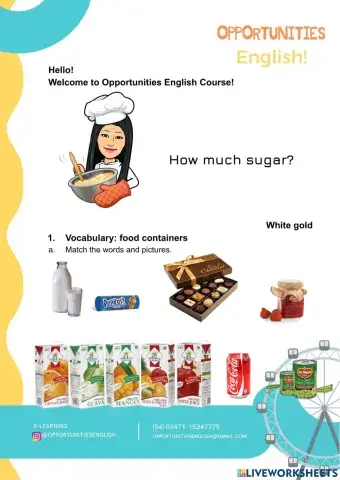
Coca-Cola was invented in 1886 by John Pemberton, a druggist living in Atlanta. The original drink was a type of syrup, using coca leaves, sugar and cola nuts, plus a few other secret ingredients! Pemberton sold it as a medicine; and with its coca (the source of cocaine), it must have made people feel good!
Nevertheless, Pemberton’s medicine was not very successful, so he sold his secret formula to another druggist, Asa Candler. Candler was interested, because he had another idea that Pemberton’s “medicine” would be much better if it was mixed with soda. Candler was thus the man who really invented the drink Coca-Cola. Candler also advertised his new drink, and soon people were going to drugstores just to get a drink of Coca-Cola.
Before long, other people became interested in the product, including a couple of businessmen who wanted to sell it in bottles. Candler sold them a licence to bottle the drink, and very quickly the men became millionaires. The famous bottle, with its very distinctive shape, was designed in 1916. And the famous Coca-Cola logo is the most famous logo in the world. Unlike any other famous commercial logos, it has not changed in 100 years!
During the First World War, American soldiers in Europe began asking for Coca-Cola, so the Coca-Cola company began to export to Europe. It was so popular with soldiers that they then had to start bottling the drink in Europe.
Today, Coca-Cola is made in countries all over the world, including Russia and China; it is the world’s most popular drink.
As for the famous formula, it is probably the world’s most valuable secret! The exact ingredients for making Coca-Cola are only known to a handful of people. And as for the “coca” that was in the original drink, that was eliminated in 1903. It was a drug, and too dangerous. Today’s Coca-Cola contains caffeine, but not cocaine!

Crea y personaliza fichas interactivas para cada aula

LiveWorksheets facilita a profesorado, familias y personas que educan en casa el diseño y la entrega de materiales de aprendizaje atractivos. Solo tienes que subir un PDF o empezar desde cero para crear lo que necesites: desde fichas interactivas de matemáticas hasta ejercicios de comprensión lectora, fichas de multiplicación o actividades para infantil, todo en unos pocos clics. Nuestro editor de arrastrar y soltar funciona en todos los cursos y asignaturas, lo que te permite adaptar el contenido a tus programaciones, deberes o evaluaciones. Quienes enseñan inglés como segunda lengua (ESL) también pueden crear sus propias fichas, añadir cuadros de sonidos comunes o integrar actividades de ESL para hacer cada clase más participativa. Además, podrás diseñar fácilmente tareas diferenciadas y autocorregidas que ahorran tiempo y apoyan un mejor aprendizaje del alumnado.

Una biblioteca completa de recursos para K-12 y ESL

Accede a miles de fichas listas para usar en todas las asignaturas de K-12, incluidas actividades para infantil, matemáticas, práctica de multiplicación, comprensión lectora y recursos de ESL. Filtra por curso, materia o nivel de competencia para encontrar exactamente lo que necesitas, ya sea para un aula de primaria, una revisión en secundaria o actividades de práctica en bachillerato. El profesorado de ESL puede explorar nuestra colección en constante crecimiento de fichas y actividades de inglés como segunda lengua, diseñadas para apoyar a estudiantes de todos los niveles. Con nuevo contenido añadido de forma regular, LiveWorksheets es un recurso flexible que ayuda a lograr aprendizajes duraderos.