Ket 5 - Part 1 - Test 1

English

Part 1- Test 1 -Ket 5 – Youtube  [ Listening A2 , KET 5, Test 1 , Part 1]


Question 1          One.  How will Jill go to the football match?

Man:  Are you going to drive to the football match, Jill?

Woman: I was going to, but I think parking will be difficult.

Man: That's what I thought. I'm going to walk, if you want to come with me.

Woman: OK then — that's cheaper than the bus, and it's always late anyway!


   Question 2          Two. Who's going to visit the woman?

Woman: My sister's son is coming to stay with me tomorrow.

Man: Oh, that’s nice. I met him a long time ago, when he was ten years old, didn't I ?

Woman: Well, he's a father now, you know. But he's not bringing the baby with him.

Man:    Oh, what a pity!


Question 3            Three. What will Ruby do tonight?

Girl:  Mum, Kate's just phoned. She wants me to go to the cinema this evening.

Woman: You can't go out, Ruby, if you haven't finished your school work.

Girl:  But I have! And I've even cleaned my shoes.

Woman: That's all right then.


Question 4             Four. How much did the woman's desk cost?

Man:    I've just spent sixty pounds fifty on a new desk. Very expensive!

Woman: Well, I paid sixty-six pounds fifty for mine.

Man: I saw one for fifty-five pounds, but it wasn't very good.

Woman: A good desk costs more than fifty-five pounds.


Question 5               Five. Where is the man's watch?

Man:  I can't find my watch anywhere!

Woman: Did you take it off when you did the washing-up last night?

Man: I've looked in the kitchen and it's not there.

Woman: Here it is. You left it on the bath before you went to bed.


CEFR A2/B1 English Level Placement Test

Vocabulary - ESL

Choose the best option (A, B, C, or D) to complete each sentence.

Grammar & Functions


  1. I'm going to the supermarket _______ some food. A. buy B. to buy C. for buying D. buying
  2. If it _______ tomorrow, we won't go to the beach. A. rained B. would rain C. rains D. is raining
  3. Excuse me, _______ you tell me where the post office is? A. could B. must C. should D. may
  4. She _______ been learning English for three years now. A. has B. is C. did D. had
  5. The tickets _______ by my brother last week. A. bought B. were bought C. have bought D. are buying
  6. I don't mind _______ the washing up; I actually quite like it. A. do B. to do C. doing D. done
  7. He _______ to smoke, but he gave it up five years ago. A. is used B. used C. was used D. gets used
  8. They have _______ furniture in their living room. A. many B. few C. a lot of D. several
  9. It's the _______ dangerous animal I've ever seen. A. most B. more C. very D. as
  10. You _______ to wear a helmet when you ride a motorbike; it's the law. A. would B. should C. have D. need


Vocabulary


  1. What's your _______ sport? A. favorite B. liked C. best D. pleased
  2. Could you please turn _______ the lights before you leave the room? A. up B. out C. in D. over
  3. She wants to _______ an appointment with the doctor. A. take B. do C. make D. give
  4. We had a great time _______ the castle yesterday. A. visiting B. seeing C. looking D. exploring
  5. I need to buy a new _______ of shoes for the wedding. A. group B. couple C. pair D. set
  6. My new job involves dealing with _______ from all over the world. A. clients B. relatives C. classmates D. colleagues
  7. The weather forecast says it will be _______ and sunny tomorrow. A. chilly B. foggy C. cloudy D. mild
  8. He was very _______ when he got lost in the city. A. confident B. embarrassed C. excited D. calm
  9. They live in a small, quiet _______ outside the main city. A. avenue B. building C. neighbour D. suburb
  10. After a long walk, they decided to _______ a coffee break. A. have B. make C. get D. do

Student Worksheet Leaflet : Marc Chagall – From Goal to Success

Reading Comprehension - English Language

Name: ____________________ 

SUCCESS

to set a goal 


to work hard


to face obstacles


to acquire new skills


to stay humble and hungry


Before Reading – Think & Discuss 

1. What do you think makes a person successful? 


2. Have you ever seen a painting with flying people, animals, or dream-like scenes? How did it make you feel? 


Reading Comprehension 

Read the biography of Marc Chagall . Then answer the questions.


True (T) or False (F)? Correct the false sentences. 


1. _ Marc Chagall was born in Paris. 

   → Correction: _____________________________________ 


2. He came from a wealthy family. 

 → Correction: _____________________________________ 


3.  He stopped painting during World War II. 

 → Correction: _____________________________________ 


4.  His art often included memories of his childhood. 

 → Correction: _____________________________________ 


5. He only painted on canvas. 

 → Correction: _____________________________________ 


6. He painted his most famous works in Paris.

 → Correction: _____________________________________ 

7. Unfortunately, Chagall`s paintings didn`t see many exhibitions during his lifetime.

 → Correction: _____________________________________ 


Find the evidence in the text. Give the real sentences from the text

To set a goal 

_________________________________________________

to work hard

_________________________________________________

to face obstacles

_________________________________________________

to acquire new skills

_________________________________________________

to stay humble and hungry

_________________________________________________


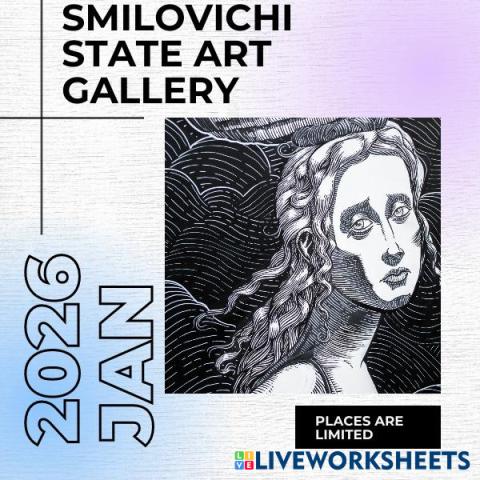
A picture description

  • Useful vocabulary

a flying couple, a violinist, a vibrant colour palette, floating figures, distorted perspective, symbols of childhood / love / hometown, euphoria of love, soaring happiness, nostalgia for the goal, connection to roots, the artist at work, between his homeland and new life


Topics to highlight while describing

  • How does this picture reflect Chagall`s goals, dreams, obstacles etc
  • What do main figures symbolize in the picture?


Reflection 

  • Marc Chagall never gave up on his dream, even when life was hard. 
  • What is your dream or big goal? What will help you achieve it? 


Remembering the History: The 16th Street Baptist Church Bombing

History - Social Studies

The 16th Street Baptist Church in Birmingham, Alabama, was an important place for the Black community and for people fighting for civil rights. On September 15, 1963, a terrible event happened when a bomb exploded at the church. This bombing took the lives of four young girls who were getting ready for Sunday school. The church was a meeting place for civil rights leaders to plan marches and peaceful protests. The sadness and anger after the bombing helped people see the need for change. It helped lead to the Civil Rights Act of 1964, a law that made segregation illegal in the United States.


Fill in the Blank

Fill in the blank with the correct words:

  1. The 16th Street Baptist Church bombing took place on _____________.
  2. The church was located in the city of _____________, Alabama.
  3. The tragedy resulted in the loss of _____________ young girls who were getting ready for Sunday school.
  4. Civil rights leaders used the church as a _____________ to plan marches like the Children’s Crusade.
  5. This event was so powerful that it helped pass the _____________ of 1964, a law that made segregation illegal.

Word Bank: Headquarters | Civil Rights Act | September 15, 1963 | Four | Birmingham


Multiple Choice Questions

Choose the correct answer from the choices for each question:

  1. What city was the 16th Street Baptist Church bombing in?
    • a) Atlanta
    • b) Birmingham
    • c) Montgomery
    • d) Selma
  2. How many young girls lost their lives in the bombing?
    • a) Three
    • b) Five
    • c) Four
    • d) Two
  3. What important law was passed partly because of the church bombing?
    • a) Voting Rights Act
    • b) Civil Rights Act
    • c) Bill of Rights
    • d) Emancipation Proclamation
  4. What was the church used for during the civil rights movement?
    • a) A restaurant
    • b) A store
    • c) A headquarters for planning marches
    • d) A library
  5. On what date did the bombing occur?
    • a) July 4, 1776
    • b) January 1, 1960
    • c) September 15, 1963
    • d) October 31, 1963


Open-Ended Questions

Answer the following questions in complete sentences:

  1. Why do you think the 16th Street Baptist Church was important to the civil rights movement?
  2. How did the bombing change the way people thought about segregation and civil rights?
  3. What can we learn from remembering the story of the 16th Street Baptist Church bombing?

Aglaya

  • English Language
  • 8th grade

Aglaya

Reading and Text Analysis - English Language

  • Why is mathematics important in daily life?
  • Can you name any famous mathematicians?
  • mathematics, the science of structure, order, and relation that has evolved from elemental practices of counting, measuring, and describing the shapes of objects. It deals with logical reasoning and quantitative calculation, and its development has involved an increasing degree of idealization and abstraction of its subject matter. Since the 17th century, mathematics has been an indispensable adjunct to the physical sciences and technology, and in more recent times it has assumed a similar role in the quantitative aspects of the life sciences.

    In many cultures—under the stimulus of the needs of practical pursuits, such as commerce and agriculture—mathematics has developed far beyond basic counting. This growth has been greatest in societies complex enough to sustain these activities and to provide leisure for contemplation and the opportunity to build on the achievements of earlier mathematicians.

    All mathematical systems (for example, Euclidean geometry) are combinations of sets of axioms and of theorems that can be logically deduced from the axioms. Inquiries into the logical and philosophical basis of mathematics reduce to questions of whether the axioms of a given system ensure its completeness and its consistency. For full treatment of this aspect, see mathematics, foundations of.

    This article offers a history of mathematics from ancient times to the present. As a consequence of the exponential growth of science, most mathematics has developed since the 15th century ce, and it is a historical fact that, from the 15th century to the late 20th century, new developments in mathematics were largely concentrated in Europe and North America. For these reasons, the bulk of this article is devoted to European developments since 1500.

    This does not mean, however, that developments elsewhere have been unimportant. Indeed, to understand the history of mathematics in Europe, it is necessary to know its history at least in ancient Mesopotamia and Egypt, in ancient Greece, and in Islamic civilization from the 9th to the 15th century. The way in which these civilizations influenced one another and the important direct contributions Greece and Islam made to later developments are discussed in the first parts of this article.

    India’s contributions to the development of contemporary mathematics were made through the considerable influence of Indian achievements on Islamic mathematics during its formative years. A separate article, South Asian mathematics, focuses on the early history of mathematics in the Indian subcontinent and the development there of the modern decimal place-value numeral system. The article East Asian mathematics covers the mostly independent development of mathematics in China, Japan, Korea, and Vietnam.

  • Match the words with their meanings.
  • structure -the process of thinking logically about something
  • reasoning-a way that parts are organized or arranged
  • quantitative-a general idea rather than a concrete object
  • abstraction-related to numbers or amounts
  • commerce-to support or keep something going
  • sustain-the activity of buying and selling goods
  • axiom-a statement that can be proved using facts and logic
  • theorem-a statement that is accepted as true without proof
  • civilization-the power to affect how someone or something develops
  • influence-an advanced human society with culture and knowledge
  • Fill in the blanks with correct words from the list:
    (structure, reasoning, commerce, influence, civilization)
  • Ancient _______ like Egypt and Greece made big progress in mathematics.
  • Logical _______ is important for solving problems.
  • Trade and _______ helped mathematics grow.
  • The _______ of India was strong in Islamic mathematics.
  • Geometry studies the _______ of shapes.
  • Choose the correct form.
  • Mathematics (has / have) been important since ancient times.
  • It (developed / has developed) far beyond basic counting.
  • Many cultures (were / have been) influenced by Greek mathematics.
  • Mathematicians (worked / have worked) for centuries to create new ideas.
  • Since the 17th century, mathematics (became / has become) a part of science.
  • Reading Comprehension

    Answer the questions:

  • What is mathematics described as in the first paragraph?
  • Why did mathematics develop in many cultures?
  • What are mathematical systems made of?
  • Where did most mathematical development occur after the 15th century?
  • Why is it important to study ancient civilizations to understand European mathematics?
  • How did India influence Islamic mathematics?

Crea y personaliza fichas interactivas para cada aula

LiveWorksheets facilita a profesorado, familias y personas que educan en casa el diseño y la entrega de materiales de aprendizaje atractivos. Solo tienes que subir un PDF o empezar desde cero para crear lo que necesites: desde fichas interactivas de matemáticas hasta ejercicios de comprensión lectora, fichas de multiplicación o actividades para infantil, todo en unos pocos clics. Nuestro editor de arrastrar y soltar funciona en todos los cursos y asignaturas, lo que te permite adaptar el contenido a tus programaciones, deberes o evaluaciones. Quienes enseñan inglés como segunda lengua (ESL) también pueden crear sus propias fichas, añadir cuadros de sonidos comunes o integrar actividades de ESL para hacer cada clase más participativa. Además, podrás diseñar fácilmente tareas diferenciadas y autocorregidas que ahorran tiempo y apoyan un mejor aprendizaje del alumnado.

Una biblioteca completa de recursos para K-12 y ESL

Accede a miles de fichas listas para usar en todas las asignaturas de K-12, incluidas actividades para infantil, matemáticas, práctica de multiplicación, comprensión lectora y recursos de ESL. Filtra por curso, materia o nivel de competencia para encontrar exactamente lo que necesitas, ya sea para un aula de primaria, una revisión en secundaria o actividades de práctica en bachillerato. El profesorado de ESL puede explorar nuestra colección en constante crecimiento de fichas y actividades de inglés como segunda lengua, diseñadas para apoyar a estudiantes de todos los niveles. Con nuevo contenido añadido de forma regular, LiveWorksheets es un recurso flexible que ayuda a lograr aprendizajes duraderos.