

Instrucciones del autor
Interactive Worksheet: Introduction to Acid and base Name: ____________________ Grade: ____________________ Part 1: Natural (Organic) Acids in Food Complete the table by identifying the specific organic acid found in each natural sourc Natural Source Organic Acid Present Vinegar Lemon Orange Tamarind Tomato [ Acetic Acid ] [ Citric Acid ] [ Ascorbic Acid ] [ Tartaric Acid ] [ Oxalic Acid ] Sour Milk (Curd) [ Lactic Acid ] Grapes [ Tartaric Acid ] Apples [ Malic Acid ] Part 2: The Indicator Challenge Fill in the resulting color change for each indicator when it reacts with an Acid or a Base. Indicator Blue Litmus Paper Red Litmus Paper Color in Acidic Solution Color in Basic Solution [ Red ] Stays Red Turmeric (Powder/Paper) Stays Yellow Phenolphthalein Methyl Orange China Rose (Hibiscus) [ Colorless ] [ Red / Pink ] [ Dark Pink ] Part 3: Properties of Acids (True or False) Tick the correct box for each statement. Statement 1. Mineral acids like Sulphuric acid are safe to taste. Stays Blue [ Blue ] [ Red / Brown ] [ Pink / Magenta ] [ Yellow ] [ Green ] 2. Organic acids are naturally occurring and generally weak. True False [ ] [X] [X] [ ] 3. Acids react with metals to release Carbon Dioxide gas. [ ] [X] 4. Concentrated mineral acids can cause severe burns on the skin. [X] [ ] 5. All substances that taste sour are strong mineral acids. [ ] 6. Diluting an acid involves adding water to the acid very quickly. [ ] Part 4: Matching the Properties Draw a line to match the term with its correct description. [X] [X] Neutralization -> Reaction between an acid and a base to form salt and water. Corrosive -> Property of strong acids that allows them to eat away at surfaces. Alkali -> A base that is specifically soluble in water. Litmus -> A natural indicator extracted from Lichens.
Introduction to acids and bases


Instrucciones del autor
Interactive Worksheet: Introduction to Acid and base Name: ____________________ Grade: ____________________ Part 1: Natural (Organic) Acids in Food Complete the table by identifying the specific organic acid found in each natural sourc Natural Source Organic Acid Present Vinegar Lemon Orange Tamarind Tomato [ Acetic Acid ] [ Citric Acid ] [ Ascorbic Acid ] [ Tartaric Acid ] [ Oxalic Acid ] Sour Milk (Curd) [ Lactic Acid ] Grapes [ Tartaric Acid ] Apples [ Malic Acid ] Part 2: The Indicator Challenge Fill in the resulting color change for each indicator when it reacts with an Acid or a Base. Indicator Blue Litmus Paper Red Litmus Paper Color in Acidic Solution Color in Basic Solution [ Red ] Stays Red Turmeric (Powder/Paper) Stays Yellow Phenolphthalein Methyl Orange China Rose (Hibiscus) [ Colorless ] [ Red / Pink ] [ Dark Pink ] Part 3: Properties of Acids (True or False) Tick the correct box for each statement. Statement 1. Mineral acids like Sulphuric acid are safe to taste. Stays Blue [ Blue ] [ Red / Brown ] [ Pink / Magenta ] [ Yellow ] [ Green ] 2. Organic acids are naturally occurring and generally weak. True False [ ] [X] [X] [ ] 3. Acids react with metals to release Carbon Dioxide gas. [ ] [X] 4. Concentrated mineral acids can cause severe burns on the skin. [X] [ ] 5. All substances that taste sour are strong mineral acids. [ ] 6. Diluting an acid involves adding water to the acid very quickly. [ ] Part 4: Matching the Properties Draw a line to match the term with its correct description. [X] [X] Neutralization -> Reaction between an acid and a base to form salt and water. Corrosive -> Property of strong acids that allows them to eat away at surfaces. Alkali -> A base that is specifically soluble in water. Litmus -> A natural indicator extracted from Lichens.
Explora las hojas de trabajo

كيف تعبر عن التفاعلات الكيميائية؟
- Science
- 8th grade

PROPIEDADES DE LA MATERIA: masa, volumen y densidad
- Science
- 8th grade
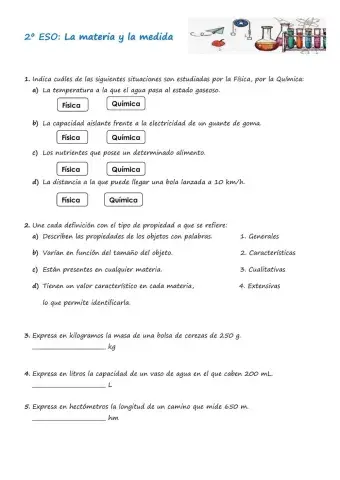
FyQ 2ºESO-La materia y la medida
- Science
- 8th grade
