Types of Institutions

Belizean Studies

Name: ________________

Class: ________________

Date: _________________


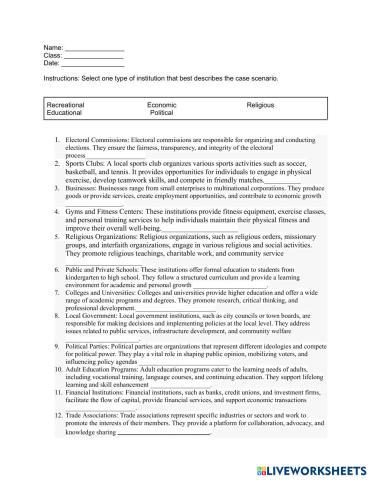
Instructions: Select one type of institution that best describes the case scenario. 


Recreational                                  Economic                                      Religious 

Educational                                     Political 


  1. Electoral Commissions: Electoral commissions are responsible for organizing and conducting elections. They ensure the fairness, transparency, and integrity of the electoral process__________________
  2. Sports Clubs: A local sports club organizes various sports activities such as soccer, basketball, and tennis. It provides opportunities for individuals to engage in physical exercise, develop teamwork skills, and compete in friendly matches.__________
  3. Businesses: Businesses range from small enterprises to multinational corporations. They produce goods or provide services, create employment opportunities, and contribute to economic growth _________________.
  4. Gyms and Fitness Centers: These institutions provide fitness equipment, exercise classes, and personal training services to help individuals maintain their physical fitness and improve their overall well-being._____________________
  5. Religious Organizations: Religious organizations, such as religious orders, missionary groups, and interfaith organizations, engage in various religious and social activities. They promote religious teachings, charitable work, and community service _____________________
  6. Public and Private Schools: These institutions offer formal education to students from kindergarten to high school. They follow a structured curriculum and provide a learning environment for academic and personal growth ______________________.
  7. Colleges and Universities: Colleges and universities provide higher education and offer a wide range of academic programs and degrees. They promote research, critical thinking, and professional development.________________________
  8. Local Government: Local government institutions, such as city councils or town boards, are responsible for making decisions and implementing policies at the local level. They address issues related to public services, infrastructure development, and community welfare ______________________.
  9. Political Parties: Political parties are organizations that represent different ideologies and compete for political power. They play a vital role in shaping public opinion, mobilizing voters, and influencing policy agendas ___________________________
  10. Adult Education Programs: Adult education programs cater to the learning needs of adults, including vocational training, language courses, and continuing education. They support lifelong learning and skill enhancement __________________.
  11. Financial Institutions: Financial institutions, such as banks, credit unions, and investment firms, facilitate the flow of capital, provide financial services, and support economic transactions _____________________.
  12. Trade Associations: Trade associations represent specific industries or sectors and work to promote the interests of their members. They provide a platform for collaboration, advocacy, and knowledge sharing _________________________.
  13. Places of Worship: Churches, mosques, temples, and synagogues are places of worship where individuals gather for religious ceremonies, prayers, and community activities____________.
  14. Religious Education Institutions: These institutions provide religious education and training to individuals, such as Sunday schools, seminaries, and religious colleges ______________.
  15. Town or County Recreation Departments: These departments offer a wide range of recreational programs and facilities for community members. They may organize events like summer camps, swimming lessons, and fitness classes to promote an active and healthy lifestyle.____________________________


Media

English language

STUDENTS THINK FAKE NEWS IS FACT AND ARE USING IT IN THEIR SCHOOLWORK, SAY TEACHERS

Teachers are frustrated that students can’t accept that some stories on social networks are false, while experts suggest that students need better education about online dangers. Students believe that fake news is a fact, and are repeating it in lessons and using it in written work, teachers have warned. More than a third of teachers say their students have used false information that they found online, according to a survey by a teacher’s union.

The union’s general secretary Chris Keates said that the information was "worrying" and it showed that internet companies have a lot of power to influence people’s opinions, especially young people. International education experts are becoming more worried about the situation and say that teachers will need to teach children how to spot fake news. Others were frustrated that students didn’t believe that news they had seen on Facebook and other social media sites was not true, even when the problem was explained to them. One teacher said that students often thought that fake news sites were real, and also that anything that President Donald Trump said was a fact. Last week, German officials said they would give fines of up to 50 million euro to social networks if they didn’t take down illegal fake news posts. The new law would give social networks 24 hours to delete or block the content and seven days to concentrate on more complicated cases. Commenting on the results of the survey, Ms. Keates said that she was worried about the trend, particularly because many young people have never known a world without internet, and are less able to judge whether information that they read online is real or fake. She added that: "It is important for children and young people to be made aware that not everything they see and read online is real."

She said that teachers are trying to help educate students about using false information, but added that it was important for internet providers and websites to take responsibility for any material that is available, and also to deal with people who misuse their services. Last month, Andreas Schleicher, the director of education and skills at OECD (The Organization of Economic co-operation and Development) said that in the modern age, being able to tell the difference between what is real and what is fake is a critical skill. He added that: "This is something that we believe schools can do something about."

Adapted from the Independent by Rachel Pells, April 12th, 2017

Crea y personaliza fichas interactivas para cada aula

LiveWorksheets facilita a profesorado, familias y personas que educan en casa el diseño y la entrega de materiales de aprendizaje atractivos. Solo tienes que subir un PDF o empezar desde cero para crear lo que necesites: desde fichas interactivas de matemáticas hasta ejercicios de comprensión lectora, fichas de multiplicación o actividades para infantil, todo en unos pocos clics. Nuestro editor de arrastrar y soltar funciona en todos los cursos y asignaturas, lo que te permite adaptar el contenido a tus programaciones, deberes o evaluaciones. Quienes enseñan inglés como segunda lengua (ESL) también pueden crear sus propias fichas, añadir cuadros de sonidos comunes o integrar actividades de ESL para hacer cada clase más participativa. Además, podrás diseñar fácilmente tareas diferenciadas y autocorregidas que ahorran tiempo y apoyan un mejor aprendizaje del alumnado.

Una biblioteca completa de recursos para K-12 y ESL

Accede a miles de fichas listas para usar en todas las asignaturas de K-12, incluidas actividades para infantil, matemáticas, práctica de multiplicación, comprensión lectora y recursos de ESL. Filtra por curso, materia o nivel de competencia para encontrar exactamente lo que necesitas, ya sea para un aula de primaria, una revisión en secundaria o actividades de práctica en bachillerato. El profesorado de ESL puede explorar nuestra colección en constante crecimiento de fichas y actividades de inglés como segunda lengua, diseñadas para apoyar a estudiantes de todos los niveles. Con nuevo contenido añadido de forma regular, LiveWorksheets es un recurso flexible que ayuda a lograr aprendizajes duraderos.