Grammar points

English Grammar

  • Present Simple Tense

    • Structure: Subject + base verb (s/es for he/she/it)
    • Example: "I work in an office." / "She goes to school every day."
  • Present Continuous Tense

    • Structure: Subject + am/are/is + verb-ing
    • Example: "I am studying right now." / "They are playing football."
  • Past Simple Tense

    • Structure: Subject + past form of verb
    • Example: "She visited the museum yesterday." / "I watched a movie last night."
  • Past Continuous Tense

    • Structure: Subject + was/were + verb-ing
    • Example: "I was reading when the phone rang." / "They were sleeping at 10 PM."
  • Future Simple Tense (will)

    • Structure: Subject + will + base verb
    • Example: "I will call you tomorrow." / "They will come to the party."
  • Future with "going to"

    • Structure: Subject + am/are/is + going to + base verb
    • Example: "I’m going to visit my grandparents." / "He is going to study abroad."
  • Present Perfect Simple

    • Structure: Subject + have/has + past participle
    • Example: "I have finished my homework." / "She has lived in this city for five years."
  • Comparatives and Superlatives

    • Comparatives: Subject + verb + adjective + -er / more + adjective (for longer adjectives)
      • Example: "This book is cheaper than that one." / "She is more intelligent than him."
    • Superlatives: The + adjective + -est / most + adjective (for longer adjectives)
      • Example: "This is the tallest building." / "He is the most hardworking person."
  • There is/There are

    • Structure: There + is/are + noun
    • Example: "There is a book on the table." / "There are many people in the park."
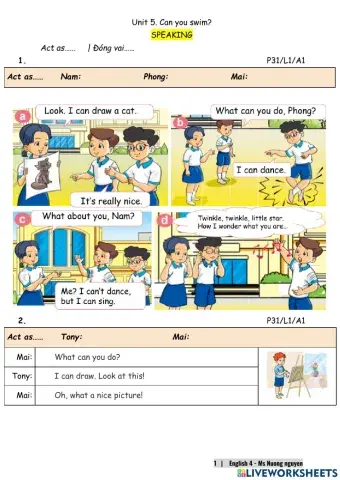
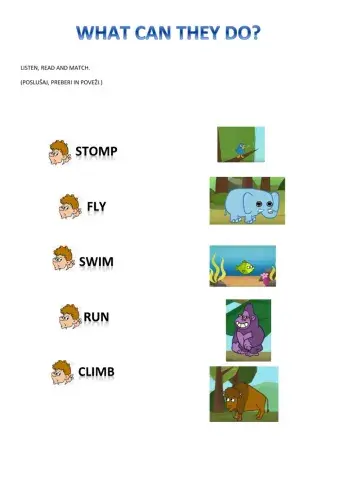
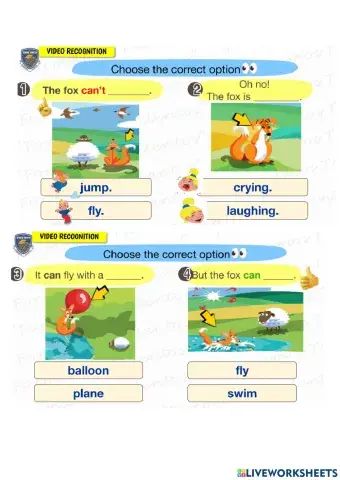
  • Can (ability and permission)

    • Structure: Subject + can + base verb
    • Example: "I can swim." / "Can I go to the bathroom?"
  • Some and Any

    • Some: Used in positive statements, offers, and requests.
      • Example: "I have some friends." / "Would you like some tea?"
    • Any: Used in negative statements and questions.
      • Example: "I don’t have any money." / "Do you have any pens?"
  • First Conditional

    • Structure: If + present simple, will + base verb
    • Example: "If it rains, I will stay at home." / "If I see her, I will say hello."
  • Second Conditional

    • Structure: If + past simple, would + base verb
    • Example: "If I were rich, I would travel the world." / "If she studied more, she would pass the exam."
  • Prepositions of Place and Time

    • Examples: "in," "on," "at"
    • "The book is on the table." / "We have a meeting at 3 PM." / "I live in New York."
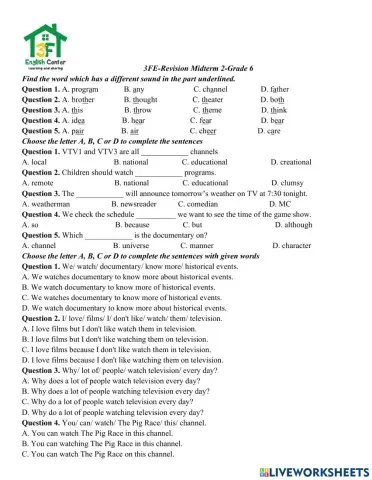
  • Questions with Wh- words

    • Examples: "What," "Where," "When," "Why," "How"
    • "What is your name?" / "Where do you live?" / "How are you?"

Types of Institutions

Belizean Studies

Name: ________________

Class: ________________

Date: _________________


Instructions: Select one type of institution that best describes the case scenario. 


Recreational                                  Economic                                      Religious 

Educational                                     Political 


  1. Electoral Commissions: Electoral commissions are responsible for organizing and conducting elections. They ensure the fairness, transparency, and integrity of the electoral process__________________
  2. Sports Clubs: A local sports club organizes various sports activities such as soccer, basketball, and tennis. It provides opportunities for individuals to engage in physical exercise, develop teamwork skills, and compete in friendly matches.__________
  3. Businesses: Businesses range from small enterprises to multinational corporations. They produce goods or provide services, create employment opportunities, and contribute to economic growth _________________.
  4. Gyms and Fitness Centers: These institutions provide fitness equipment, exercise classes, and personal training services to help individuals maintain their physical fitness and improve their overall well-being._____________________
  5. Religious Organizations: Religious organizations, such as religious orders, missionary groups, and interfaith organizations, engage in various religious and social activities. They promote religious teachings, charitable work, and community service _____________________
  6. Public and Private Schools: These institutions offer formal education to students from kindergarten to high school. They follow a structured curriculum and provide a learning environment for academic and personal growth ______________________.
  7. Colleges and Universities: Colleges and universities provide higher education and offer a wide range of academic programs and degrees. They promote research, critical thinking, and professional development.________________________
  8. Local Government: Local government institutions, such as city councils or town boards, are responsible for making decisions and implementing policies at the local level. They address issues related to public services, infrastructure development, and community welfare ______________________.
  9. Political Parties: Political parties are organizations that represent different ideologies and compete for political power. They play a vital role in shaping public opinion, mobilizing voters, and influencing policy agendas ___________________________
  10. Adult Education Programs: Adult education programs cater to the learning needs of adults, including vocational training, language courses, and continuing education. They support lifelong learning and skill enhancement __________________.
  11. Financial Institutions: Financial institutions, such as banks, credit unions, and investment firms, facilitate the flow of capital, provide financial services, and support economic transactions _____________________.
  12. Trade Associations: Trade associations represent specific industries or sectors and work to promote the interests of their members. They provide a platform for collaboration, advocacy, and knowledge sharing _________________________.
  13. Places of Worship: Churches, mosques, temples, and synagogues are places of worship where individuals gather for religious ceremonies, prayers, and community activities____________.
  14. Religious Education Institutions: These institutions provide religious education and training to individuals, such as Sunday schools, seminaries, and religious colleges ______________.
  15. Town or County Recreation Departments: These departments offer a wide range of recreational programs and facilities for community members. They may organize events like summer camps, swimming lessons, and fitness classes to promote an active and healthy lifestyle.____________________________


Present Simple vs Present Continuous

Grammar - Language Arts

🌴 GRAMMAR ISLAND ADVENTURE 🌴


Name: _______________________ Date: _____________


Task 1. Choose the correct word. 🔍

Пример: I (go / am going) to school every day. → go

1. She ( reads / is reading ) a book now.

2. We ( play / are playing ) football every Sunday.

3. Look! The cat ( sleeps / is sleeping ) on the chair.

4. He ( drinks / is drinking ) milk every morning.

5. Listen! My sister ( sings / is singing ) a song.

Task 2. Put the words in the correct box. 📦

Пример: now → Present Continuous

Words: now, every day, at the moment, always, today, on Mondays

Present Simple Present Continuous

(every day, always, on Mondays) (now, at the moment, today)

1. ________________ 1. ________________

2. ________________ 2. ________________

3. ________________ 3. ________________


Task 3. Find and fix the mistake. ✏️

Пример: I am go to school now. → I am going to school now.

1. He are playing football.

   → ________________________________

2. She drink tea every day.

   → ________________________________

3. We is watching TV now.

   → ________________________________

4. They goes to the park on Sundays.

   → ________________________________


Task 4. Choose the right answer. ✅

1. My brother _______ a comic now.

   · A) reads

   · B) is reading

2. I _______ to music every evening.

   · A) listen

   · B) am listening

3. The girls _______ in the pool at the moment.

   · A) swim

   · B) are swimming

4. _______ he _______ his homework every day?

   · A) Do / do

   · B) Does / do

🎉 GREAT JOB! YOU ARE A GRAMMAR HERO! 🎉

FF3 - Midterm

English

Part 1: Fill in the Blanks

  1. (Simple present with "be")
    My brother (is/are) a student.
  2. (Simple past with "be")
    Yesterday, they (was/were) at the park.
  3. (Comparatives)
    This book is (more interesting/most interesting) than that one.
  4. (Simple Present)
    She (go/goes) to school every day.
  5. (Like + verb + ing)
    (like/likes) swimming in the pool.
  6. (You/our/their)
    Is this (your/our/their) book?
  7. (Can for permission/requests)
    (Can/May) you help me with my homework?
  8. (Present progressive: affirmative)
    They (is/are) playing soccer now.
  9. (Present progressive: negative)
    She (isn't/aren't) studying at the moment.
  10. (Present continuous: questions)
    (Is/Are) you reading a book?
    (Yes/No), I am.
  11. (Present simple: Affirmative)
    He (like/likes) pizza.
  12. (Present simple: Negative)
    They (don't/doesn't) like carrots.
  13. (Present simple: Questions)
    (Do/Does) you have a pet?
    (Yes/No), I do.

Part 2: Multiple Choice

  1. Which sentence is correct? (Simple present with "be")

    • a) I am happy.
    • b) I is happy.
    • c) I are happy.
  2. Which sentence is correct? (Simple past with "be")

    • a) He were here yesterday.
    • b) He was here yesterday.
    • c) He be here yesterday.
  3. Which sentence is correct? (Comparatives)

    • a) This car is faster than that one.
    • b) This car is the faster than that one.
    • c) This car is more faster than that one.
  4. Which sentence is correct? (Simple Present)

    • a) She go to the market every day.
    • b) She goes to the market every day.
    • c) She going to the market every day.
  5. Which sentence is correct? (Like + verb + ing)

    • a) He like playing football.
    • b) He likes playing football.
    • c) He like to playing football.
  6. Which sentence is correct? (You/our/their)

    • a) That is your pen.
    • b) That is our pen.
    • c) That is their pen.
  7. Which sentence is correct? (Can for permission/requests)

    • a) Can I go to the bathroom?
    • b) Can I to go to the bathroom?
    • c) Can I going to the bathroom?
  8. Which sentence is correct? (Present progressive: affirmative)

    • a) They is running now.
    • b) They are running now.
    • c) They running now.
  9. Which sentence is correct? (Present progressive: negative)

    • a) She isn't sleeping now.
    • b) She aren't sleeping now.
    • c) She not sleeping now.
  10. Which question is correct? (Present continuous: questions)

    • a) Are you eating lunch?
    • b) Do you eating lunch?
    • c) You are eating lunch?
  11. Which sentence is correct? (Present simple: Affirmative)

    • a) We enjoys the game.
    • b) We enjoy the game.
    • c) We enjoying the game.
  12. Which sentence is correct? (Present simple: Negative)

    • a) They doesn't play tennis.
    • b) They don't play tennis.
    • c) They not play tennis.
  13. Which question is correct? (Present simple: Questions)

    • a) Does he like music?
    • b) Do he like music?
    • c) He does like music?

Part 3: Sentence Correction

Correct the mistakes in the following sentences:

  1. He is not playing football now. (Present progressive: negative)

    • Correct: ______________________
  2. They was at the zoo last week. (Simple past with "be")

    • Correct: ______________________
  3. She like going to the beach. (Like + verb + ing)

    • Correct: ______________________
  4. Do you has a pen? (Present simple: questions)

    • Correct: ______________________
  5. This cake is more delicious than that one. (Comparatives)

    • Correct: ______________________

Create and Customize Worksheets for Every Classroom

LiveWorksheets makes it easy for teachers, parents and homeschool educators to design and deliver engaging learning materials. Upload a PDF or start from scratch to create what you need: anything from interactive math worksheets to reading comprehension worksheets, multiplication worksheets, and kindergarten worksheets in just a few clicks. Our drag-and-drop editor works across all grade levels and subjects, so you can tailor content to your lesson plans, homework, or assessments. ESL teachers can also build custom ESL worksheets, add a common sound chart, or integrate ESL activities to make each class more engaging. Easily create differentiated, auto-graded activities that save valuable time and support better student learning.

A Complete Library of Learning Resources for K-12 and ESL

Access thousands of ready-to-use worksheets across K-12 subjects, including kindergarten worksheets, math worksheets, multiplication practice, reading comprehension exercises, and ESL resources. Filter by grade, subject, or skill level to find exactly what you need, whether it’s for an elementary classroom, middle school review, or high school practice. ESL teachers can explore our growing collection of ESL worksheets and English as a Second Language activities designed to support all levels of learners. With new content added regularly, LiveWorksheets is a flexible resource that helps build lasting learning outcomes.