New: Give students instant feedback with Practice Mode Learn how
$1.99/month with a free account - sign up in seconds.
Most Popular
Newest
Oldest
A-Z
Z-A
English as a Second Language (ESL)
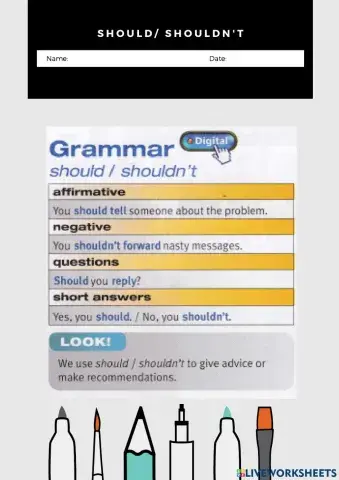
Giving advice using should/ shouldn't and must/ mustn't
English As A Second Language
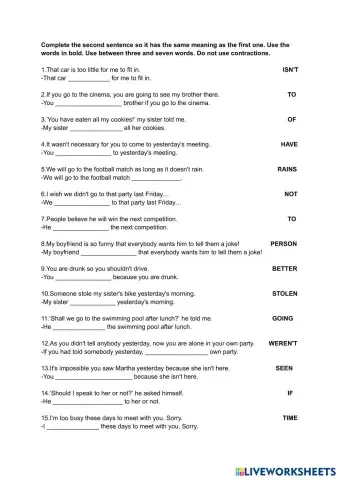
Some sentence transformations to practice for the First Certificate exam!
IMPORTANT: The last sentence is not complete so you must imagine the same end as the one of the sentence above. Sorry!
In the 12th sentence, the word in bold is WOULDN'T not WEREN'T. Sorry!
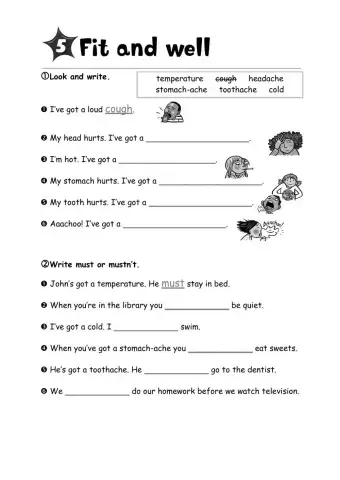
must musn't
Grammar - ESL
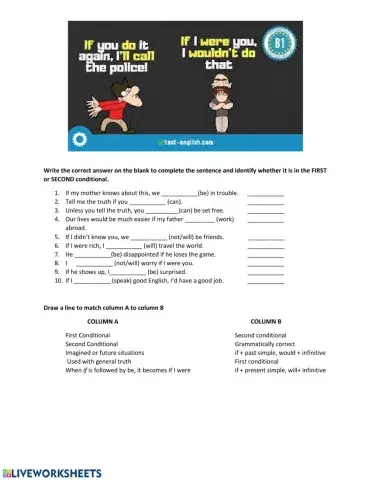
In this activity, the students must identify whether the sentences are in the first or second conditional. The second part will test their understanding of the concept of conditionals.
Grammar - Language Arts
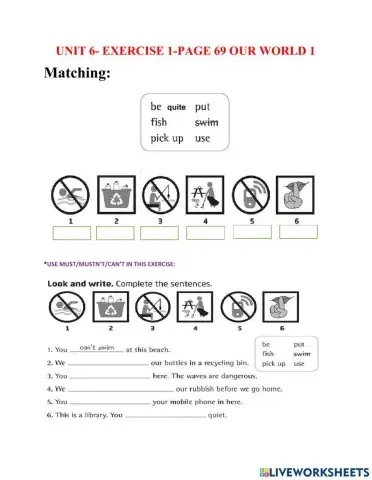
complete the sentences , use you must and you mustn't
in the followint speaking test you have to record an audio of minimum 5 minutes talking about one of your past vacations, you must include sentences in the past simple with the correct structure, vocabulary and the correct pronunciation of the verbs.
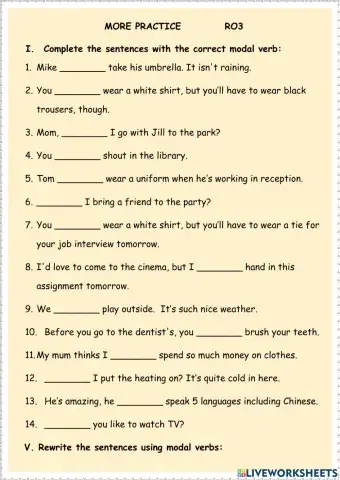
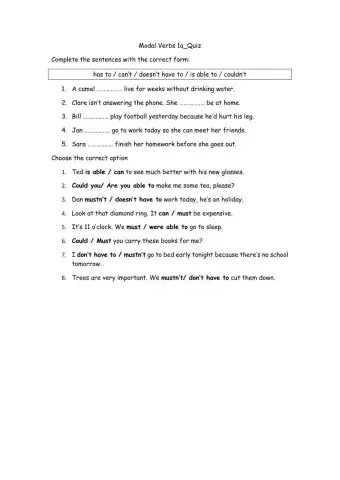
can, could, should, must, mustn't, would, have to, don't have to
Students will practice Have to / Don't have to / Must / Mustn't
History - Social Studies
students must match years and characteristic of each government
Multiplication and Division - Math
Must be able to write addition and multiplication sentences when multiplying by 5
This is about health and wellbeing
Writing - Language Arts
Complete the exam
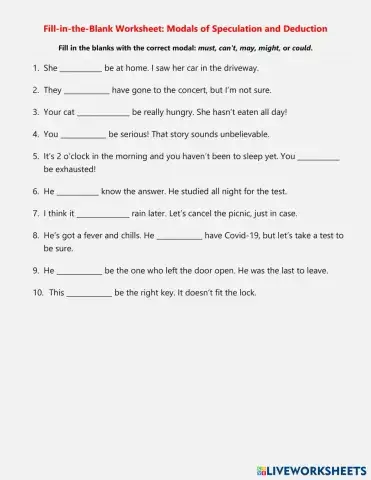
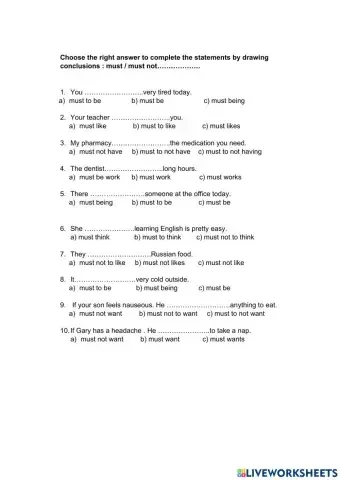
Modals of Deduction and Speculation
Grammar
short quiz on modal verbs part 1
English language
Primer conditional. Acciones que podemos considerar muy posibles en el presente o en el futuro se construyen con presente simple + futuro simple u otros auxiliares modales como: 'can', 'may', 'might', 'must' y también 'going to + inf':
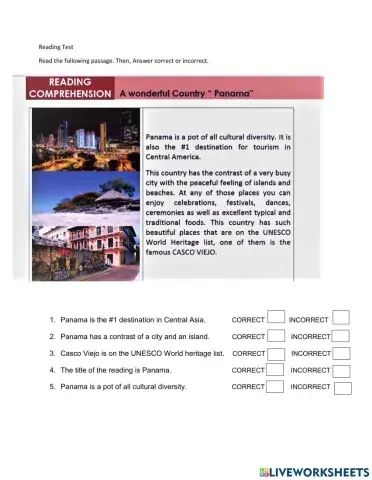
Students must read passage as they relate to the vocabulary and answer the comprehension questions
Comparatives and superlatives Have to/ must/ should
Math
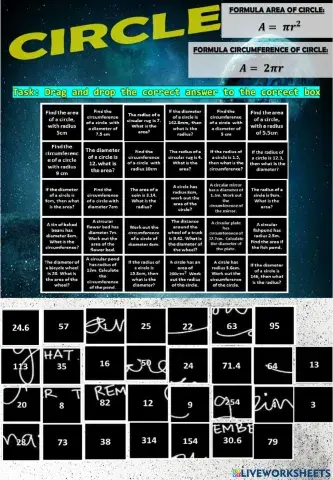
You must remember the formula to find the circle and circumference.
Exercises on the use of modal verbs can, should, must, may and have to
Must or mustn't Can/can't don't
In this worksheet, your ESL student must fill in the blanks with the appropriate reflexive pronouns, such as myself, yourself, herself, himself, itself, ourselves, yourselves, and themselves.
Writing - ESL
The student must organize the paragraphs and give coherence to the text.
Multiple choice
Ss must read, write and speak ordinal numbers
 Switch to New Search Page