Public Speaking For Beginners

Public Speaking

Welcome to the exciting world of public speaking! This course is designed to equip you with the essential skills and techniques necessary to become a confident and effective communicator in front of any audience. Whether you're a seasoned speaker looking to polish your delivery or someone who shudders at the mere thought of speaking in public, this course will provide you with the tools and strategies to excel.


Public speaking is not just about standing up and talking; it's about engaging, inspiring, and influencing others with your words. Whether you're giving a presentation at work, delivering a toast at a wedding, or advocating for a cause you believe in, the ability to speak confidently and persuasively is an invaluable asset in both your personal and professional life.


Throughout this course, you will learn how to conquer your fears, organize your thoughts effectively, captivate your audience, and handle unexpected challenges with poise. From mastering body language and vocal delivery to crafting compelling narratives and responding to audience feedback, each lesson is designed to empower you to become a more dynamic and impactful speaker.


No matter your level of experience, this course will provide you with the guidance and support you need to unlock your full potential as a communicator. So, get ready to step onto the stage with confidence and make your voice heard!


Learning public speaking offers a myriad of benefits that extend beyond simply mastering the skill of delivering speeches. Here are some of the key advantages:


  1. Enhanced Communication Skills: Public speaking teaches you how to express yourself clearly, concisely, and persuasively. These communication skills are invaluable in both personal and professional settings, enabling you to articulate your ideas effectively and connect with others on a deeper level.
  2. Boosted Confidence: Overcoming the fear of public speaking and gaining competence in this area can significantly boost your self-confidence. As you become more comfortable speaking in front of others, you'll develop a sense of empowerment that can positively impact other areas of your life.
  3. Improved Leadership Abilities: Public speaking is often a hallmark of effective leadership. By mastering this skill, you'll enhance your ability to inspire and influence others, whether you're leading a team, presenting a proposal, or rallying support for a cause.
  4. Career Advancement: In many professions, strong communication and presentation skills are highly sought after. Whether you're vying for a promotion, pitching a new idea to stakeholders, or representing your organization at conferences, the ability to speak confidently and persuasively can open doors to new opportunities and career advancement.
  5. Increased Networking Opportunities: Public speaking engagements provide opportunities to connect with a wide range of individuals, including industry peers, potential clients, and thought leaders. Building a reputation as a skilled and engaging speaker can expand your network and lead to valuable professional relationships.
  6. Ability to Influence and Inspire Others: Effective public speakers have the power to inspire change, motivate action, and sway opinions. Whether you're advocating for a cause, pitching a product, or delivering a keynote address, the ability to captivate an audience and convey your message can have a profound impact.
  7. Personal Growth and Development: Learning public speaking requires stepping out of your comfort zone, confronting fears, and honing your skills through practice and perseverance. This journey of personal growth and development can foster resilience, adaptability, and a willingness to embrace new challenges.
  8. Improved Critical Thinking: Crafting and delivering a compelling speech requires careful thought, organization, and analysis of information. Public speaking encourages critical thinking skills as you evaluate evidence, anticipate counterarguments, and structure your message to effectively convey your ideas.


Lesson 1: Overcoming Fear and Building Confidence

  • Understanding the root causes of public speaking anxiety
  • Techniques for managing nervousness and building confidence
  • Practical exercises to desensitize fear and boost self-assurance

Lesson 2: Understanding Your Audience

  • Identifying audience demographics, interests, and expectations
  • Tailoring your message to resonate with different audience types
  • Strategies for connecting with and engaging diverse audiences

Lesson 3: Crafting Compelling Content

  • The art of storytelling: structuring narratives for impact
  • Creating clear and concise key messages
  • Using evidence and examples to support your points effectively

Lesson 4: Mastering Delivery Techniques

  • Body language: posture, gestures, and facial expressions
  • Voice modulation and vocal variety
  • Techniques for controlling pace, pitch, and tone

Lesson 5: Effective Visual Aids and Presentation Tools

  • Selecting and designing appropriate visual aids (slides, props, etc.)
  • Integrating visual aids seamlessly into your presentation
  • Avoiding common pitfalls and distractions

Lesson 6: Handling Q&A Sessions and Audience Interaction

  • Strategies for preparing and anticipating questions
  • Techniques for responding to challenging or unexpected inquiries
  • Engaging and involving the audience during Q&A sessions

Lesson 7: Rehearsal and Preparation

  • Developing a systematic approach to rehearsal
  • Tips for memorization and improvisation
  • Preparing for technical and logistical challenges

Lesson 8: Overcoming Common Pitfalls and Challenges

  • Dealing with technical difficulties and other unforeseen obstacles
  • Strategies for managing time constraints and staying on track
  • Recovering gracefully from mistakes and setbacks

Lesson 9: Persuasion and Influence

  • Understanding the principles of persuasion and influence
  • Techniques for building credibility and trust with your audience
  • Crafting persuasive arguments and calls to action

Lesson 10: Putting It All Together: Final Presentations and Feedback

  • Delivering a final presentation incorporating all learned skills and techniques
  • Peer and instructor feedback sessions for constructive critique and improvement
  • Reflection and goal-setting for continued growth as a public speaker

Travel and Transport

Reading and Text Analysis - Language Arts

Reading Task

Text (example):
“Travel has always been important for people. In the past, people traveled by horse, on foot, or by simple boats. Today, we can travel by car, train, plane, or even by underground metro. Modern transport is faster and more comfortable, but it also causes traffic jams and pollution. Many people now think about eco-friendly travel, such as cycling, walking, or using electric vehicles.”


Text Analysis Tasks
    1.    Comprehension Questions
    •    How did people travel in the past?
    •    What are the advantages of modern transport?
    •    What problems does modern transport create?
    •    What are some eco-friendly ways to travel?
    2.    True or False
    •    In the past, people traveled by airplane.
    •    Modern transport is faster and more comfortable.
    •    Transport does not cause any problems.
    •    Cycling is an eco-friendly way to travel.
    3.    Vocabulary Work
    •    Find words in the text that mean:
a) very old ( → past )
b) not harmful to the environment ( → eco-friendly )
c) faster and easier to use ( → comfortable )
d) situation when many cars stop moving ( → traffic jam )
    4.    Discussion / Critical Thinking
    •    Which transport do you use most often and why?
    •    What are the advantages and disadvantages of cars?
    •    How can we make transport more eco-friendly in the future?
    5.    Writing Extension
    •    Write a short paragraph about your last trip. Which transport did you use? Was it comfortable or difficult?

Choose the correct affix (Prefixes only)

Grammar - Language Arts

Part 1: Add the correct prefix from your unit list to the root word in parentheses.


Log Entry: 04:00 AM The air at this altitude is ____________ (sufficient) for most people to breathe easily. We noticed that the local residents have ____________ (active) lungs that have adapted over generations. It is a common ____________ (understanding) that humans cannot live this high up, but these villagers prove that theory wrong.


Log Entry: 12:00 PM We had to ____________ (place) our equipment because the wind blew our original tent away. The terrain is very ____________ (regular) and rocky, making it hard to walk. We decided to set up a ____________ (permanent) camp until the storm passes.


Log Entry: 08:00 PM The villagers ____________ (act) with each other in a way that shows great community strength. Even in this ____________ (pleasant) cold, they remain cheerful. It is ____________ (possible) to imagine living anywhere else once you see this view.


Part 2: The Prefix Sorting Lab


Use the "Secret Code" rules to add the correct negative prefix (im-, il-, ir-, un-, or dis-) to these words.


  1.  

    ____________ + literate: Someone who cannot read or write.


  2.  

    ____________ + perfect: Something that has a small flaw or mistake.


  3.  

    ____________ + rational: Something that does not make logical sense.


  4.  

    ____________ + modest: Someone who brags too much about themselves.


  5.  

    ____________ + legal: Something that is against the law.


Part 3: Critical Thinking


In one sentence, use a word with the prefix Inter- (meaning "between") to describe how two different locations might be connected.


Your Sentence: ______________________________________________________________________

CLIL

English as a Foreign Language (EFL)

CLIL (Content and Language Integrated Learning), students learn various subjects like history, art, science and math in a foreign language. Rather than being a stand-alone subject, language becomes a skill acquired in the classroom while mastering other types of content.

Tips for Planning and Teaching CLIL Lessons 

As you can see from the lesson plans above, you can get creative with CLIL lessons and include diverse themes! Whether you want to make your own lesson plan or you’ll be working off these examples, here are some ways to make your CLIL lessons even more effective:  

Teach vocabulary separately 

Pick the important concepts and words and teach them in isolation from the main lesson. I usually prep students by doing this beforehand, but you can also choose to wait until after the class.

During the class, assume your students are native speakers of the target language and just teach the subject. For example, when the lesson is about math, teach actual addition and subtraction, not the translation of the word “addition” in German. Teach the math and be a math teacher for the duration of the activity.

In the course of the lesson, kids will be compelled to use their critical thinking skills to figure out the meanings of any unknown words. 

Include authentic materials

Aside from CLIL materials on the subject you want, look for authentic materials too about the subject at hand. For example, on top of CLIL-specific materials about philosophy in German, I’d look for native German discussions, blogs, websites, forums and book excerpts about philosophy too

There are three particular sites that I often check because they’re loaded with authentic materials and educational links:

  • Government sites and ministries. One of the aims of national leadership, for all states, is the education of their populace. So you can be sure that their websites have links to resources that can help you find material for CLIL. For example, the site for France’s Ministry of National Educationhas links to academic sites and even its own search engine.
  • Websites for the top universities in the country. Naturally, these sites are replete with links to the latest research, publications, lessons and journals. You may also find online libraries, databases and even e-books you could use. Take the example of Technische Universität München, one of the top universities in Germany.
  • Forums for native speakers. When you join these forums, you’ll have reached the inner sanctum of the country—at least online. Read the posts and discussion and you’ll have an insider’s look not only at their relationship problems, you’ll find in their postings, links to sites that native speakers actually use and recommend to each other. This one’s big in China.

Give simple worksheets

Keep any CLIL worksheets visually appealing and user-friendly. Avoid overcrowding it or making it too “busy.”

Use a consistent font and style throughout—ideally a basic font that won’t be distracting. Include lots of pictures and graphs to enhance the visual appearance. 

These are my favorite resource websites for worksheets:

  • One Stop English — This site provides unique English CLIL resources that can be adapted to any language. You’ll find puzzles, crosswords, vocabulary worksheets and more catering to a range of ages.
  • Teachers Pay Teachers — As the name suggests, this is a platform where teachers can sell resources that they’ve created to other teachers. Just look up “CLIL Teaching Resources,” and you can even filter for worksheets and select them by subject and grade. 
  • Scholastic’s Teacher Resources — This is a great place to find worksheet ideas to fit any subject you’re teaching through CLIL. You can get grade-appropriate lesson plans here on everything from literature to basic science to economics.
  • Instant Online Crossword Puzzle Maker— This non-traditional worksheet option is great for teaching vocabulary in any subject or language in an engaging way. You can use this instant crossword maker to easily produce fun worksheets targeting any vocabulary set you’re working on. 
  • Pinterest — Mostly known for craft and home decor inspiration, this popular platform is now also a go-to source for great lesson plan ideas, especially for elementary school children. Just type “CLIL” into the search bar plus the name of the target language (e.g. “CLIL italiano”). 

Do scaffolding

Give the students the temporary support they need to reach higher levels of comprehension and mastery, in terms of both the language and the content.

Begin with simple tasks and work your way up to those that are more complex. Give clear directions and explain concepts in multiple ways to ensure understanding.

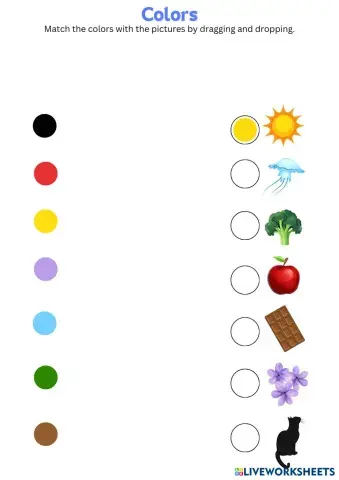
I sometimes start with intro exercises where students match vocabulary with images, followed by guided readings where key vocabulary is highlighted. After that, students can do more involved discussions and activities that involve problem-solving and research.

Use gestures, visual aids and props. 

You used to just stand there and talk. With CLIL, not anymore. Illustrate what you’re speaking about, and you’ll see that students are better able to grasp your message.

Break up presentations with videos and images that students will find interesting. You can show mind maps or flowcharts to explain more complicated processes. 

I also try to bring props whenever I can. I’ve used 3D models of different shapes in math when explaining concepts like area or volume and even puppets for storytelling. If the subject is history or geography, these might be objects related to what the students are learning.


Should Homework Be Required Every Night?

Writing - Language Arts

Summary of Should Homework Be Required Every Night? Homework is a common part of school life, but opinions vary on whether it should be assigned every night. Some believe nightly homework helps students practice and learn better, while others think it may cause stress and take away family or playtime. Understanding both sides can help students and teachers find the best balance for learning and well-being. Arguments for Requiring Homework Every Night Homework reinforces what is learned in class, helping students remember and understand lessons better. It encourages responsibility and good study habits, preparing students for future school years. Nightly homework can improve time management skills by creating a routine. Some students benefit from extra practice, especially in subjects like math and reading. Homework allows parents to see what their children are learning and get involved. Arguments Against Requiring Homework Every Night Too much homework can cause stress, anxiety, and reduce free time for relaxation and hobbies. It may interfere with family time, sports, and other important activities for a balanced life. Not all students have equal support at home, making homework harder for some. Excessive homework can lead to burnout, making students dislike school or learning. Some studies suggest that homework does not always improve academic performance, especially in younger grades. Activity Structure to Explore Both Sides Students are divided into two teams: Yes (for nightly homework) and No (against nightly homework). Each team writes their name and explains their position by answering these questions: What is our side? Why do we support this side? What are the positives of this side? What are the negatives of this side? Teams start with 5 points and can lose points by arguing or speaking negatively about the opposing side. The goal is to maintain points and be able to list three points from the other side to earn a reward. After initial arguments, students swap worksheets to review and write down positives and negatives of the opposing side. A final discussion encourages understanding different viewpoints and recognizing the importance of open-mindedness. Conclusion: Key Takeaways Homework every night has both benefits and drawbacks. It can help students practice and develop important skills but may also cause stress and reduce time for other activities. Learning to see both sides of an issue helps build critical thinking and respect for different opinions. This balanced approach supports better decision-making about homework policies that work for all students.

Detective Game for English Writing Practice

Writing - Language Arts

Free detective game where students practise English writing by interrogating suspects to solve a murder. No download. No account. No GDPR concerns. Works instantly on any school PC, Mac or tablet.


Already used in classrooms worldwide - recommended by educational consultants at Danish universities (UCN, UCL, UC SYD) and adopted by schools in Denmark and Taiwan.


WHAT IS IT?

Jack & Mani is a free interactive murder mystery comic playable directly in any web browser. Students play Inspector Jack and must write freely in English to interrogate suspects and solve the case.

The game automatically corrects grammar mistakes, corrects spelling errors, and explains every mistake in real time. Learning becomes an investigation to solve.


WHY TEACHERS LOVE IT

- No download required

- No account needed

- full GDPR compliance

- Works on any PC, Mac or tablet

- Play as guest

- instant classroom access

- Episode 1 completely free


Already used in schools across Denmark and Taiwan

Recommended by university educational consultants


WHAT STUDENTS HAVE TO FIND

- The killer

- The murder weapon

- The motive


CLASSROOM SETUP - 5 MINUTES

1. Open Chrome, Firefox or Safari

2. Go to play.jackandmani.com (or scan QR code in guide)

3. Enable Academic Mode and select English

4. Play as guest - no login needed

5. Start the free episode!


THIS RESOURCE INCLUDES

A ready-to-print teacher guide with step-by-step setup instructions, teaching tips, QR code and classroom recommendations.


Age: 10-18 | Grades 5-12 | Duration: 30-45 min | Setup: 1-2 students per device

Skills: writing - reading - grammar - vocabulary - critical thinking

Create and Customize Worksheets for Every Classroom

LiveWorksheets makes it easy for teachers, parents and homeschool educators to design and deliver engaging learning materials. Upload a PDF or start from scratch to create what you need: anything from interactive math worksheets to reading comprehension worksheets, multiplication worksheets, and kindergarten worksheets in just a few clicks. Our drag-and-drop editor works across all grade levels and subjects, so you can tailor content to your lesson plans, homework, or assessments. ESL teachers can also build custom ESL worksheets, add a common sound chart, or integrate ESL activities to make each class more engaging. Easily create differentiated, auto-graded activities that save valuable time and support better student learning.

A Complete Library of Learning Resources for K-12 and ESL

Access thousands of ready-to-use worksheets across K-12 subjects, including kindergarten worksheets, math worksheets, multiplication practice, reading comprehension exercises, and ESL resources. Filter by grade, subject, or skill level to find exactly what you need, whether it’s for an elementary classroom, middle school review, or high school practice. ESL teachers can explore our growing collection of ESL worksheets and English as a Second Language activities designed to support all levels of learners. With new content added regularly, LiveWorksheets is a flexible resource that helps build lasting learning outcomes.