Should Homework Be Required Every Night?

Writing - English Language

Summary of Should Homework Be Required Every Night? Homework is a common part of school life, but opinions vary on whether it should be assigned every night. Some believe nightly homework helps students practice and learn better, while others think it may cause stress and take away family or playtime. Understanding both sides can help students and teachers find the best balance for learning and well-being. Arguments for Requiring Homework Every Night Homework reinforces what is learned in class, helping students remember and understand lessons better. It encourages responsibility and good study habits, preparing students for future school years. Nightly homework can improve time management skills by creating a routine. Some students benefit from extra practice, especially in subjects like math and reading. Homework allows parents to see what their children are learning and get involved. Arguments Against Requiring Homework Every Night Too much homework can cause stress, anxiety, and reduce free time for relaxation and hobbies. It may interfere with family time, sports, and other important activities for a balanced life. Not all students have equal support at home, making homework harder for some. Excessive homework can lead to burnout, making students dislike school or learning. Some studies suggest that homework does not always improve academic performance, especially in younger grades. Activity Structure to Explore Both Sides Students are divided into two teams: Yes (for nightly homework) and No (against nightly homework). Each team writes their name and explains their position by answering these questions: What is our side? Why do we support this side? What are the positives of this side? What are the negatives of this side? Teams start with 5 points and can lose points by arguing or speaking negatively about the opposing side. The goal is to maintain points and be able to list three points from the other side to earn a reward. After initial arguments, students swap worksheets to review and write down positives and negatives of the opposing side. A final discussion encourages understanding different viewpoints and recognizing the importance of open-mindedness. Conclusion: Key Takeaways Homework every night has both benefits and drawbacks. It can help students practice and develop important skills but may also cause stress and reduce time for other activities. Learning to see both sides of an issue helps build critical thinking and respect for different opinions. This balanced approach supports better decision-making about homework policies that work for all students.

fiction

Reading Comprehension - English Language

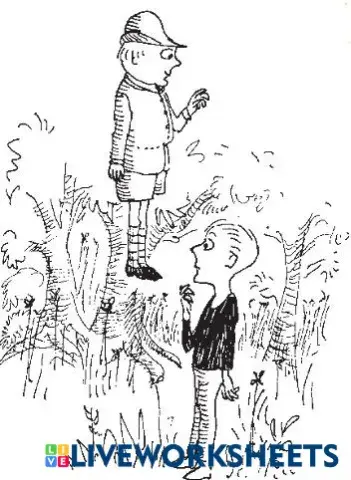
Fiction “It seems to me that almost everything is a waste of time,” Milo remarks as he walks dejectedly home from school. Until for no logical or predictable reason he is transported to a strange world of words, numbers and confusion. ‘Isn’t it beautiful?’ gasped Milo. ‘Oh, I don’t know,’ answered a strange voice. ‘It all depends on how you look at things.’ ‘I beg your pardon?’ said Milo, for he didn’t see who had spoken. ‘I said it depends how you look at things,’ repeated the voice. Milo turned around and found himself staring at two very neatly polished brown shoes, for standing directly in front of him (if you can use the word ‘standing’ for someone suspended in mid-air) was another boy just about his age, whose feet were easily three feet off the ground. ‘For instance,’ continued the boy, ‘if you happen to like deserts, you might not think this was beautiful at all.’ ‘For instance,’ said the boy again, ‘if Christmas trees were people and people were Christmas trees, we’d all be chopped down, put up in the living room, and covered with tinsel, while the trees opened our presents.’ ‘What does that have to do with it?’ asked Milo. 83 Year 6, Sequence 11 ‘Nothing at all,’ he answered, ‘but it’s an interesting possibility, don’t you think?’ ‘How do you manage to stand up there?’ for this was the subject that most interested him. ‘I was about to ask you a similar question,’ answered the boy, ‘for you must be much older than you look to be standing on the ground.’ ‘What do you mean?’ Milo asked. ‘Well,’ said the boy, ‘in my family everyone is born in the air, with his head at exactly the height it’s going to be when he’s an adult, and then we all grow towards the ground. When we’re fully grown up, or as you can see, grown down, our feet finally touch. Of course, there are a few of us whose feet never reach the ground, no matter how old we get, but I suppose it is the same in every family.’ He hopped a few steps in the air, skipped back to where he started, and then began again. ‘You certainly must be very old to have reached the ground already.’ ‘Oh no,’ said Milo seriously, ‘in my family we all start on the ground and grow up, and we never know how far until we actually get there.’ ‘What a silly system,’ the boy laughed. ‘Then your head keeps changing its height and you always see things in a different way? Why, when you’re fifteen things won’t look at all the way they did when you were ten, and at twenty everything will change again.’ ‘I suppose so,’ said Milo, for he had never really thought about the matter. ‘We always see things from the same angle,’ the boy continued. ‘It’s much less trouble that way. Besides it makes more sense to grow down and not up. When you’re very young, you can never hurt yourself from falling down if you’re in mid-air, and you certainly can’t get into trouble for scuffing your shoes or marking the floor if there’s nothing to scuff them on and the floor is three feet away

Create and Customize Worksheets for Every Classroom

LiveWorksheets makes it easy for teachers, parents and homeschool educators to design and deliver engaging learning materials. Upload a PDF or start from scratch to create what you need: anything from interactive math worksheets to reading comprehension worksheets, multiplication worksheets, and kindergarten worksheets in just a few clicks. Our drag-and-drop editor works across all grade levels and subjects, so you can tailor content to your lesson plans, homework, or assessments. ESL teachers can also build custom ESL worksheets, add a common sound chart, or integrate ESL activities to make each class more engaging. Easily create differentiated, auto-graded activities that save valuable time and support better student learning.

A Complete Library of Learning Resources for K-12 and ESL

Access thousands of ready-to-use worksheets across K-12 subjects, including kindergarten worksheets, math worksheets, multiplication practice, reading comprehension exercises, and ESL resources. Filter by grade, subject, or skill level to find exactly what you need, whether it’s for an elementary classroom, middle school review, or high school practice. ESL teachers can explore our growing collection of ESL worksheets and English as a Second Language activities designed to support all levels of learners. With new content added regularly, LiveWorksheets is a flexible resource that helps build lasting learning outcomes.