English Tenses Master Guide

Grammar - ESL

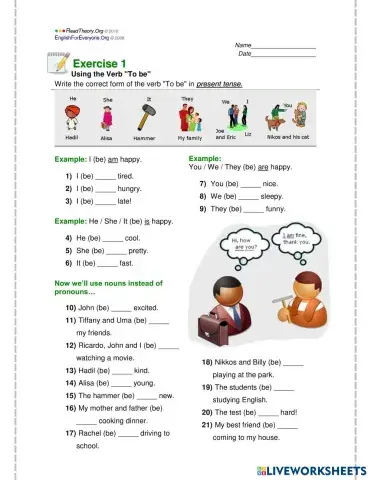
Present Tenses (El Presente)


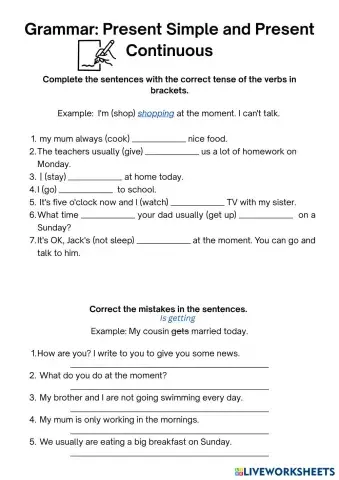
In English, we split the present depending on whether an action is a regular routine or happening right now.


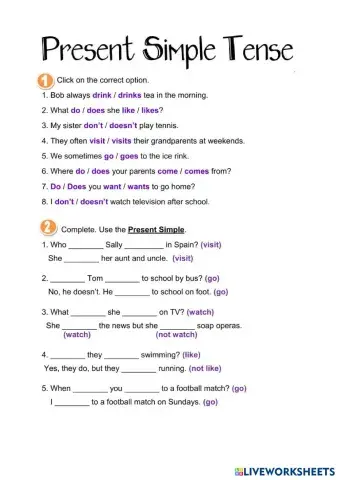
A. Present Simple

  • Why we use it: To talk about habits, daily routines, permanent facts, or general truths.

  • The Concept: Think of this as something that is true all the time, not just at this exact second.

  • Examples:

    • English: I work in an office every weekday.

    • Spanish: Trabajo en una oficina todos los dĂ­as de la semana.

đŸ’¡ Tip for Spanish Speakers: In Spanish, you can drop the subject pronoun ("Trabajo"). In English, you must always include the pronoun ("I work").


B. Present Continuous

  • Why we use it: To describe an action that is in progress right now at the moment of speaking, or a temporary situation.

  • Structure: Subject + am / is / are + Verb (-ing)

  • Examples:

    • English: I am writing an email right now.

    • Spanish: Estoy escribiendo un correo en este momento.

2. Past Tenses (El Pasado)

We choose past tenses based on whether the action was completed or in progress at a specific time.


A. Past Simple

  • Why we use it: To talk about actions that started and finished at a specific time in the past.

  • Colombian Spanish Equivalent: Matches PretĂ©rito Indefinido (comĂ­, viajĂ©, hablamos).

  • Examples:

    • English: We visited Cartagena last year.

    •  Spanish: Visitamos Cartagena el año pasado.

B. Past Continuous

  • Why we use it: To set the scene or talk about an action that was in progress in the past, often interrupted by a shorter action (in Past Simple).

  •  Spanish Equivalent: Matches Estaba + gerundio (estaba comiendo) or PretĂ©rito Imperfecto (comĂ­a).

  • Examples:

    • English: I was studying when you called me.

    •  Spanish: Estaba estudiando cuando me llamaste.

C. Past Perfect (B2–C1 Level)

  • Why we use it: To show that one past action happened before another past action. It is the "past before the past."

  • Structure: Subject + had + Past Participle

  • Examples:

    • English: When I arrived at the station, the train had already left.

    •  Spanish: Cuando lleguĂ© a la estaciĂ³n, el tren ya se habĂ­a ido.

3. Present Perfect Tenses (El Pretérito Perfecto)


English treats the Present Perfect as a bridge connecting past actions directly to the present moment.


A. Present Perfect Simple

  • Why we use it: For life experiences (without specifying when), or actions that started in the past and continue up to the present.

  • Structure: Subject + have / has + Past Participle

  • Examples:

    • English: I have lived in Bogota since 2018.(And I still live there now!)

    • Colombian Spanish: He vivido en BogotĂ¡ desde 2018 / Vivo en BogotĂ¡ desde el 2018.

B. Present Perfect Continuous (B2–C1 Level)

  • Why we use it: To emphasise the duration or ongoing process of an activity that started in the past and is still going on.

  • Structure: Subject + have / has been + Verb (-ing)

  • Examples:

    • English: I have been waiting here for two hours!

    •  Spanish: ¡Llevo dos horas esperando aquĂ­! 

4. Future Tenses (El Futuro)


In English, we choose the future tense based on how decided or planned the action is.


A. Future with "Be Going To"

  • Why we use it: For pre-made plans, intentions, or predictions based on current visual evidence.

  •  Spanish Equivalent: Direct translation of "ir a + verbo" 

  • Examples:

    • English: I am going to study medicine next year.

    •  Spanish: Voy a estudiar medicina el prĂ³ximo año.

B. Future with "Will"

  • Why we use it: For spontaneous decisions made at the exact moment of speaking, offers to help, promises, or general opinions about the future.

  • Examples:

    • English:The phone is ringing. — I'll answer it!  (Instant decision)

    • Colombian Spanish: El telĂ©fono estĂ¡ sonando. — ¡Yo contesto!

Create and Customize Worksheets for Every Classroom

LiveWorksheets makes it easy for teachers, parents and homeschool educators to design and deliver engaging learning materials. Upload a PDF or start from scratch to create what you need: anything from interactive math worksheets to reading comprehension worksheets, multiplication worksheets, and kindergarten worksheets in just a few clicks. Our drag-and-drop editor works across all grade levels and subjects, so you can tailor content to your lesson plans, homework, or assessments. ESL teachers can also build custom ESL worksheets, add a common sound chart, or integrate ESL activities to make each class more engaging. Easily create differentiated, auto-graded activities that save valuable time and support better student learning.

A Complete Library of Learning Resources for K-12 and ESL

Access thousands of ready-to-use worksheets across K-12 subjects, including kindergarten worksheets, math worksheets, multiplication practice, reading comprehension exercises, and ESL resources. Filter by grade, subject, or skill level to find exactly what you need, whether it’s for an elementary classroom, middle school review, or high school practice. ESL teachers can explore our growing collection of ESL worksheets and English as a Second Language activities designed to support all levels of learners. With new content added regularly, LiveWorksheets is a flexible resource that helps build lasting learning outcomes.