Types of Institutions

Belizean Studies

Name: ________________

Class: ________________

Date: _________________


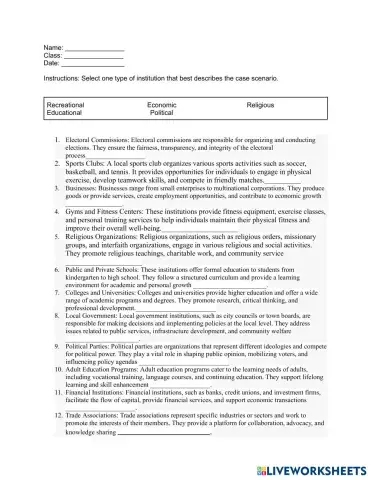
Instructions: Select one type of institution that best describes the case scenario. 


Recreational                                  Economic                                      Religious 

Educational                                     Political 


  1. Electoral Commissions: Electoral commissions are responsible for organizing and conducting elections. They ensure the fairness, transparency, and integrity of the electoral process__________________
  2. Sports Clubs: A local sports club organizes various sports activities such as soccer, basketball, and tennis. It provides opportunities for individuals to engage in physical exercise, develop teamwork skills, and compete in friendly matches.__________
  3. Businesses: Businesses range from small enterprises to multinational corporations. They produce goods or provide services, create employment opportunities, and contribute to economic growth _________________.
  4. Gyms and Fitness Centers: These institutions provide fitness equipment, exercise classes, and personal training services to help individuals maintain their physical fitness and improve their overall well-being._____________________
  5. Religious Organizations: Religious organizations, such as religious orders, missionary groups, and interfaith organizations, engage in various religious and social activities. They promote religious teachings, charitable work, and community service _____________________
  6. Public and Private Schools: These institutions offer formal education to students from kindergarten to high school. They follow a structured curriculum and provide a learning environment for academic and personal growth ______________________.
  7. Colleges and Universities: Colleges and universities provide higher education and offer a wide range of academic programs and degrees. They promote research, critical thinking, and professional development.________________________
  8. Local Government: Local government institutions, such as city councils or town boards, are responsible for making decisions and implementing policies at the local level. They address issues related to public services, infrastructure development, and community welfare ______________________.
  9. Political Parties: Political parties are organizations that represent different ideologies and compete for political power. They play a vital role in shaping public opinion, mobilizing voters, and influencing policy agendas ___________________________
  10. Adult Education Programs: Adult education programs cater to the learning needs of adults, including vocational training, language courses, and continuing education. They support lifelong learning and skill enhancement __________________.
  11. Financial Institutions: Financial institutions, such as banks, credit unions, and investment firms, facilitate the flow of capital, provide financial services, and support economic transactions _____________________.
  12. Trade Associations: Trade associations represent specific industries or sectors and work to promote the interests of their members. They provide a platform for collaboration, advocacy, and knowledge sharing _________________________.
  13. Places of Worship: Churches, mosques, temples, and synagogues are places of worship where individuals gather for religious ceremonies, prayers, and community activities____________.
  14. Religious Education Institutions: These institutions provide religious education and training to individuals, such as Sunday schools, seminaries, and religious colleges ______________.
  15. Town or County Recreation Departments: These departments offer a wide range of recreational programs and facilities for community members. They may organize events like summer camps, swimming lessons, and fitness classes to promote an active and healthy lifestyle.____________________________


Free Video Lesson

critical thinking

  • Answer the following questions:


1. What are the 5 strategies to sharpen your critical thinking?

1.

2.

3.

4.

5.


2. Why critical thinking is important? How does it affect the decision-making process? 


3. What do you do to sharpen your critical thinking? 


4. Write (R) or (W) to the following statements:


1. We are so lucky now because we live in a world where we can get access to information easily.         (..................)

2. People usually accept something as evidence when it confirms what they know or believe in.             (..................)

3. People shouldn't change their minds and only believe what they know is true.                                      (..................)

4. Perception is a key element that enables us to view and understand the world.                                    (.................) 

5. Arguing means you are always right and the other person is wrong.                                                      (.................)

6. Putting yourself into the other person's shoes won't make any difference, it will only worsen things.    (..................)

7. You must check where your information comes from.                                                                            (..................)

8. If you hate someone, you must disagree with what they are saying even if it is true.                            (..................)


Public Speaking For Beginners

Public Speaking

Welcome to the exciting world of public speaking! This course is designed to equip you with the essential skills and techniques necessary to become a confident and effective communicator in front of any audience. Whether you're a seasoned speaker looking to polish your delivery or someone who shudders at the mere thought of speaking in public, this course will provide you with the tools and strategies to excel.


Public speaking is not just about standing up and talking; it's about engaging, inspiring, and influencing others with your words. Whether you're giving a presentation at work, delivering a toast at a wedding, or advocating for a cause you believe in, the ability to speak confidently and persuasively is an invaluable asset in both your personal and professional life.


Throughout this course, you will learn how to conquer your fears, organize your thoughts effectively, captivate your audience, and handle unexpected challenges with poise. From mastering body language and vocal delivery to crafting compelling narratives and responding to audience feedback, each lesson is designed to empower you to become a more dynamic and impactful speaker.


No matter your level of experience, this course will provide you with the guidance and support you need to unlock your full potential as a communicator. So, get ready to step onto the stage with confidence and make your voice heard!


Learning public speaking offers a myriad of benefits that extend beyond simply mastering the skill of delivering speeches. Here are some of the key advantages:


  1. Enhanced Communication Skills: Public speaking teaches you how to express yourself clearly, concisely, and persuasively. These communication skills are invaluable in both personal and professional settings, enabling you to articulate your ideas effectively and connect with others on a deeper level.
  2. Boosted Confidence: Overcoming the fear of public speaking and gaining competence in this area can significantly boost your self-confidence. As you become more comfortable speaking in front of others, you'll develop a sense of empowerment that can positively impact other areas of your life.
  3. Improved Leadership Abilities: Public speaking is often a hallmark of effective leadership. By mastering this skill, you'll enhance your ability to inspire and influence others, whether you're leading a team, presenting a proposal, or rallying support for a cause.
  4. Career Advancement: In many professions, strong communication and presentation skills are highly sought after. Whether you're vying for a promotion, pitching a new idea to stakeholders, or representing your organization at conferences, the ability to speak confidently and persuasively can open doors to new opportunities and career advancement.
  5. Increased Networking Opportunities: Public speaking engagements provide opportunities to connect with a wide range of individuals, including industry peers, potential clients, and thought leaders. Building a reputation as a skilled and engaging speaker can expand your network and lead to valuable professional relationships.
  6. Ability to Influence and Inspire Others: Effective public speakers have the power to inspire change, motivate action, and sway opinions. Whether you're advocating for a cause, pitching a product, or delivering a keynote address, the ability to captivate an audience and convey your message can have a profound impact.
  7. Personal Growth and Development: Learning public speaking requires stepping out of your comfort zone, confronting fears, and honing your skills through practice and perseverance. This journey of personal growth and development can foster resilience, adaptability, and a willingness to embrace new challenges.
  8. Improved Critical Thinking: Crafting and delivering a compelling speech requires careful thought, organization, and analysis of information. Public speaking encourages critical thinking skills as you evaluate evidence, anticipate counterarguments, and structure your message to effectively convey your ideas.


Lesson 1: Overcoming Fear and Building Confidence

  • Understanding the root causes of public speaking anxiety
  • Techniques for managing nervousness and building confidence
  • Practical exercises to desensitize fear and boost self-assurance

Lesson 2: Understanding Your Audience

  • Identifying audience demographics, interests, and expectations
  • Tailoring your message to resonate with different audience types
  • Strategies for connecting with and engaging diverse audiences

Lesson 3: Crafting Compelling Content

  • The art of storytelling: structuring narratives for impact
  • Creating clear and concise key messages
  • Using evidence and examples to support your points effectively

Lesson 4: Mastering Delivery Techniques

  • Body language: posture, gestures, and facial expressions
  • Voice modulation and vocal variety
  • Techniques for controlling pace, pitch, and tone

Lesson 5: Effective Visual Aids and Presentation Tools

  • Selecting and designing appropriate visual aids (slides, props, etc.)
  • Integrating visual aids seamlessly into your presentation
  • Avoiding common pitfalls and distractions

Lesson 6: Handling Q&A Sessions and Audience Interaction

  • Strategies for preparing and anticipating questions
  • Techniques for responding to challenging or unexpected inquiries
  • Engaging and involving the audience during Q&A sessions

Lesson 7: Rehearsal and Preparation

  • Developing a systematic approach to rehearsal
  • Tips for memorization and improvisation
  • Preparing for technical and logistical challenges

Lesson 8: Overcoming Common Pitfalls and Challenges

  • Dealing with technical difficulties and other unforeseen obstacles
  • Strategies for managing time constraints and staying on track
  • Recovering gracefully from mistakes and setbacks

Lesson 9: Persuasion and Influence

  • Understanding the principles of persuasion and influence
  • Techniques for building credibility and trust with your audience
  • Crafting persuasive arguments and calls to action

Lesson 10: Putting It All Together: Final Presentations and Feedback

  • Delivering a final presentation incorporating all learned skills and techniques
  • Peer and instructor feedback sessions for constructive critique and improvement
  • Reflection and goal-setting for continued growth as a public speaker

Crea y personaliza fichas interactivas para cada aula

LiveWorksheets facilita a profesorado, familias y personas que educan en casa el diseño y la entrega de materiales de aprendizaje atractivos. Solo tienes que subir un PDF o empezar desde cero para crear lo que necesites: desde fichas interactivas de matemáticas hasta ejercicios de comprensión lectora, fichas de multiplicación o actividades para infantil, todo en unos pocos clics. Nuestro editor de arrastrar y soltar funciona en todos los cursos y asignaturas, lo que te permite adaptar el contenido a tus programaciones, deberes o evaluaciones. Quienes enseñan inglés como segunda lengua (ESL) también pueden crear sus propias fichas, añadir cuadros de sonidos comunes o integrar actividades de ESL para hacer cada clase más participativa. Además, podrás diseñar fácilmente tareas diferenciadas y autocorregidas que ahorran tiempo y apoyan un mejor aprendizaje del alumnado.

Una biblioteca completa de recursos para K-12 y ESL

Accede a miles de fichas listas para usar en todas las asignaturas de K-12, incluidas actividades para infantil, matemáticas, práctica de multiplicación, comprensión lectora y recursos de ESL. Filtra por curso, materia o nivel de competencia para encontrar exactamente lo que necesitas, ya sea para un aula de primaria, una revisión en secundaria o actividades de práctica en bachillerato. El profesorado de ESL puede explorar nuestra colección en constante crecimiento de fichas y actividades de inglés como segunda lengua, diseñadas para apoyar a estudiantes de todos los niveles. Con nuevo contenido añadido de forma regular, LiveWorksheets es un recurso flexible que ayuda a lograr aprendizajes duraderos.