Ancient Greece

Reading and Text Analysis - English Language

Read the text about Ancient Greece 

Ancient Greece was one of the most influential civilizations in world history. It developed around 800 BCE in southeastern Europe, on the rocky coasts and islands of the Mediterranean Sea. Because the land was mountainous, Greeks lived in small, independent city-states rather than one large empire. Two of the most famous city-states were Athens and Sparta.


Athens is remembered for its achievements in art, philosophy, and government. It was the birthplace of democracy, a system in which free male citizens could vote on important issues. Thinkers like Socrates, Plato, and Aristotle questioned the nature of knowledge, justice, and the universe. Artists and architects built temples, statues, and theaters that are still admired today.


Sparta, by contrast, focused on military strength. Boys began training to be soldiers at a very young age, and the society valued discipline, bravery, and loyalty. Women in Sparta had more freedom than in Athens, but the culture was centered on preparing for war.


The Greeks also made lasting contributions to sports, literature, and science. The Olympic Games, first held in 776 BCE, honored the god Zeus and brought athletes together from across Greece. Writers like Homer told epic stories such as the Iliad and the Odyssey. Scientists and mathematicians like Archimedes and Pythagoras studied the natural world and developed ideas that are still taught today.


Today, many people admire Ancient Greece for its creativity and ideas. Some believe it shaped much of Western civilization. The influence of Greek democracy, philosophy, and art can still be seen in modern governments, schools, and culture around the world.


Task: 

Read the text. Decide if each statement is a Fact or an Opinion.


  1. Ancient Greece developed around 800 BCE in southeastern Europe.
  2. Athens was the birthplace of democracy.
  3. Socrates, Plato, and Aristotle were important Greek thinkers.
  4. Sparta was the best city-state in Ancient Greece.
  5. The Olympic Games honored the god Zeus.
  6. Homer wrote the Iliad and the Odyssey.
  7. Greek culture is more interesting than Roman culture.
  8. Ancient Greece shaped much of Western civilization.


Social Media

English as a Second Language (ESL)

The digital landscape has put increased pressure on teenagers today, and we feel it. There are so many social media channels: Facebook, Twitter, Instagram, Snapchat, Tumblr, you name it. I made a conscious decision to avoid Snapchat and Instagram because of the social pressure I saw them putting on my 14-year-old little sister. If my mum turned off the WiFi at 11pm, my sister would beg me to turn my phone into a hotspot1. She always needed to load her Snapchat stories one more time, or to reply to a message that had come in two minutes ago because she didn’t want her friend to feel ignored. If I refused, saying she could respond in the morning, I’d get the “You’re ruining my social life” speech. Even as a teenager as well, I sometimes find this craze a little baffling.

A new study has found that teenagers who engage with social media during the night could be damaging their sleep and increasing their risk of anxiety and depression. Teenagers spoke about the pressure they felt to make themselves available 24/7 and the resulting anxiety if they did not respond immediately to texts or posts. Teens are so emotionally invested in social media that a fifth of secondary school pupils will wake up at night and log on just to make sure they don’t miss out. Perhaps the worst thing about this is that teenagers need more sleep than adults do, so night-time social media use could be detrimental to their health. A lack of sleep can make teenagers tired, irritable, and depressed.

During the summer holidays, I lost my phone. And for the week that I was phoneless, it felt like a disaster. I love my phone. It gives me quick access to information and allows me to be constantly looped in with my friends, to know exactly what is going on in their lives. So when I didn’t have my phone for a week, I felt a slight sense of FOMO, or if you’re not up to speed with the lingo, fear of missing out. By the end of the week, I’d got used to not having a phone and I’d quite enjoyed the break from social media. But there was still a lingering sense of sadness at the back of my mind that there would be conversations I had missed, messages that had been sent, funny videos shared and night-time chats that I would probably never get to see.

The Last Name Project - African-American History

History - Social Studies

📝 My Last Name Project Worksheet
Discovering the Meaning Behind Your Family Name

Name: _________________________  Date: _________________________


🔍 Part 1: Discover Your Name

1. What Does My Last Name Mean?
Go to a name website like BehindTheName.com or talk to a family member.

My last name is: _______________________________

It comes from (country or culture): _______________________________

It means: ________________________________________________________


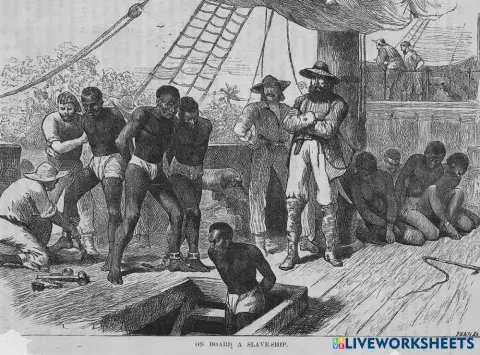
2. How Did African Americans Get Their Last Names?
Read, research, or discuss how African Americans received their last names (from enslavers, free ancestors, or choosing their own).

Write 3–4 sentences:

🏡 Part 2: Family & Identity

1. Ask a Family Member
Talk to a parent, grandparent, or guardian and write what you learn.

  • Do you know where our last name comes from?
  • Has it changed over time?
  • What does it mean to our family?

Write 2–3 sentences about what you learned:

2. If You Could Choose a Last Name...
If you could pick a last name that shows who you are, what would it be?

My chosen name would be: _______________________________________

Why?

🎨 Part 3: Show What You Learned

✅ Choose ONE way to show what you discovered about your name:

Poster – Draw your name, its meaning, and pictures or symbols that represent your family.
Short Report – Write 1 page (or a paragraph) explaining everything you learned.
Family Tree – Draw a simple family tree that shows people with your last name.
Video or Audio Interview – Record yourself explaining what you learned!

🧠 Need Help?

  • Ask your teacher for a printed family interview sheet.
  • Use a sentence starter if you're stuck.
  • Draw instead of writing where needed!

Crea y personaliza fichas interactivas para cada aula

LiveWorksheets facilita a profesorado, familias y personas que educan en casa el diseño y la entrega de materiales de aprendizaje atractivos. Solo tienes que subir un PDF o empezar desde cero para crear lo que necesites: desde fichas interactivas de matemáticas hasta ejercicios de comprensión lectora, fichas de multiplicación o actividades para infantil, todo en unos pocos clics. Nuestro editor de arrastrar y soltar funciona en todos los cursos y asignaturas, lo que te permite adaptar el contenido a tus programaciones, deberes o evaluaciones. Quienes enseñan inglés como segunda lengua (ESL) también pueden crear sus propias fichas, añadir cuadros de sonidos comunes o integrar actividades de ESL para hacer cada clase más participativa. Además, podrás diseñar fácilmente tareas diferenciadas y autocorregidas que ahorran tiempo y apoyan un mejor aprendizaje del alumnado.

Una biblioteca completa de recursos para K-12 y ESL

Accede a miles de fichas listas para usar en todas las asignaturas de K-12, incluidas actividades para infantil, matemáticas, práctica de multiplicación, comprensión lectora y recursos de ESL. Filtra por curso, materia o nivel de competencia para encontrar exactamente lo que necesitas, ya sea para un aula de primaria, una revisión en secundaria o actividades de práctica en bachillerato. El profesorado de ESL puede explorar nuestra colección en constante crecimiento de fichas y actividades de inglés como segunda lengua, diseñadas para apoyar a estudiantes de todos los niveles. Con nuevo contenido añadido de forma regular, LiveWorksheets es un recurso flexible que ayuda a lograr aprendizajes duraderos.