Exercise: Forming Questions about Clothes

English as a Second Language (ESL)

Exercise: Forming Questions about Clothes

Part 1: Yes/No Questions

Rewrite the sentences below as yes/no questions using "do" or "does".

  1. You need a new shirt.
    • Question: Do you need a new shirt?
  2. She wants a pair of jeans.
    • Question: Does she want a pair of jeans?
  3. They like the red dress.
    • Question: Do they like the red dress?
  4. He has a blue jacket.
    • Question: Does he have a blue jacket?
  5. We need some new shoes.
    • Question: Do we need some new shoes?

Part 2: Information Questions

Rewrite the statements below as information questions using "do" or "does" and the question words (what, which, why, when, where, who).

  1. You need a new shirt.
    • Question: What do you need?
  2. She wants a pair of jeans.
    • Question: What does she want?
  3. They like the red dress.
    • Question: Which dress do they like?
  4. He has a blue jacket.
    • Question: What color jacket does he have?
  5. We need some new shoes.
    • Question: What do we need?

Part 3: Create Your Own Questions

Now, create your own yes/no and information questions about clothes using the verbs need, want, like, and have.

  1. (Yes/No Question)
    • Statement: I need a warm sweater.
    • Question:
    • Why do you want to buy a new jacket?
  2. (Information Question)
    • Statement: She likes the black boots.
    • Question: What color shoes does she like?
  3. (Yes/No Question)
    • Statement: They have a lot of scarves.
    • Question: ____Do they have a lot of scarves_________________________________?
  4. (Information Question)
    • Statement: He wants a new belt.
    • Question: ______What does he want___________________________?


Part 1: Yes/No Questions

Rewrite the sentences below as yes/no questions using "do" or "does".

  1. You need a new shirt.
    • Question: Do you need a new shirt?
  2. She wants a pair of jeans.
    • Question: Does she want a pair of jeans?
  3. They like the red dress.
    • Question: Do they like the red dress?
  4. He has a blue jacket.
    • Question: Does he have a blue jacket?
  5. We need some new shoes.
    • Question: Do we need some new shoes?

Part 2: Information Questions

Rewrite the statements below as information questions using "do" or "does" and the question words (what, which, why, when, where, who).

  1. You need a new shirt.
    • Question: What do you need?
  2. She wants a pair of jeans.
    • Question: What does she want?
  3. They like the red dress.
    • Question: Which dress do they like?
  4. He has a blue jacket.
    • Question: What color jacket does he have?
  5. We need some new shoes.
    • Question: What do we need?

Part 3: Create Your Own Questions

Now, create your own yes/no and information questions about clothes using the verbs need, want, like, and have.

  1. (Yes/No Question)
    • Statement: I need a warm sweater.
    • Question: ________Do you need a sweater__________________?
  2. (Yes/No Question)
    • Statement: They have a lot of scarves.
    • Question: ______________Do they have a scarf_____________?

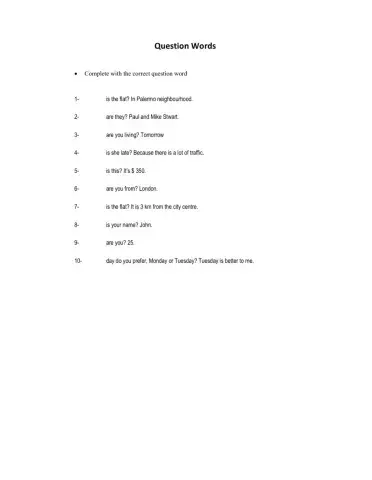
Exercise: Forming Questions with Why, What, Which, and One/Ones

Part 1: Complete the Questions

Complete the questions using "why," "what," "which," "one," or "ones."

  1. ____Why____ do you want to buy a new jacket?
  2. ___What_____ color shoes do you need?
  3. ___Which_____ dress do you like, the red one or the blue one?
  4. ___What_____ do you have in your shopping bag?
  5. _____Which___ do you prefer, the striped shirt or the plain one?
  6. _____Why___ did you choose the black boots?
  7. ___Which_____ jeans are more comfortable, the skinny ones or the regular ones?
  8. ____What____ accessories do you want to wear with your outfit?
  9. ____Which____ of these hats is your favorite?
  10. _____Why__ does he need a new suit?


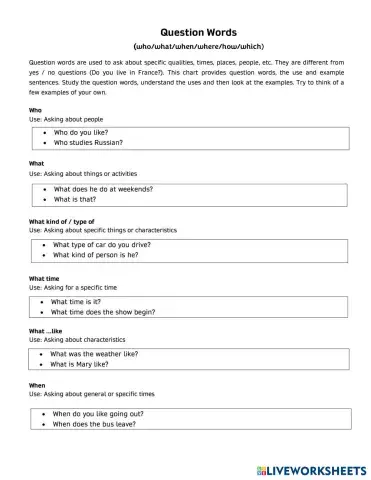
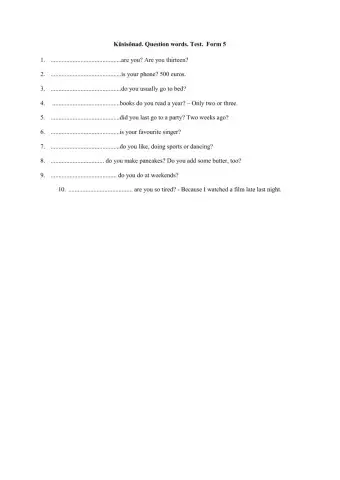
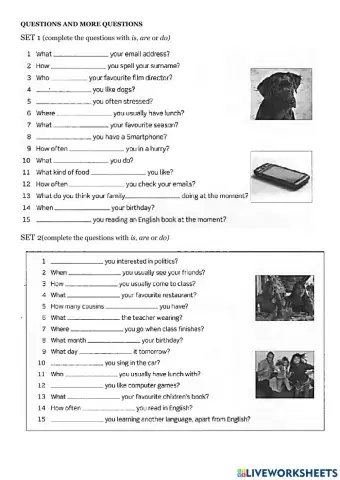
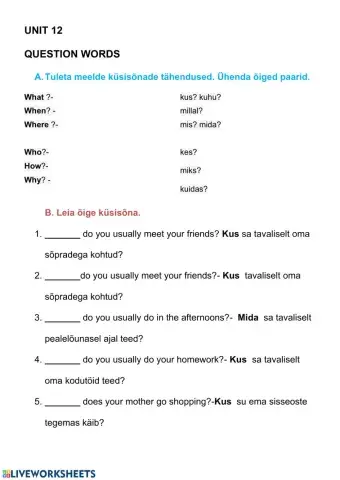
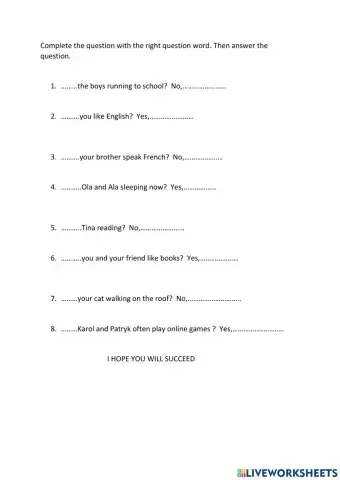
question words

Grammar - ESL

Цель домашнего задания: Закрепить знания, полученные на уроке, развить навыки самостоятельной работы и подготовиться к освоению новых тем.

1. Общие правила для всех ДЗ

Регулярность: ДЗ выполняется систематически и сдаётся строго в указанный срок.

Самопроверка: После выполнения обязательно проверь свою работу на наличие ошибок (орфографических, грамматических).

Качество оформления: работа в основном включает в себя тест (автопроверка) и устно-письменную часть (проверяется учителем). При желании выполнять дз в рабочую тетрадь, не забывая заносить ответы в поля

Честность: Выполняй задание самостоятельно. Списанная работа не поможет тебе понять материал. Если что-то не получается — обязательно задай вопрос учителю до срока сдачи.

2. Что делать, если возникли трудности?

Не понимаю задание: Перечитай его несколько раз, изучи соответствующий параграф учебника. Посмотри примеры, решённые в классе.

Не могу решить задачу/упражнение: Попробуй определить, на какое правило или тему это задание. Отметь место, где остановился, и сформулируй конкретный вопрос.

Ничего не получается: Не оставляй пустым лист! Обратись за помощью к учителю на перемене или на следующем уроке ДО сдачи работы.


3. Критерии оценки ДЗ

Домашняя работа оценивается не только за правильность, но и за:

Полноту выполнения (сделаны ли все задания).

Аккуратность и культуру оформления.

Отсутствие грубых ошибок.

Проявление самостоятельности и творческого подхода (где это требуется).

Своевременность сдачи.

Crea y personaliza fichas interactivas para cada aula

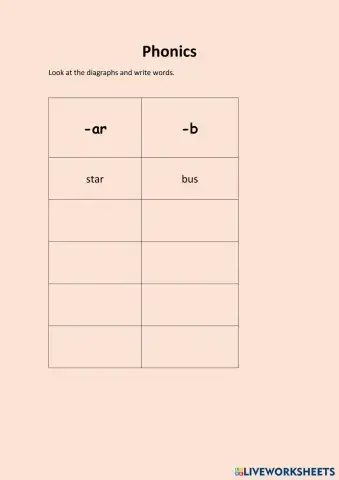
LiveWorksheets facilita a profesorado, familias y personas que educan en casa el diseño y la entrega de materiales de aprendizaje atractivos. Solo tienes que subir un PDF o empezar desde cero para crear lo que necesites: desde fichas interactivas de matemáticas hasta ejercicios de comprensión lectora, fichas de multiplicación o actividades para infantil, todo en unos pocos clics. Nuestro editor de arrastrar y soltar funciona en todos los cursos y asignaturas, lo que te permite adaptar el contenido a tus programaciones, deberes o evaluaciones. Quienes enseñan inglés como segunda lengua (ESL) también pueden crear sus propias fichas, añadir cuadros de sonidos comunes o integrar actividades de ESL para hacer cada clase más participativa. Además, podrás diseñar fácilmente tareas diferenciadas y autocorregidas que ahorran tiempo y apoyan un mejor aprendizaje del alumnado.

Una biblioteca completa de recursos para K-12 y ESL

Accede a miles de fichas listas para usar en todas las asignaturas de K-12, incluidas actividades para infantil, matemáticas, práctica de multiplicación, comprensión lectora y recursos de ESL. Filtra por curso, materia o nivel de competencia para encontrar exactamente lo que necesitas, ya sea para un aula de primaria, una revisión en secundaria o actividades de práctica en bachillerato. El profesorado de ESL puede explorar nuestra colección en constante crecimiento de fichas y actividades de inglés como segunda lengua, diseñadas para apoyar a estudiantes de todos los niveles. Con nuevo contenido añadido de forma regular, LiveWorksheets es un recurso flexible que ayuda a lograr aprendizajes duraderos.