LKPD Narrative Text

Reading Comprehension - English Language

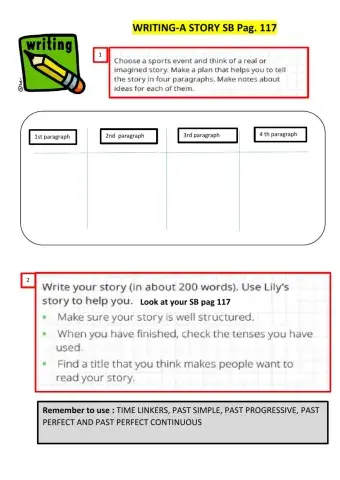
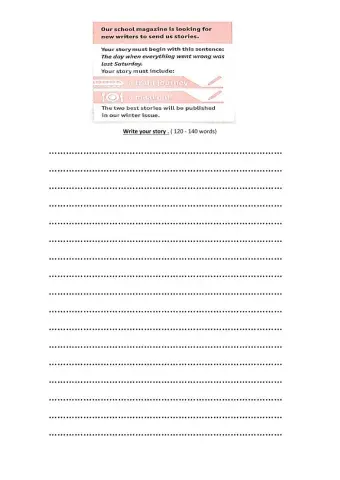
📘 NARRATIVE TEXT WORKSHEET – COMPLETE INSTRUCTIONS 1. Read the Narrative Text Read the story provided on the worksheet carefully. Pay attention to: The characters The setting (place & time) The plot (beginning–problem–solution–ending) 2. Identify the Story Elements Answer the questions about the story: Characters: Who are the people/animals in the story? Setting: Where and when does the story happen? Orientation: How does the story begin? Complication: What problem or conflict appears? Resolution: How is the problem solved? Moral Value: What lesson can we learn? Write your answers in complete, simple sentences. 3. Vocabulary Practice Find and answer: Difficult Words: Write 3–5 new words from the story. Meaning: Write their meanings in English or Indonesian. Use Them in Sentences: Make short sentences using 2 of the words. 4. Grammar Focus: Past Tense Narrative texts usually use past tense. From the story: Underline 5 regular verbs (e.g., walked, played, helped). Circle 5 irregular verbs (e.g., went, saw, took). Rewrite 3 verbs in their present tense and past tense forms. Example: go → went help → helped 5. Sequence the Story Put the events in the correct order. Number the sentences or arrange the boxes (depending on your worksheet layout). This helps you understand the plot structure. 6. Short-Answer Questions Answer comprehension questions such as: Why did the main character do that? What caused the problem? How did the character feel? What would you do in that situation? Write clear and simple answers. 7. Write Your Own Mini Narrative Now create your own short narrative using 6–8 sentences. Use this structure: Orientation: Introduce characters + setting Complication: Present a problem Resolution: Show how it is solved Ending: Add a short closing line or moral value You may choose any topic (e.g., adventure, school event, funny moment, friendship). 8. Check Your Writing Before Submitting Tick ✔ each item: ⬜ I used past tense. ⬜ My story has orientation–complication–resolution. ⬜ My sentences are complete and clear. ⬜ I checked spelling, capital letters, and punctuation. ⬜ My story has 6–8 sentences. 9. Share and Submit Read your story to your partner or group. Submit your worksheet to the teacher (paper or digital).

B2 - Grammar

English Language

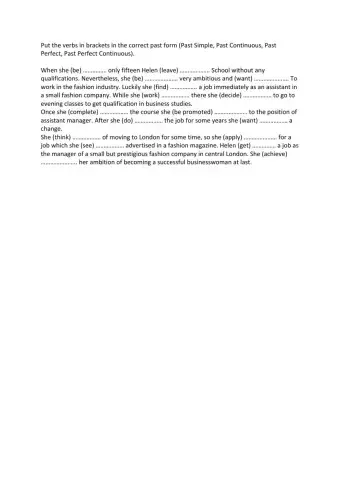
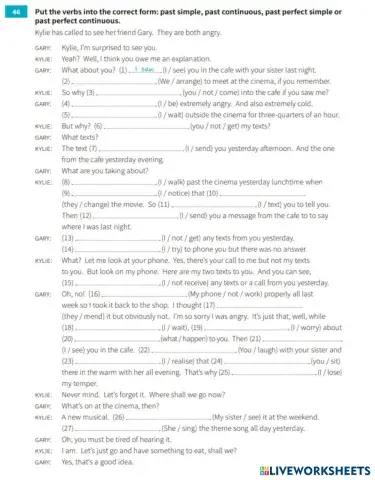
Past tenses

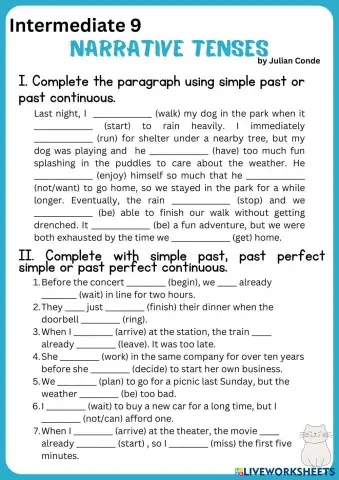
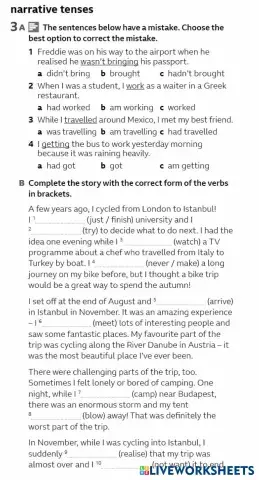
B2 Narrative tenses, used to, would


Future

B2 Future forms – expressing future time

B2 Other ways to express future – be about to, be due to, etc.

B2 Future in the past


Modals, the imperative, etc .

B2 Modal verbs – permission, obligation, prohibition, necessity

B2 Speculation and deduction – modal verbs and expressions

B2 Verbs of the senses

B2 Get – different meanings


Conditionals, if, wish, etc.

B2 All conditionals – mixed conditionals, alternatives to if, inversion

B2 Mixed conditionals – If I were you, I wouldn’t have done it

B2 Wish, rather, if only, it’s time – unreal uses of past tenses

B2 Unless, even if, provided, as long as, etc. – other expressions in conditionals


Passive

B2 Distancing – expressions and passive of reporting verbs

B2 Passive verbs with two objects


-ing and the infinitive

B2 Verb + object + infinitive/gerund – verb patterns

B2 Gerunds and infinitives – complex forms


Articles, nouns, pronouns, and determiners.

B2 Reflexive and reciprocal pronouns

B2 Generic pronouns – common-gender pronouns

B2 Compound nouns and possessive forms

B2 Possessive ’s with time expressions – Two hours’ walk


Relative clauses, relative pronouns and adverbs

B2 Relative clauses – defining and non-defining


there and it

B2 There and it – preparatory subjects


Auxiliary verbs

B2 Have – auxiliary or main verb

B2 Ellipsis and substitution


Adjectives and adverbs

B2 Inversion with negative adverbials – adding emphasis


Conjunctions and clauses

B2 Clauses of contrast, purpose, reason and result

B2 Discourse markers – linking words

B2 Participle claus

es


Word order


B2 Cleft sentences – adding emphasis


Crea y personaliza fichas interactivas para cada aula

LiveWorksheets facilita a profesorado, familias y personas que educan en casa el diseño y la entrega de materiales de aprendizaje atractivos. Solo tienes que subir un PDF o empezar desde cero para crear lo que necesites: desde fichas interactivas de matemáticas hasta ejercicios de comprensión lectora, fichas de multiplicación o actividades para infantil, todo en unos pocos clics. Nuestro editor de arrastrar y soltar funciona en todos los cursos y asignaturas, lo que te permite adaptar el contenido a tus programaciones, deberes o evaluaciones. Quienes enseñan inglés como segunda lengua (ESL) también pueden crear sus propias fichas, añadir cuadros de sonidos comunes o integrar actividades de ESL para hacer cada clase más participativa. Además, podrás diseñar fácilmente tareas diferenciadas y autocorregidas que ahorran tiempo y apoyan un mejor aprendizaje del alumnado.

Una biblioteca completa de recursos para K-12 y ESL

Accede a miles de fichas listas para usar en todas las asignaturas de K-12, incluidas actividades para infantil, matemáticas, práctica de multiplicación, comprensión lectora y recursos de ESL. Filtra por curso, materia o nivel de competencia para encontrar exactamente lo que necesitas, ya sea para un aula de primaria, una revisión en secundaria o actividades de práctica en bachillerato. El profesorado de ESL puede explorar nuestra colección en constante crecimiento de fichas y actividades de inglés como segunda lengua, diseñadas para apoyar a estudiantes de todos los niveles. Con nuevo contenido añadido de forma regular, LiveWorksheets es un recurso flexible que ayuda a lograr aprendizajes duraderos.